The year 2025 marked a critical juncture in global climate efforts as the international community confronted escalating environmental challenges amid growing geopolitical fragmentation. According to Erik Solheim, Co-chair of the Europe-Asia Center and former UN Under-Secretary-General, the world reached multiple climate “tipping points” while temperatures continued their dangerous upward trajectory, particularly threatening ecosystems and economies across the Global South.
Solheim, who previously served as Executive Director of the UN Environment Programme, identified that geopolitical tensions and divergent policies among major powers have significantly complicated unified climate action. The United States’ withdrawal from the Paris Agreement under its current administration has introduced substantial uncertainties into global climate governance mechanisms, exacerbating climate-critical risks for nations already facing extreme weather events, food insecurity, and ecological degradation.
Despite renewable energy deployment growing faster than the global average in Global South nations—driven by abundant solar and wind resources—these regions continue to struggle with financing gaps, technological access, and adaptive capacity. UN Secretary-General António Guterres highlighted this disparity in July 2025, noting that Africa—possessing 60% of the world’s best solar resources—received merely 2% of global clean energy investments.
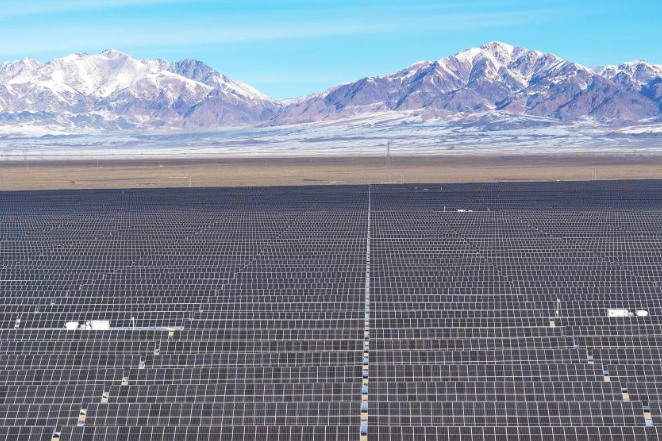
Amid these challenges, China has emerged as a significant force in climate engagement with other Global South members. The country’s remarkable transformation over the past decade includes ambitious renewable energy targets that have positioned it as a global leader in solar, wind, and hydropower deployment. In September 2025, China reinforced its commitment through new Paris Agreement-aligned targets, including expanding non-fossil energy consumption, broadening its carbon market, and integrating climate adaptation into policy frameworks.
Solheim emphasized that China’s Global Governance Initiative and Global Development Initiative propose multilateral cooperation models grounded in sovereign equality, consultation, and shared benefits—principles that resonate with developing nations seeking greater influence in international decision-making. “Truly effective governance must be people-centered and responsive to changing global realities,” Solheim stated, “rather than confined to structures shaped in the mid-20th century.”
The expert concluded that while principles of equity and sovereignty provide a foundation for fairer global cooperation, they must translate into concrete political action and institutional reform to deliver tangible results for vulnerable populations worldwide.