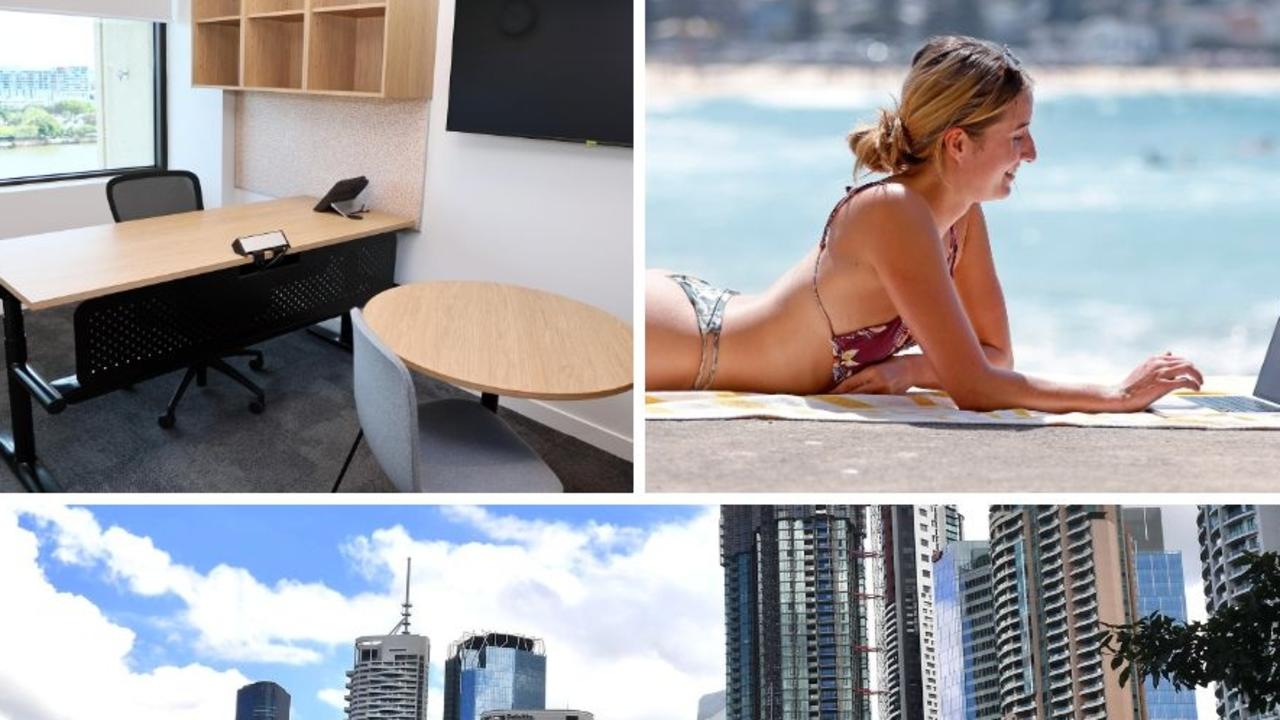
Australia’s urban centers are undergoing a fundamental transformation as hybrid work models permanently alter commercial real estate dynamics, creating a pronounced two-tier market that favors premium office spaces while leaving older buildings increasingly vacant.
Property analytics from JLL reveal a national net increase of 33,000 square meters in CBD office occupancy during early 2024, signaling growing corporate confidence in defining post-pandemic workspace requirements. This apparent recovery, however, masks a stark divergence between property classifications. Over the twelve months concluding March 2024, premium-grade office inventory expanded by 190,000 square meters while secondary-tier properties suffered a contraction of 234,000 square meters.
According to JLL’s Head of Research for Australasia Andrew Ballantyne, ‘Organizations are gaining confidence in defining their occupational footprint, resulting in a net balance of organizations seeking more office space.’ This trend reflects strategic corporate decisions to prioritize quality over quantity, with businesses opting for superior spaces in prime locations despite overall reduced square footage requirements.
Market differentiation extends beyond building quality to tenant size categories. CBRE research indicates small and medium enterprises (occupying under 1,000 square meters) are expanding their footprint by approximately 23% when committing to new leases. Conversely, larger corporations (occupying over 3,000 square meters) continue to contract their space requirements, albeit at a diminishing rate from 22% two years ago to 11% projected for 2025.
Geographic recovery patterns show significant variation across major metropolitan centers. Sydney’s CBD demonstrates robust recovery with strong premium office growth offsetting secondary property losses. Brisbane outperforms with eight consecutive periods of positive growth and prime office vacancies at multi-year lows, driving 12% rental increases. Melbourne continues to struggle with vacancy rates climbing to 18% by mid-2024, while Adelaide surprises with occupancy reaching 88% of pre-pandemic levels.
Financial adaptations include landlords offering incentives exceeding 40% in some markets, while lease terms have stabilized near 30 months – significantly longer than pandemic-era agreements yet shorter than traditional pre-COVID standards.
The conversion of unused office space to residential use remains economically challenging due to construction costs and regulatory requirements, prompting many owners to pursue refurbishment or temporary market withdrawal instead. Industry experts suggest government intervention may be necessary to facilitate viable conversion programs.
As hybrid work arrangements become permanently embedded in corporate culture, businesses have fundamentally re-evaluated their spatial needs, with many having downsized sufficiently to preclude any return to pre-pandemic office utilization levels.