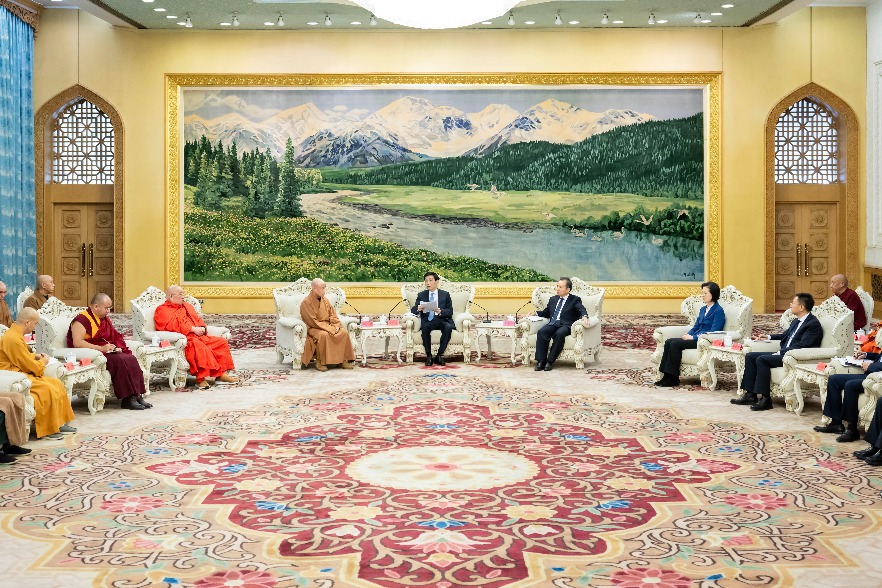
BEIJING – Wang Huning, Chairman of the Chinese People’s Political Consultative Conference (CPPCC) National Committee, convened with delegates from the Buddhist Association of China during their 11th national congress in Beijing this week. The high-level meeting emphasized the strategic alignment of religious practices with national development objectives.
As a senior member of the Communist Party of China Central Committee’s Political Bureau Standing Committee, Wang articulated the necessity of implementing the Party’s fundamental religious policies. He called upon Buddhist leaders and adherents to actively contribute to China’s comprehensive modernization initiatives, highlighting the role of religious communities in national progress.
Wang directed the association to strengthen internal governance through rigorous oversight and enhanced legal awareness. He emphasized the imperative for clerical personnel to maintain strict adherence to both national laws and traditional monastic disciplines, ensuring proper faith practices and conduct.
The political advisor further encouraged the Buddhist community to develop talent well-versed in both religious teachings and China’s rich cultural heritage. He advocated for expanded international exchanges on Buddhist matters, promoting cultural diplomacy through religious channels.
The congress itself marked a significant organizational milestone, featuring the adoption of revised constitutional documents and updated religious regulations. Delegates elected a new leadership team to guide the association’s activities in coming years, signaling a fresh chapter for organized Buddhism in China.