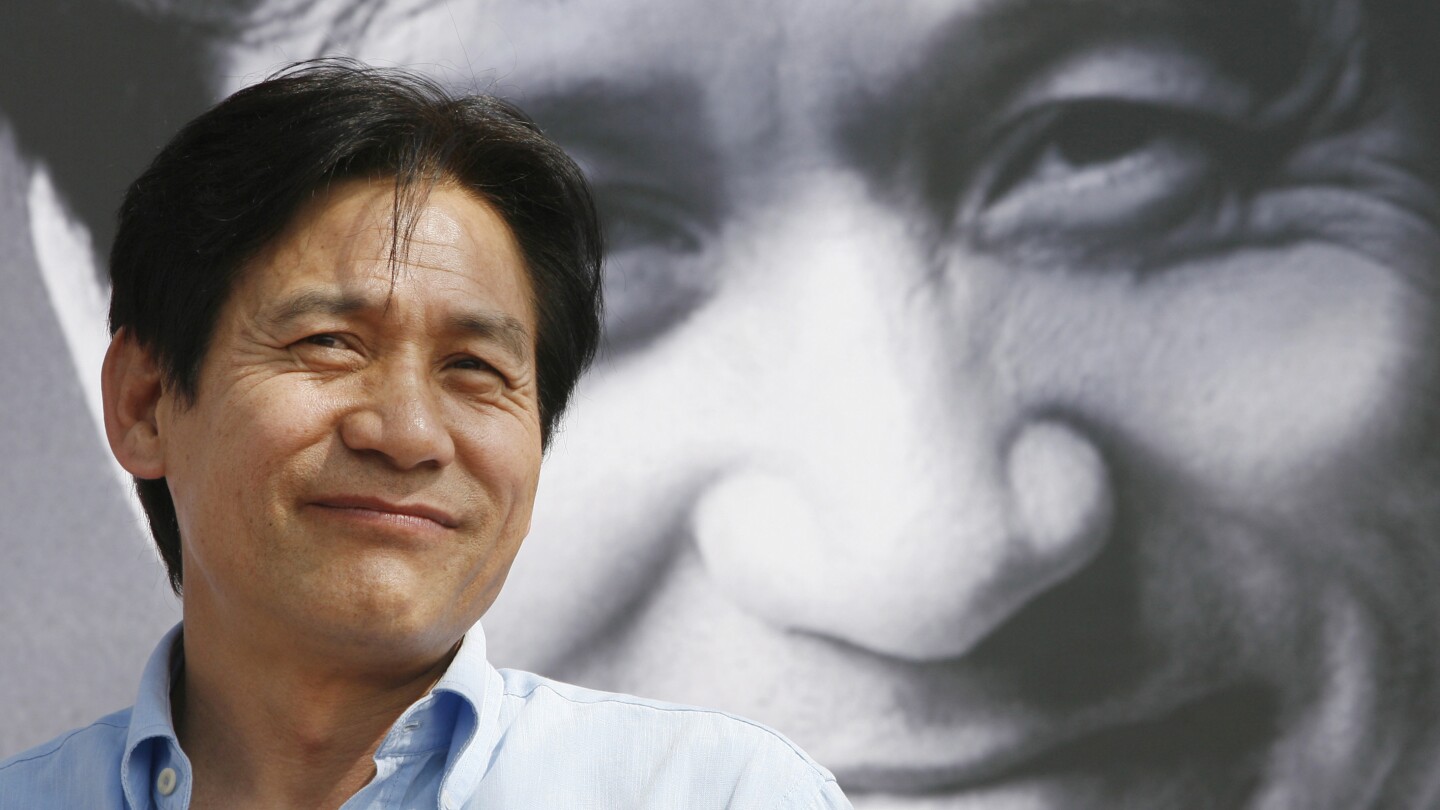
SEOUL, South Korea – The South Korean film industry mourns the loss of its most revered acting legend, Ahn Sung-ki, who passed away on Monday at age 74 after a prolonged battle with blood cancer. His death was confirmed by his management agency, The Artist Company, and Soonchunhyang University Hospital in Seoul.
Ahn’s extraordinary career spanned six decades, establishing him as one of the most accomplished and beloved figures in Korean cinema history. Born in 1952 in Daegu to a filmmaker father, Ahn began his acting journey at just five years old with his debut in “The Twilight Train” (1957). He would go on to appear in approximately 70 films as a child actor before temporarily leaving the industry to pursue a conventional education.
After graduating with top honors in Vietnamese studies from Hankuk University of Foreign Studies, Ahn faced employment challenges during the post-Vietnam War era when his specialized major held limited professional value. Following a period of unemployment, he returned to his true calling in 1977.
His breakthrough arrived in 1980 with Lee Jang-ho’s critically acclaimed coming-of-age drama “Good, Windy Days,” where his portrayal of working-class struggles during Korea’s rapid industrialization earned him the Best New Actor award at the Grand Bell Awards – Korea’s equivalent of the Oscars.
Throughout the 1980s and 1990s, Ahn dominated Korean cinema with an unparalleled series of performances across diverse genres. His remarkable filmography includes transformative roles as a Buddhist monk in “Mandara” (1981), a destitute beggar in “Whale Hunting” (1984), a Vietnam War veteran in “White Badge” (1992), a corrupt police officer in “Two Cops” (1993), and a special forces trainer in the blockbuster “Silmido” (2003).
Ahn’s unprecedented acting prowess earned him five Best Actor awards at the Grand Bell Awards – a record that remains unmatched in South Korean cinema. Beyond his professional achievements, he cultivated a public image as a humble, scandal-free family man who maintained a quiet personal life despite his superstar status. Numerous public surveys consistently identified him as the nation’s most beloved actor, solidifying his nickname “The Nation’s Actor.”
In reflecting on his extensive career, Ahn often noted that his role as a dedicated manager to a fading rock star in “Radio Star” (2006) most closely mirrored his own personality and approach to his craft.