India’s rapidly expanding aviation sector faces a critical juncture as it navigates supply chain constraints and ambitious domestic production goals. With IndiGo and Air India controlling over 90% of the market and having placed orders for nearly 1,500 aircraft over the next decade, the country’s dependency on Boeing and Airbus has become increasingly problematic. Both manufacturers reported historically high delivery backlogs in 2024, creating delays that directly impact Indian carriers.
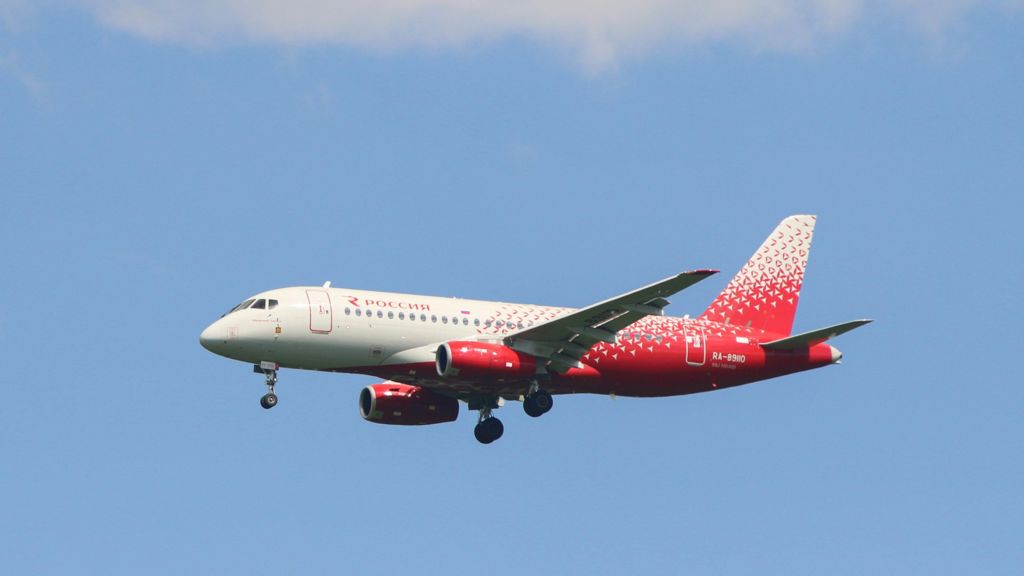
This supply challenge has revitalized discussions about India’s long-standing aspiration to develop indigenous passenger aircraft capabilities. The recent preliminary agreement signed between Delhi and Moscow to manufacture Russian SJ-100 planes in India represents the latest attempt to address this dependency. The SJ-100, a twin-engine regional jet capable of carrying up to 103 passengers, is already operational with several Russian airlines according to manufacturer United Aircraft Corporation (UAC).
However, aviation experts question the project’s feasibility amid multiple complexities. Western sanctions imposed after Russia’s invasion of Ukraine have fundamentally altered the aircraft’s certification and component sourcing. The European Union Aviation Safety Agency revoked its certification, effectively banning the SJ-100 from European airspace. UAC was forced to replace approximately 40 systems to create an ‘import-substituted’ version in 2023.
India’s historical attempts at aircraft manufacturing reveal a pattern of ambitious projects with limited commercial success. Since establishing the National Aerospace Laboratories (NAL) in 1959, the country has developed small training aircraft like the two-seater Hansa but has struggled with larger passenger planes. Previous collaborations include licensed production of UK-designed Avro 748 jets in the 1960s and partnership with Germany’s Dornier for 19-seat aircraft in the 1980s.
The most notable setback occurred with the Saras project, a 15-seater developed with Russian assistance that stalled in 2009 following a fatal prototype accident. While revived as the 19-seater Saras MK2, the program remains uncertified. Similarly, the Regional Transport Aircraft (RTA) project for a 90-seater comparable to the SJ-100 has seen minimal progress since feasibility reports were submitted in 2011.
Dr. Abhay Pashilkar, director of NAL, identifies key structural challenges: ‘Lack of large domestic demand until recently, along with a shortage of highly skilled manpower and a small domestic manufacturing ecosystem, has held back growth in the sector.’ He emphasizes that engagement with both Indian and global manufacturers represents the most viable path forward.
Despite these challenges, the Russia partnership offers strategic advantages for both nations. For India, it provides immediate manufacturing capability while domestic projects remain years from completion. For Russia, successful international production would demonstrate its ability to create civilian aircraft without Western technology. Gopal Sutar, former spokesperson of Hindustan Aeronautics Limited, notes that Russia’s role as a ‘steadfast supporter’ of India remains strategically significant, with both nations presumably accounting for potential sanction-related challenges.
The agreement nevertheless involves considerable trade-offs and leaves unanswered questions about technology transfer, production timelines, and market acceptance. Meanwhile, India’s aviation expansion faces additional constraints beyond aircraft availability, including crew shortages evidenced by recent IndiGo flight cancellations that stranded thousands of passengers due to inadequate pilot roster planning.