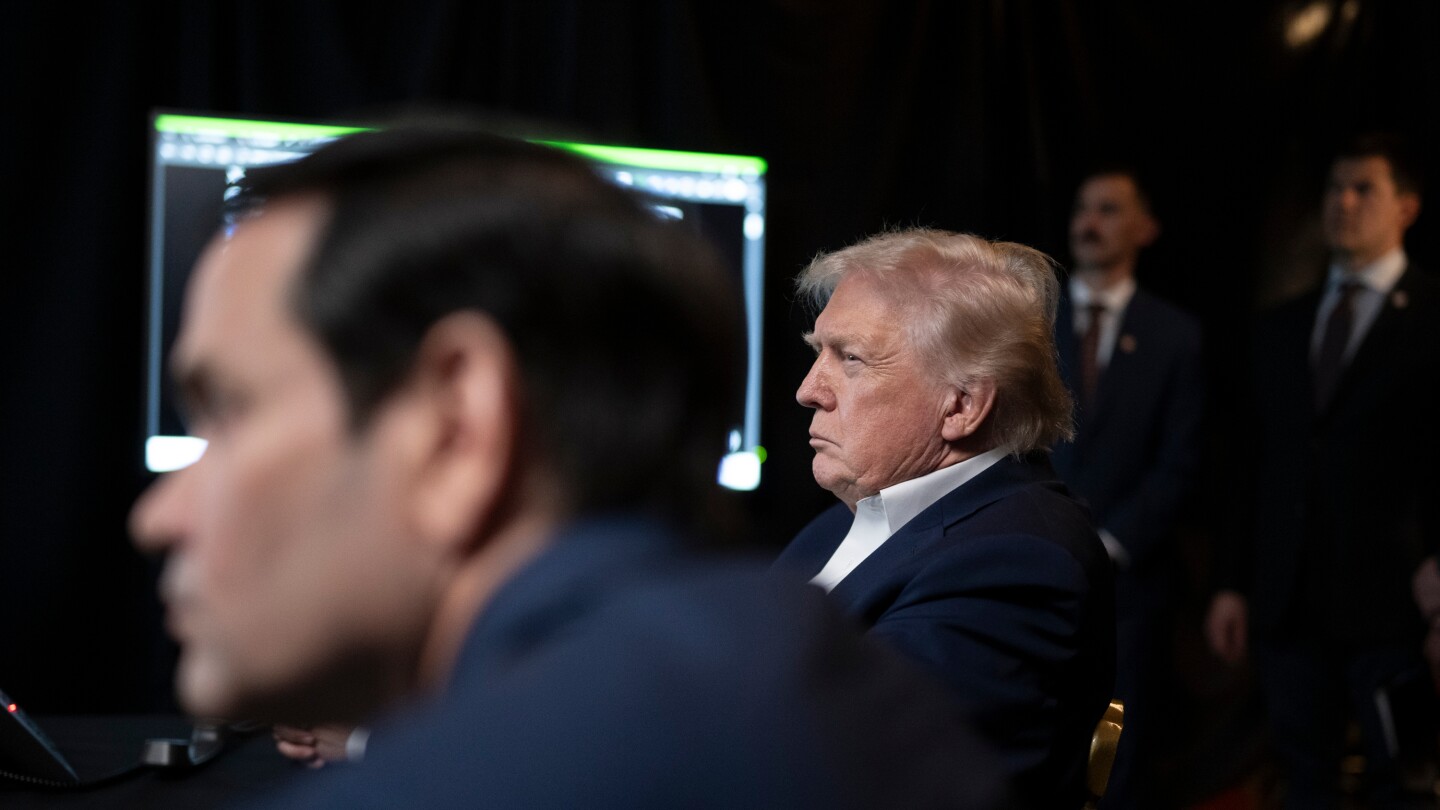
WASHINGTON — In a striking demonstration of renewed hemispheric ambition, the Trump administration has simultaneously escalated tensions with multiple Western Hemisphere nations through both rhetorical assertions and military action. The recent U.S. military operation in Venezuela that ousted Nicolás Maduro has served as a catalyst for broader regional claims, including President Trump’s renewed push for American acquisition of Greenland and heightened warnings toward Cuba.
President Trump explicitly reaffirmed his administration’s interest in acquiring the Danish territory of Greenland, describing the strategically positioned Arctic island as essential to U.S. security interests. “We do need Greenland, absolutely,” Trump stated in an interview with The Atlantic, noting the territory’s significance amid increasing Russian and Chinese naval presence in Arctic waters. When questioned about potential parallels between the Venezuela operation and future actions regarding Greenland, Trump offered an ambiguous response: “They are going to have to view it themselves. I really don’t know.”
The administration’s position draws historical precedent from the 19th century Monroe Doctrine and Roosevelt Corollary, which Trump has referenced to justify an assertive approach toward American neighbors. This philosophical framework, which Trump has jokingly rebranded the “Don-roe Doctrine,” emphasizes American preeminence throughout the Western Hemisphere.
Denmark responded with firm opposition to Trump’s territorial aspirations. Danish Prime Minister Mette Frederiksen issued a statement asserting that the United States has “no right to annex” Greenland and reminded the administration of existing security agreements that already provide U.S. access through NATO frameworks. Frederiksen strongly urged the U.S. to “stop threatening a historically close ally and another country and people who have made it very clear that they are not for sale.”
The situation intensified when a former Trump administration official turned podcaster, Katie Miller, posted an illustrated map of Greenland adorned with American flag colors captioned “SOON,” further provoking Danish officials. Denmark’s ambassador to Washington, Jesper Møller Sørensen, emphasized the need for “full respect for the territorial integrity of the Kingdom of Denmark.”
Concurrently, Secretary of State Marco Rubio issued stern warnings to Cuba, Venezuela’s primary ally, declaring the communist government “in a lot of trouble.” Rubio alleged that Cuban personnel provided security and intelligence services for Maduro’s government, claiming “It was Cubans that guarded Maduro. He was not guarded by Venezuelan bodyguards. He had Cuban bodyguards.”
President Trump characterized Cuba as “very similar” to Venezuela and suggested the nation might become a future focus of administration attention, noting “Cuba is going to be something we’ll end up talking about, because Cuba is a failing nation right now.”
Cuban authorities responded by convening rallies supporting Venezuela’s government and issuing statements warning that “the threat hangs over all of us” in the region. Cuban citizens expressed concern about potential U.S. actions against sovereign states, with biochemical laboratory worker Bárbara Rodríguez noting, “It can happen in any country, it can happen right here. We have always been in the crosshairs.”
The administration’s multifaceted approach signals a comprehensive strategy to reassert American influence throughout the Western Hemisphere, employing both military action and diplomatic pressure to reshape regional dynamics according to U.S. security and strategic interests.