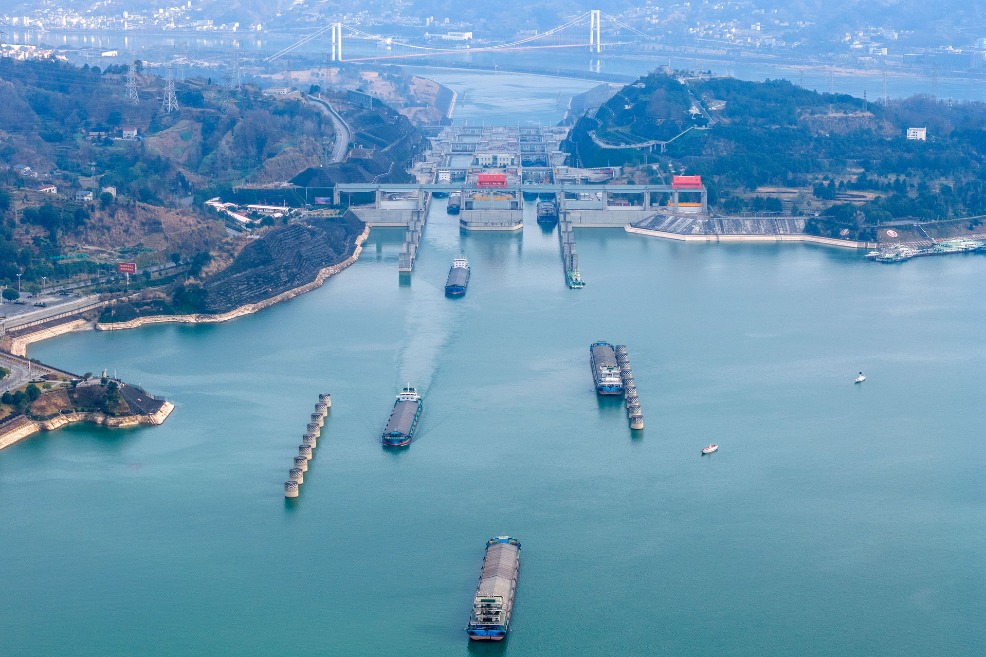
A profound ecological transformation is underway along China’s Yangtze River, where former fishermen have become guardians of the nation’s ‘mother river.’ In Hukou county, Jiangxi province, a 16-member patrol team led by 58-year-old Shu Yin’an vigilantly monitors the confluence of the Yangtze and Poyang Lake, protecting endangered finless porpoises and combating illegal fishing activities.
Shu’s personal journey mirrors the river’s remarkable turnaround. ‘My family relied on fishing for generations,’ he recalled, ‘but overfishing devastated the ecosystem until we could scarcely survive.’ His concern that future generations might never witness fish in the Yangtze prompted him to join the patrol team when it formed in 2017.
This transformation stems from President Xi Jinping’s strategic vision initiated at the first Yangtze River Economic Belt symposium in Chongqing on January 5, 2016. Xi established a groundbreaking principle: ‘Restoring the ecological environment of the Yangtze River should be an overriding priority. We must focus on joint protection and avoid excessive development.’
The implementation of this vision has been systematic and comprehensive. In 2020, a decade-long fishing ban took effect in key waters, transitioning over 230,000 fishermen like Shu to new livelihoods with government support. The 2016 master plan formally embedded ‘ecological priority, green development’ as foundational principles, marking a fundamental shift from industrial expansion at environmental expense.
Tangible results emerge across the river basin. Chongqing’s Guangyang Isle, once threatened by massive real estate projects covering 3 million square meters, has undergone comprehensive ecological restoration since 2017. The island now welcomes returning residents and tourists alike, demonstrating successful environmental rehabilitation.
Chemical pollution, which President Xi described as leaving the river ‘seriously ill’ in 2018, has been systematically addressed. One notable case involved a major chemical company fined 27 million yuan ($3.86 million) in 2016—the largest environmental penalty in the basin’s history. The company subsequently invested 100 million yuan in advanced pollution control facilities, achieving both environmental remediation and industrial upgrading.
Over the past decade, President Xi has conducted approximately 30 inspection tours along the Yangtze and chaired four pivotal symposiums to steer the economic belt’s development. The strategy has evolved into a multidimensional framework encompassing high-quality development, innovation-driven growth, and regional coordination.
During the 14th Five-Year Plan period (2021-25), the Yangtze River Economic Belt—contributing nearly half of China’s GDP and hosting over 40% of its population—has emerged as a national model for high-quality development. The region has strengthened its technological innovation capabilities, established 196 national smart manufacturing demonstration factories, and nurtured 1,738 innovative ‘little giant’ enterprises.
Experts envision a ‘colorful’ development pathway during the 15th Five-Year Plan period (2026-30), driven by innovation and consumption rather than traditional factors. This comprehensive approach demonstrates China’s successful integration of ecological conservation with sustainable economic advancement along its most vital waterway.