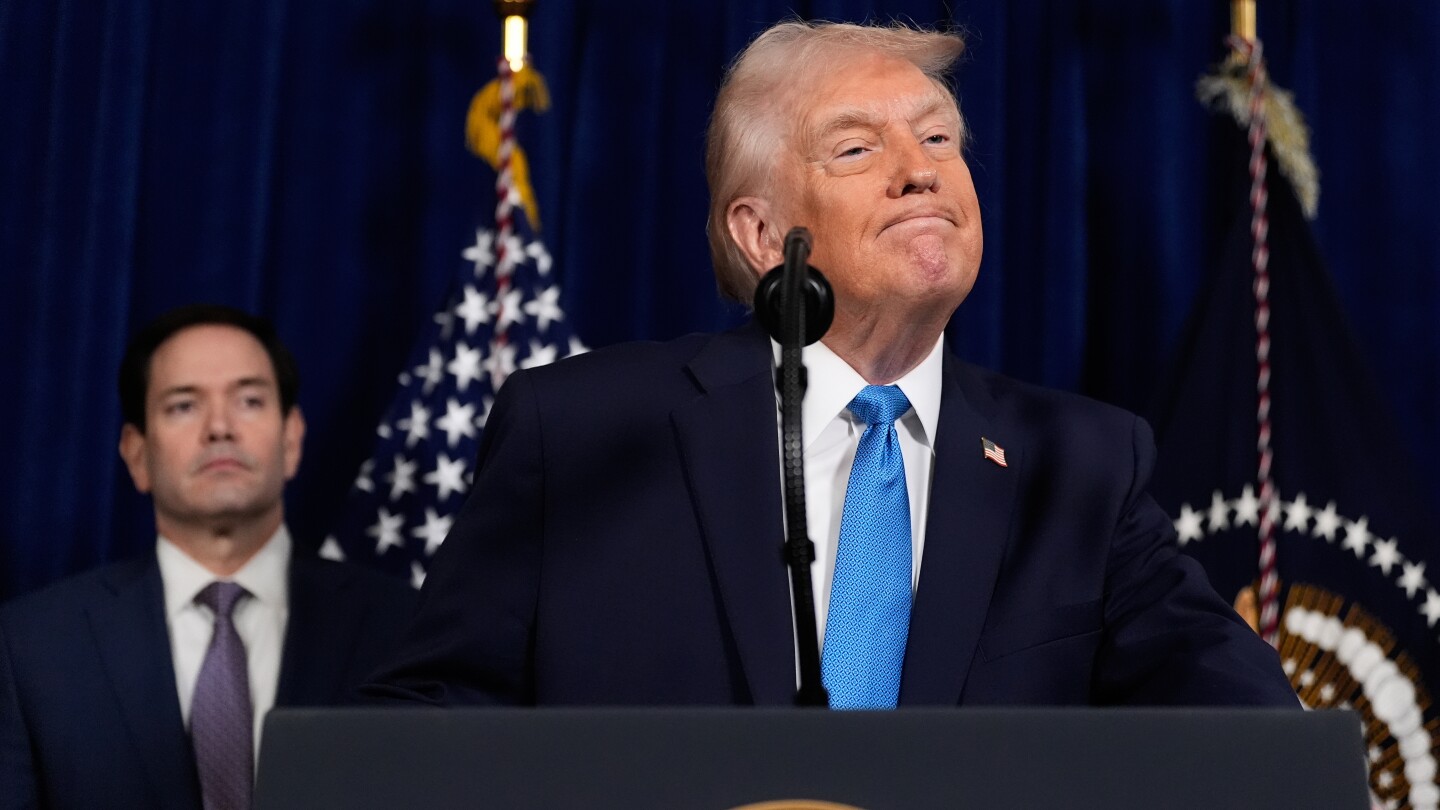
WASHINGTON — President Donald Trump’s military operation in Venezuela has emerged as a critical test of his capacity to maintain cohesion within an increasingly restive Republican coalition during a challenging election cycle. Although most party members initially rallied behind the administration following the audacious capture of Venezuelan leader Nicolás Maduro, discernible fractures have begun to surface across the GOP spectrum.
The president’s remarks regarding potential U.S. management of Venezuela have triggered particular concern among lawmakers, appearing to contradict the “America First” doctrine that has fundamentally defined Trump’s political identity. Representative Marjorie Taylor Greene (R-Ga.), a former Trump ally, expressed sharp criticism on NBC’s “Meet the Press,” characterizing the intervention as part of a “Washington playbook that serves big corporations, banks, and oil executives rather than American citizens.”
These reservations extend beyond the party’s far-right faction. Moderate Representative Brian Fitzpatrick (R-Pa.), facing a competitive reelection battle, emphasized that “the only country the United States of America should be ‘running’ is the United States of America.”
The Venezuela operation highlights delicate political dynamics as Republicans confront the possibility of losing congressional control in November. While Trump remains the dominant force within the GOP, his previously unassailable influence has encountered unusual resistance in recent months regarding various issues including the Jeffrey Epstein files and affordability concerns.
This intervention strikes at the core of Trump’s political brand, which has consistently emphasized avoiding foreign entanglements that divert attention from domestic priorities. The president’s recent declaration that he is “not afraid of boots on the ground” and his framing of the Venezuela mission as essential for American security mark a significant evolution from his previous critiques of the Iraq War as a “big, fat mistake.”
Secretary of State Marco Rubio attempted to moderate expectations by suggesting a more limited U.S. role, specifically denying Washington would handle day-to-day governance while enforcing existing oil sanctions.
Despite these concerns, no organized opposition to Trump’s Venezuela policy has materialized within Republican ranks. Lawmakers including Senators Susan Collins (R-Maine), Rand Paul (R-Ky.), and Mitch McConnell (R-Ky.) have offered measured support while advocating for congressional oversight and expressing cautious optimism regarding the operation’s eventual outcome.