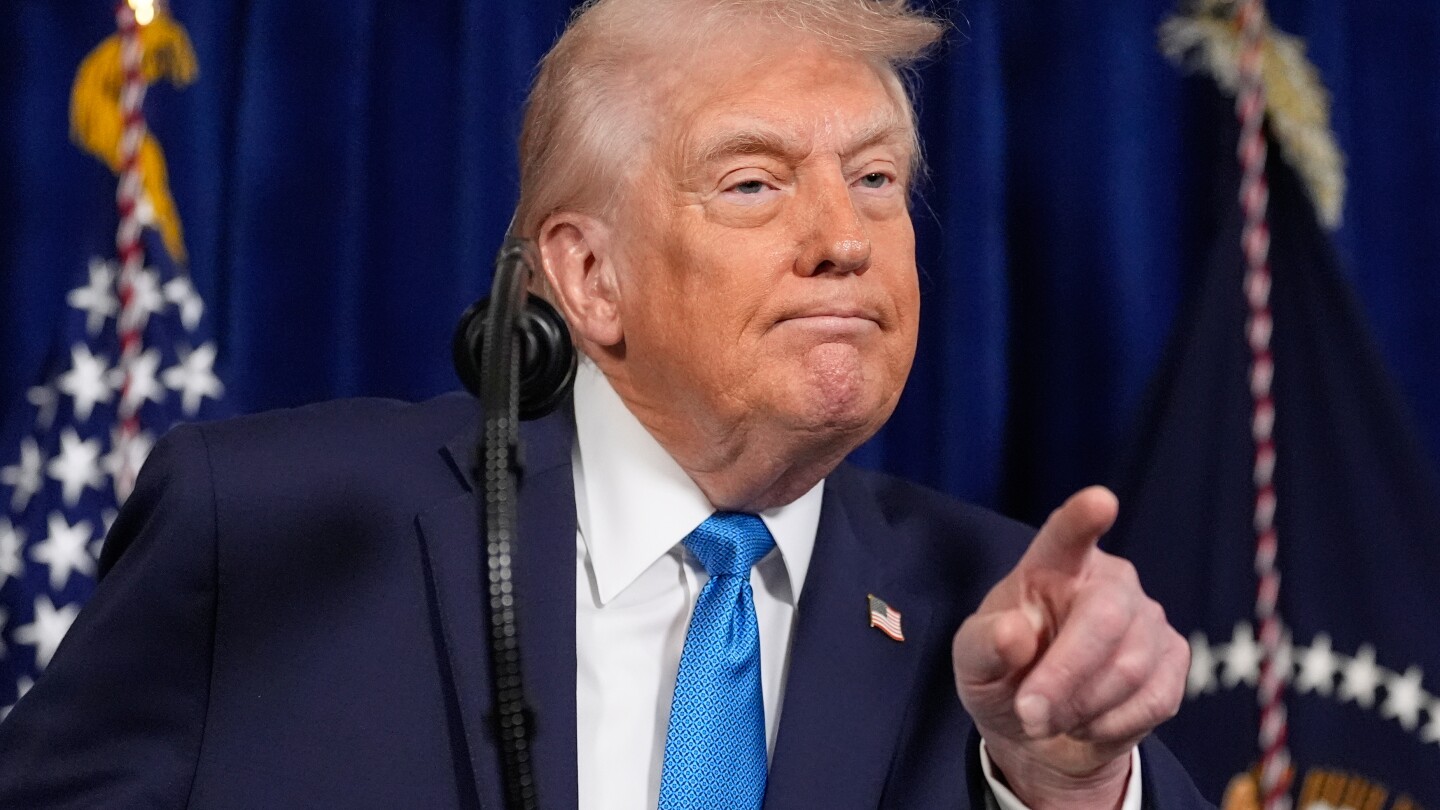
In a significant foreign policy address, President Donald Trump has invoked the 200-year-old Monroe Doctrine to rationalize recent U.S. military operations targeting Venezuelan leader Nicolás Maduro. The historical principle, originally articulated by President James Monroe in 1823 to deter European interference in the Western Hemisphere, has been reinterpreted by multiple administrations throughout American history to justify regional interventions.
During recent remarks, Trump not only referenced the doctrine but humorously suggested some now call it ‘the Don-roe Doctrine,’ signaling his administration’s distinctive approach to hemispheric policy. This revival of Monroe-era principles coincides with the Trump administration’s assertion that Washington would ‘run’ Venezuela until a suitable replacement for Maduro is established.
Historical experts note profound connections between current policy and historical applications. Jay Sexton, University of Missouri history professor and author of ‘The Monroe Doctrine: Empire and Nation in Nineteenth-Century America,’ emphasizes that ‘Venezuela has been the pretext or trigger for a lot of corollaries to the Monroe Doctrine,’ citing instances dating back to the late 1800s.
The administration’s newly articulated approach—dubbed the ‘Trump Corollary’ in official national security documents—represents the latest evolution of this enduring foreign policy framework. ‘Under our new national security strategy,’ Trump declared, ‘American dominance in the Western Hemisphere will never be questioned again.’
This modern interpretation follows historical precedents including Theodore Roosevelt’s ‘Big Stick’ diplomacy and Cold War-era applications against Soviet influence. Professor Gretchen Murphy of the University of Texas observes that Trump’s usage aligns with historical patterns where the doctrine ‘legitimate[s] interventions that undermine real democracy, and ones where various kinds of interests are served, including commercial interests.’
However, experts warn that prolonged engagement in Venezuela may create political complications within Trump’s base. Sexton notes that unlike ‘hit-and-run’ operations such as strikes on Iranian nuclear facilities, Venezuela engagement ‘is going to be potentially quite a mess and contradict the administration’s policies on withdrawing from forever wars.’
The White House’s December national security strategy explicitly frames military operations against drug trafficking and migration flows as implementing this renewed hemispheric dominance, marking a significant reimagining of America’s regional military presence despite isolationist tendencies within the administration’s coalition.