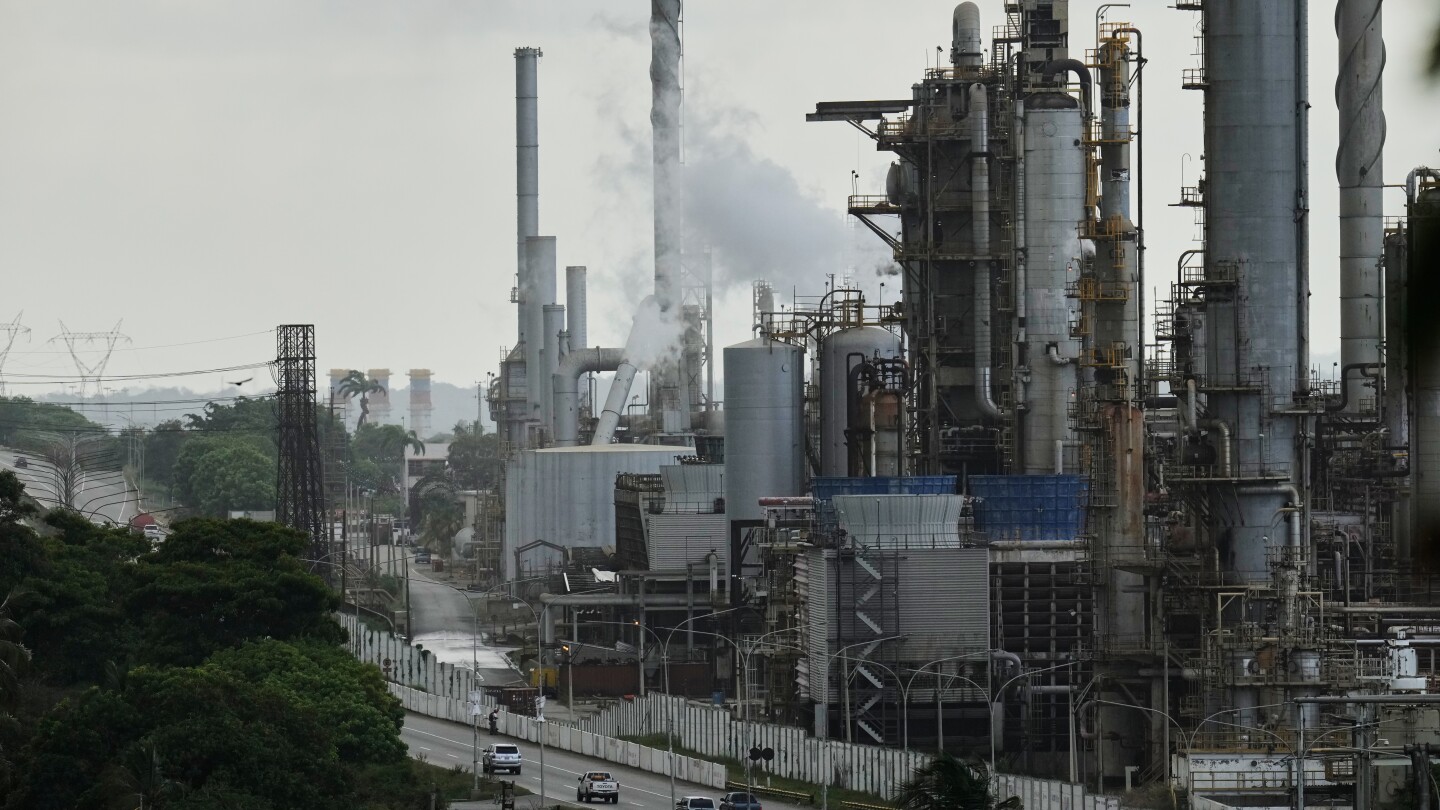
The prospect of US-led revitalization of Venezuela’s crippled oil industry following military actions against Nicolás Maduro’s regime presents a complex scenario with limited immediate market impact. While possessing the world’s largest proven crude reserves at approximately 303 billion barrels, Venezuela’s current production languishes at just 1.1 million barrels daily – a dramatic decline from its 1999 peak of 3.5 million barrels due to years of systemic corruption, mismanagement, and international sanctions.
Energy analysts emphasize that infrastructure decay represents merely one challenge in resurrecting Venezuela’s oil sector. Patrick De Haan, lead petroleum analyst at GasBuddy, notes that while physical infrastructure escaped recent military actions unscathed, it has been deteriorating for decades and requires substantial reconstruction time.
The political landscape remains equally problematic. American energy corporations demand regime stability before committing significant investment, yet Venezuela’s leadership situation remains volatile. Current Vice President’s claim to power, the high court’s intervention, and competing narratives about legitimate governance create precisely the uncertainty that deters foreign capital.
Phil Flynn, senior market analyst at Price Futures Group, suggests that demonstrated US control over the next 24-48 hours could generate optimism about rapid industry revitalization. Such development could potentially enable Venezuela to double or triple production, ultimately applying downward pressure on global oil prices and reducing reliance on Russian energy.
However, Francisco Monaldi, director of Rice University’s Latin American energy program, projects a more realistic timeline: approximately a decade and $100 billion in investment would be required to boost production to four million barrels daily. Legal complications surrounding resource ownership and contract enforcement under occupation add further uncertainty, with Columbia University law professor Matthew Waxman highlighting potential violations of international law regarding resource appropriation.
Despite these challenges, Venezuela’s heavy crude remains particularly valuable for diesel production and heavy equipment fuels – commodities currently in global short supply due to sanctions. Gulf Coast refineries, specifically optimized for processing such crude, would benefit significantly from renewed Venezuelan production.