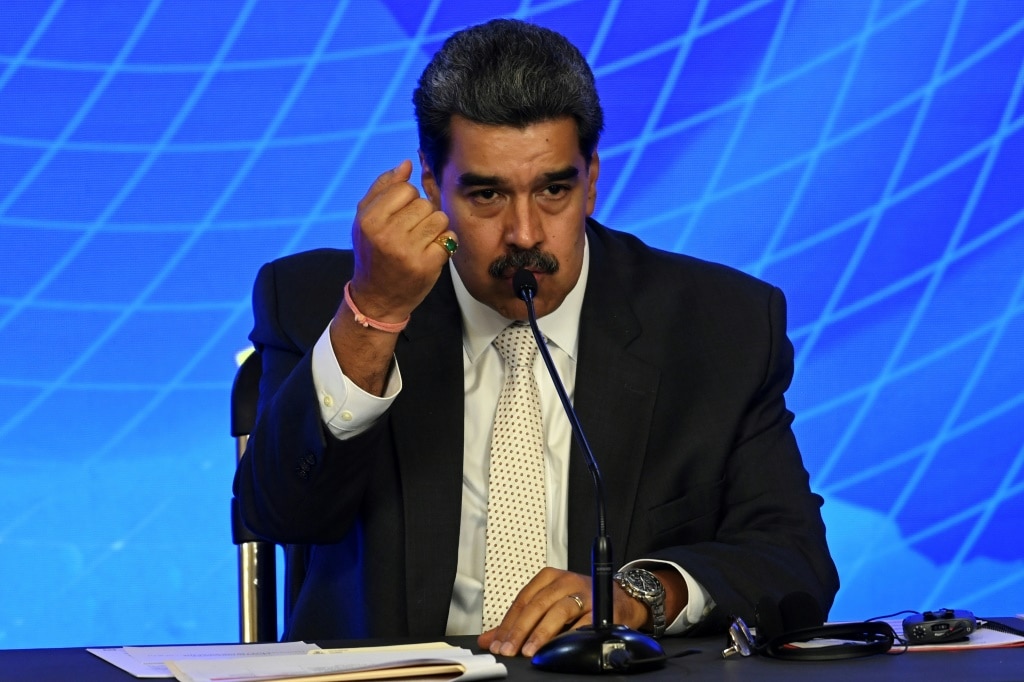
Nicolas Maduro’s political trajectory represents one of Latin America’s most dramatic rises to power, beginning as a bus driver before ascending to Venezuela’s presidency where he established an authoritarian regime. His leadership, marked by economic collapse and human rights violations, culminated in a stunning capture by U.S. special forces in Caracas.
Maduro cultivated a paradoxical public persona, presenting himself simultaneously as a man of the people through televised dance performances and baseball enthusiasm while ruling with increasingly authoritarian measures. This carefully constructed image included regular appearances as a cartoon superhero named ‘Super-Bigote’ (Super-Mustache), creating an unusual contrast to his repressive governance.
The economic consequences of his administration proved catastrophic, with Venezuela experiencing four consecutive years of hyperinflation and an 80% GDP contraction over a decade. This economic freefall triggered a massive exodus of approximately seven million Venezuelans fleeing economic hardship and political repression.
Maduro maintained power through strategic alliances with China, Cuba, and Russia while relying heavily on military and paramilitary support. His government faced international condemnation for systematic human rights abuses including arbitrary detentions, torture, censorship, and violent crackdowns on dissent. More than 2,400 arrests occurred during protests following his disputed 2024 election victory, resulting in 28 fatalities and 200 injuries.
The political opposition faced consistent suppression throughout Maduro’s tenure. Despite international recognition of Juan Guaido as interim president in 2018 and later endorsement of opposition candidate Edmundo Gonzalez Urrutia in 2024, Maduro retained control through questionable electoral processes widely denounced as fraudulent.
His wife, Cilia Flores, played a crucial role as his political partner and behind-the-scenes power broker. Referred to as ‘First Combatant’ and ‘Cilita,’ Flores accompanied Maduro during his capture and faces federal charges alongside him in New York.
Maduro’s ideological foundation blended Marxism with Christianity, creating a unique political identity that included anti-American conspiracy theories inherited from his predecessor Hugo Chavez. Despite occasionally engaging in diplomatic negotiations that temporarily eased international sanctions, Maduro consistently reneged on democratic commitments, leading to renewed economic pressure.
His capture by U.S. forces marks a potentially transformative moment for Venezuelan politics, ending an era characterized by economic devastation, political repression, and the mass emigration of citizens seeking refuge from his authoritarian rule.