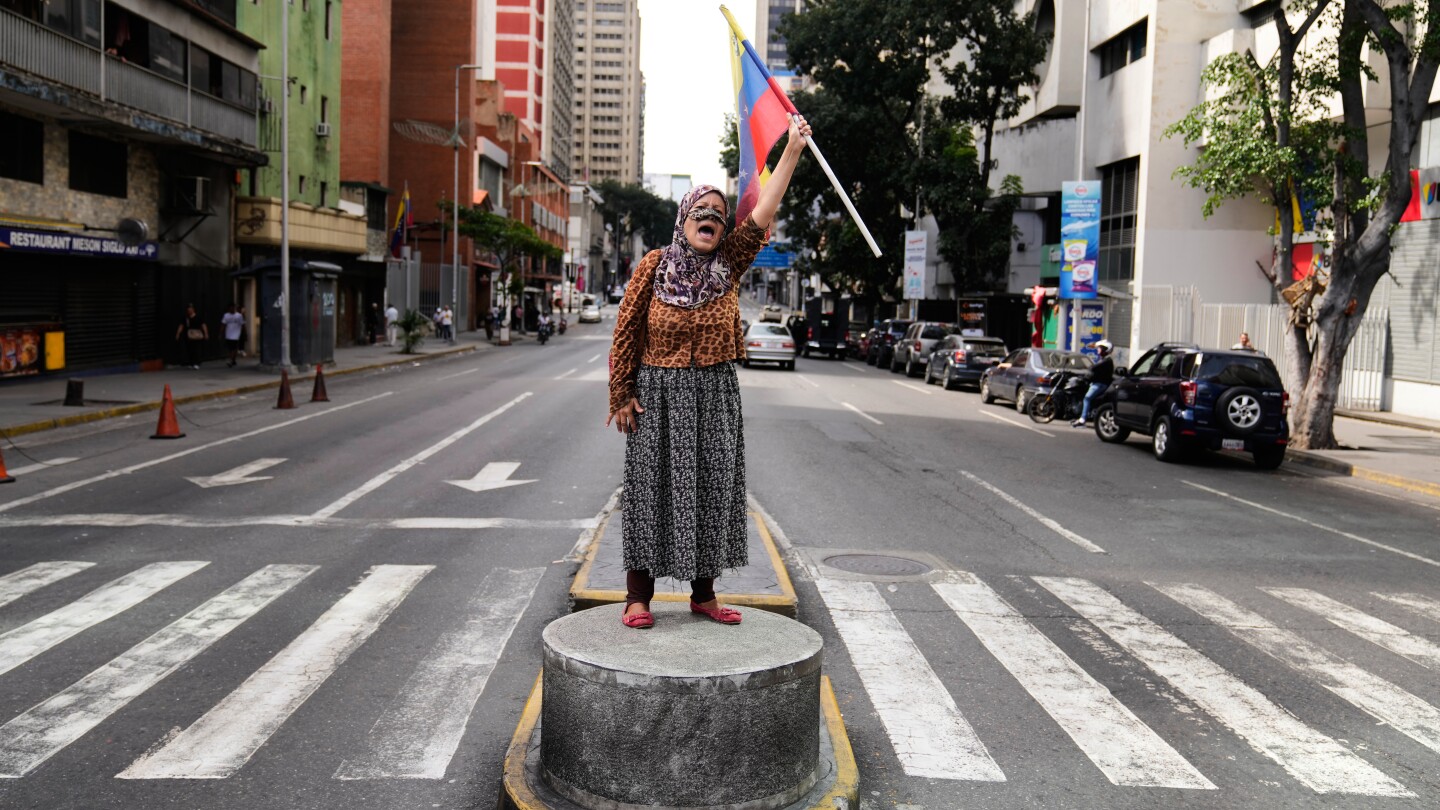
BUENOS AIRES, Argentina (AP) — Venezuela has been plunged into a profound constitutional crisis following the dramatic capture of President Nicolás Maduro by U.S. military forces. The operation has triggered urgent questions about legitimate leadership and the nation’s political future, creating widespread uncertainty among citizens and officials alike.
In a stunning development, former U.S. President Donald Trump unexpectedly endorsed Maduro’s vice president, Delcy Rodríguez, as a potential successor despite her history of facing U.S. sanctions for undermining Venezuelan democracy. Trump revealed that Rodríguez had engaged in extensive discussions with Secretary of State Marco Rubio, during which she allegedly expressed willingness to cooperate with American objectives.
“She’s essentially willing to do what we think is necessary to make Venezuela great again,” Trump told reporters, simultaneously dismissing opposition leader Maria Corina Machado—the 2024 Nobel Peace Prize laureate—as lacking sufficient support to govern effectively.
Rodríguez responded to these developments with defiant rhetoric on state television, demanding Maduro’s immediate release and condemning the U.S. operation as a flagrant violation of international law. Flanked by senior civilian officials and military commanders, she emphatically declared: “There is only one president in this country, and his name is Nicolás Maduro.”
The situation remains highly fluid with no visible U.S. administration presence in Venezuela. Constitutional provisions requiring a new election within thirty days of presidential absence now face extraordinary complications due to the military intervention and questions about the government’s legitimacy.
Venezuelan military leaders projected unwavering defiance, with Defense Minister Gen. Vladimir Padrino López asserting “They have attacked us but will not break us.” Interior Minister Diosdado Cabello appeared in combat gear, urging citizens to defend national sovereignty against what he characterized as “rats” who would “regret what they did.”
Rodríguez’s complex profile includes strong connections to Wall Street and Republican oil interests, having previously engaged with figures including Blackwater founder Erik Prince and Trump special envoy Richard Grenell. Unlike many Maduro associates facing U.S. criminal indictments, Rodríguez and her brother Jorge—who leads the Maduro-controlled National Assembly—have avoided legal prosecution while maintaining leftist credentials rooted in their father’s tragic death in police custody during the 1970s.
The opposition movement, led by Machado, maintains that retired diplomat Edmundo González—widely believed to have won the disputed 2024 presidential election—should immediately assume constitutional authority. Machado pledged to restore order, free political prisoners, and reclaim democratic governance, asserting readiness to “assert our mandate and take power.”
With military forces traditionally serving as Venezuela’s ultimate political arbiter, Rodríguez faces significant challenges in consolidating authority. Experts emphasize that the resolution will depend heavily on the current state of military capabilities and which officials were detained during the operation.
Venezuelan citizens expressed widespread shock and confusion, with many speculating on social media about possible mistaken identity in Trump’s comments regarding the two prominent female political figures.