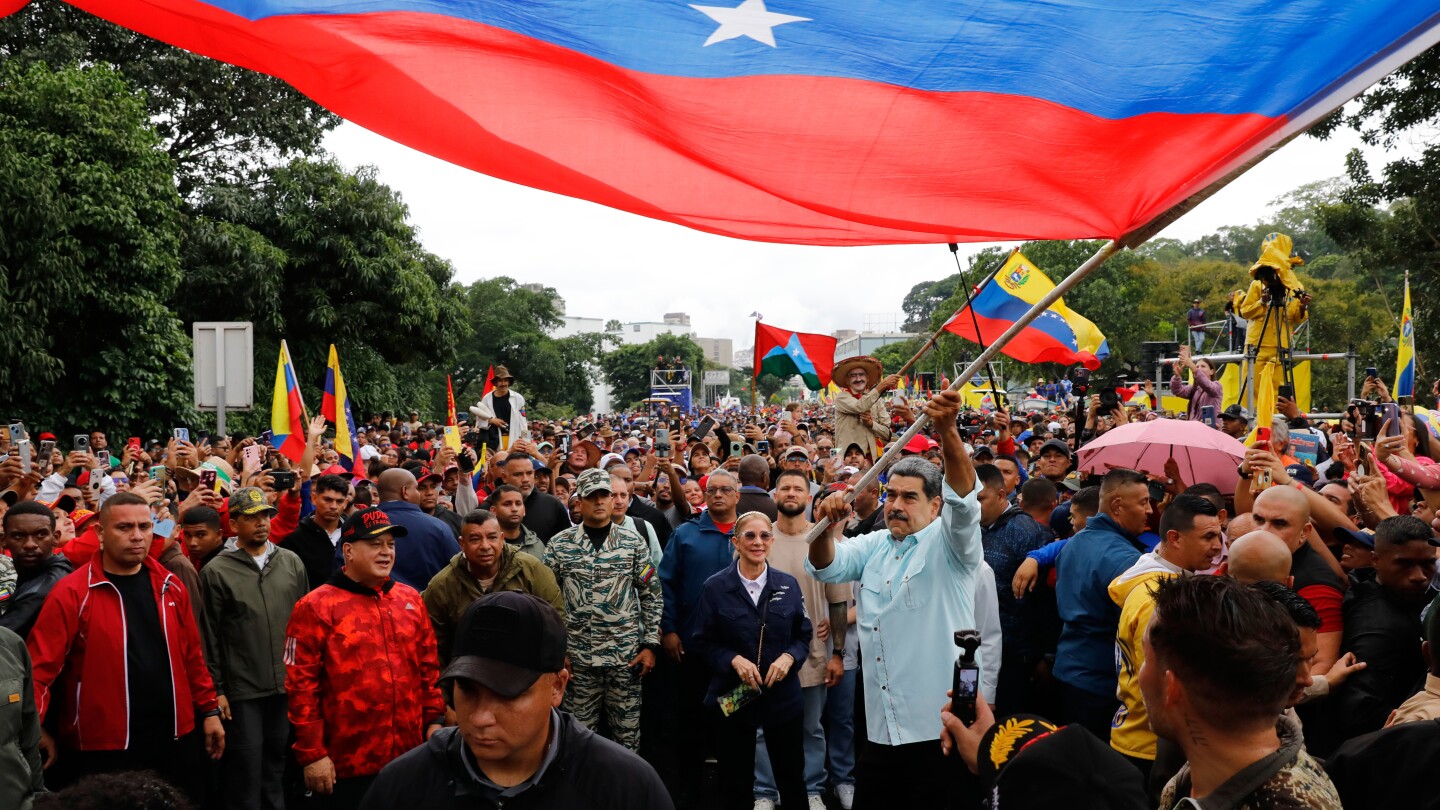
In a seismic geopolitical development, Venezuelan President Nicolás Maduro was apprehended by U.S. military forces during a targeted operation in Caracas on Saturday. The capture marks a stunning conclusion to months of escalating pressure from the United States against the socialist leader’s regime.
U.S. President Donald Trump confirmed the operation through an early morning social media announcement, while Venezuelan Vice President Delcy Rodríguez subsequently disclosed that Maduro’s current whereabouts, along with those of his wife Cilia Flores, remain unverified. U.S. Attorney General Pam Bondi indicated that both Maduro and Flores will face charges stemming from a New York indictment.
Maduro’s extraordinary journey from Caracas bus driver to presidential palace spanned four decades, beginning with ideological training in Cuba in 1986—his only formal education after high school. His political ascent accelerated through his association with the late Hugo Chávez, who personally anointed Maduro as his successor during his final public address in 2013.
Maduro’s presidency became synonymous with catastrophic economic collapse and democratic backsliding. Under his administration, Venezuela experienced a 71% economic contraction between 2012-2020, hyperinflation exceeding 130,000%, and the mass exodus of over 7.7 million citizens. His rule was characterized by systematic repression, including the imprisonment and torture of political opponents.
The 2018 presidential election, widely criticized as illegitimate, saw Maduro declared winner amid widespread international condemnation. Subsequent negotiations facilitated by Norwegian diplomats failed to resolve fundamental political divisions, culminating in the 2024 election where opposition candidate Edmundo González allegedly secured a decisive victory according to independent tallies.
Trump’s return to the White House in January 2025 dramatically altered the strategic calculus, leading to increased military presence in the Caribbean and renewed focus on addressing narco-terrorism concerns. These developments ultimately precipitated the operation that ended Maduro’s controversial twelve-year presidency.