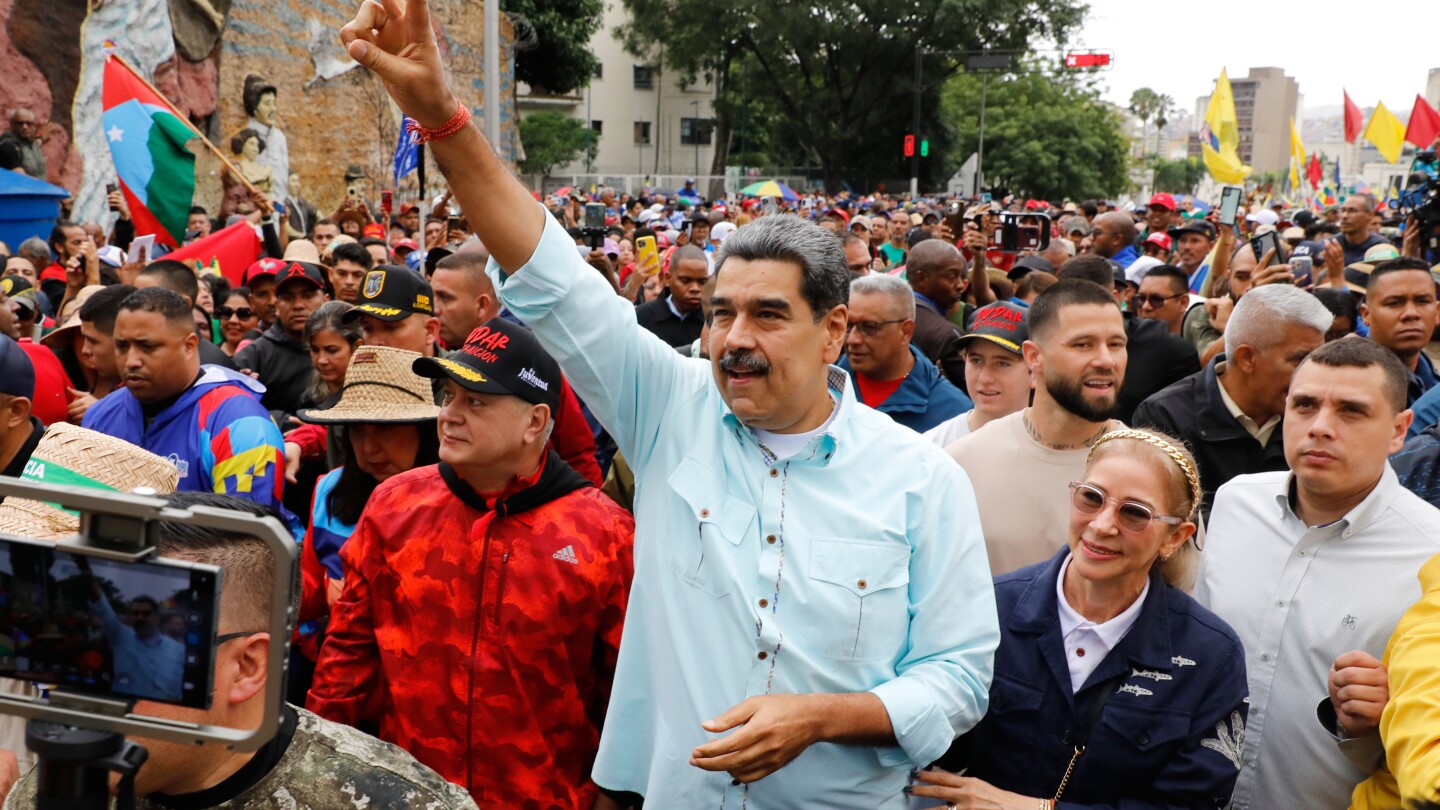
Venezuelan President Nicolás Maduro has expressed willingness to negotiate a bilateral agreement with the United States targeting drug trafficking operations, while simultaneously accusing Washington of pursuing regime change to access the country’s substantial oil reserves. The declaration came during a state-televised interview with Spanish journalist Ignacio Ramonet that aired Thursday, though the interview was originally recorded on New Year’s Eve.
Maduro declined to comment specifically on a recent CIA-led drone strike at a Venezuelan docking area allegedly used by cartels, stating he would address the incident “in a few days.” Instead, he framed the offer for cooperation as an alternative to current U.S. strategies, which he characterized as based on “threats, intimidation and force.”
The Venezuelan leader presented a dual proposition: potential collaboration on narcotics enforcement alongside invitations for expanded U.S. energy investment, specifically mentioning Chevron Corp.—currently the only major oil company exporting Venezuelan crude to the United States. “If they want oil, Venezuela is ready for U.S. investment, like with Chevron, whenever they want it, wherever they want it and however they want it,” Maduro stated.
This overture occurs against a backdrop of escalating military actions. The Trump administration has conducted 35 known boat strikes since August, resulting in at least 115 fatalities, including Venezuelan citizens. President Trump has characterized these operations as necessary escalations in an “armed conflict” with drug cartels, with recent strikes expanding from Venezuela’s Caribbean coast to the eastern Pacific Ocean.
The CIA operation on Venezuelan soil represents a significant intensification of pressure against Maduro, who faces narco-terrorism charges in the United States. The administration’s campaign began with a substantial military deployment to the Caribbean Sea in August, which Maduro interprets as fundamentally aimed at securing control over Venezuela’s vast petroleum resources—the world’s largest proven oil reserves.