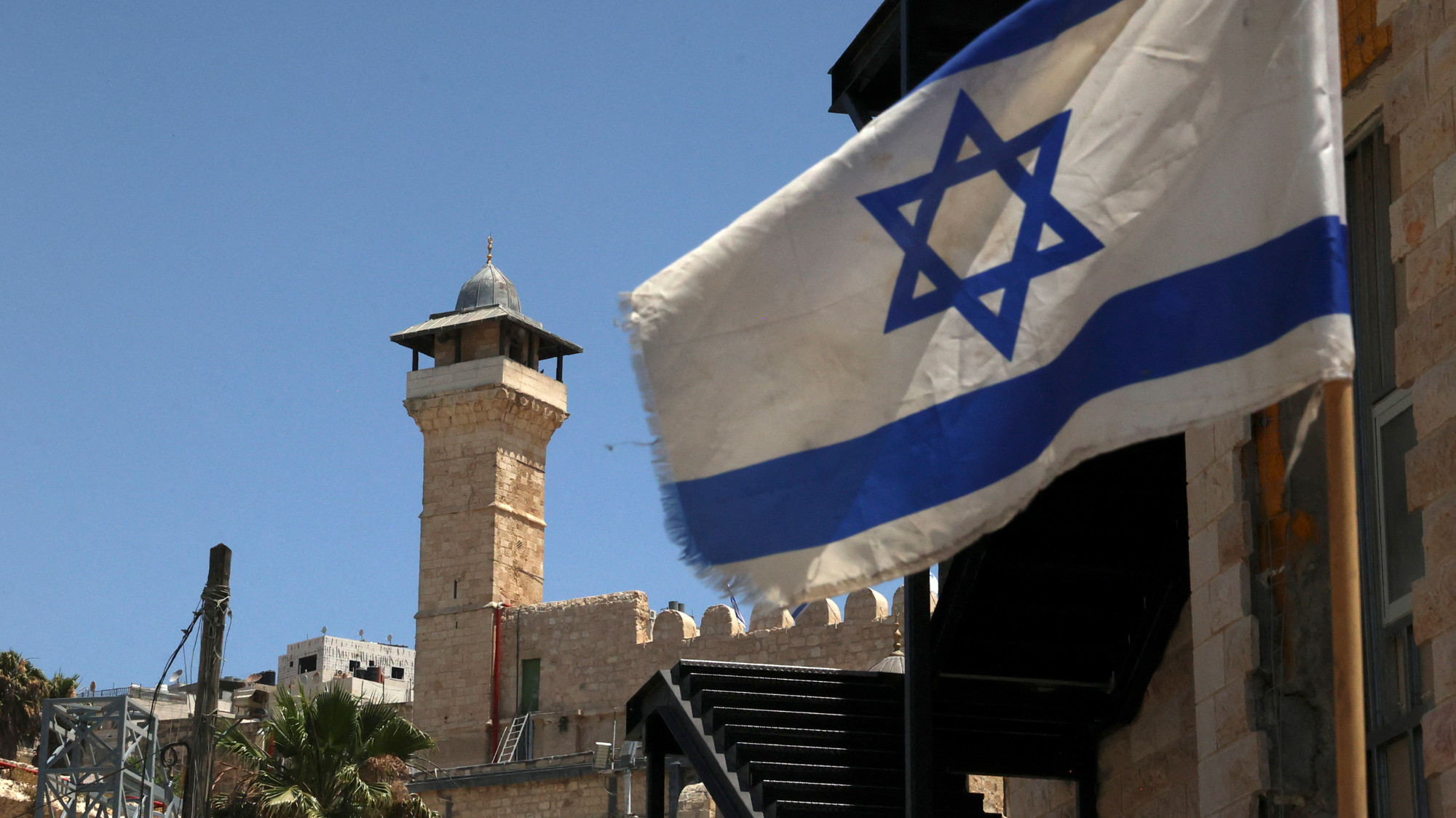
In a significant escalation of tensions, Israeli military authorities have formally stripped Palestinian institutions of municipal authority over Hebron’s revered Ibrahimi Mosque. The Israeli Civil Administration, the military governance body overseeing the occupied West Bank, announced Wednesday the transfer of planning jurisdiction from the Palestinian Authority-run Hebron Municipality to its own Supreme Planning Council.
This administrative shift enabled the immediate approval of construction projects—including a controversial roof over the mosque’s internal courtyard—despite vigorous Palestinian opposition. Hebron Municipality officials condemned the move as a “serious and illegal violation” that systematically attacks both the status quo at the holy site and the authority of Palestinian management bodies.
The municipality asserted that Israel’s actions constitute “a clear violation of international law and existing agreements,” accusing Israeli authorities of deliberately dismantling Palestinian planning and construction rights. Hamas similarly denounced the move as part of a dangerous “Judaisation” campaign intended to erase Palestinian identity in Hebron and replace it with Jewish characteristics.
This development occurs against the backdrop of UNESCO’s designation of the Ibrahimi Mosque and Hebron’s Old City as endangered world heritage sites. Legal representatives challenging the move in Israel’s Supreme Court maintain that all construction permits and confiscation actions lack legal validity.
The site holds profound religious significance for Muslims, Jews, and Christians as the traditional burial place of Prophet Abraham. Known to Israelis as the Cave of the Patriarchs, the mosque witnessed a horrific massacre in 1994 when extremist settler Baruch Goldstein killed 29 Muslim worshippers during Ramadan.
Since the 1997 agreement that divided control between Palestinians and Israelis, settler incursions and Israeli oversight have steadily increased. The recent power transfer effectively nullifies the management role historically held by the Islamic Waqf religious trust and Hebron Municipality, raising concerns about Israel’s broader strategy to assume complete administrative control.
Israeli media reports from July suggested plans to eventually transfer authority to the religious council of the Kiryat Arba settlement, though the Islamic Waqf notes it has received no official notification. Since the onset of the Gaza conflict in 2023, Palestinian worshippers have faced increasing restrictions including banned prayer calls, closed entrances, confiscated keys, and harassment by soldiers and settlers.