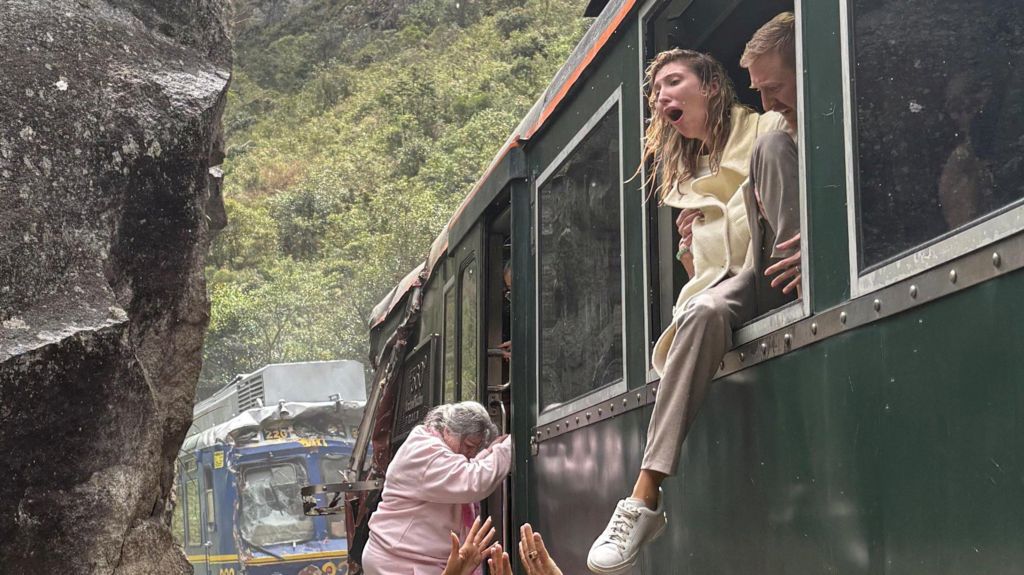
A devastating head-on collision between two passenger trains near Peru’s iconic Machu Picchu has resulted in one fatality and at least 40 injuries, according to official reports. The incident occurred Tuesday at approximately 13:20 local time (18:20 GMT) along the vital transport route connecting Ollantaytambo Station and Aguas Calientes, the gateway town to the ancient Incan citadel.
Eyewitness Niels Honkoop, a 33-year-old tourist, provided harrowing accounts of the immediate aftermath to BBC reporters. Having fortuitously moved from the middle to the rear of the train shortly before impact, Honkoop described scenes of utter chaos with injured passengers, shattered glass covering carriage floors, and structural components torn apart. “I saw staff running around and people crying and people on the floor and chaos erupted,” he recounted. “We got off the train and I saw people bleeding with very severe injuries.”
The collision involved trains operated by PeruRail and Inca Rail, the two primary rail service providers for the UNESCO World Heritage site. Emergency response teams arrived via another train, evacuating survivors to nearby villages for medical treatment and temporary accommodation. Multiple international citizens were among those affected, with both the UK Foreign Office and US Embassy confirming they were providing consular assistance to injured nationals.
PeruRail issued an official statement expressing profound regret for the incident and confirming their staff had provided immediate first aid to those involved. The precise cause of the accident remains under investigation amid ongoing transportation disputes in the region. Local communities have voiced concerns about insufficiently transparent bidding processes for transport services to Machu Picchu, where limited accessibility creates lucrative but expensive transit options for visitors.
The incident highlights ongoing challenges in managing tourism to the 15th-century Incan city, designated one of the Seven Modern Wonders of the World. While Peruvian authorities implemented daily visitor caps in 2011 to preserve the archaeological site, transportation infrastructure and safety protocols remain critical concerns for the millions who visit annually via rail and hiking trails.