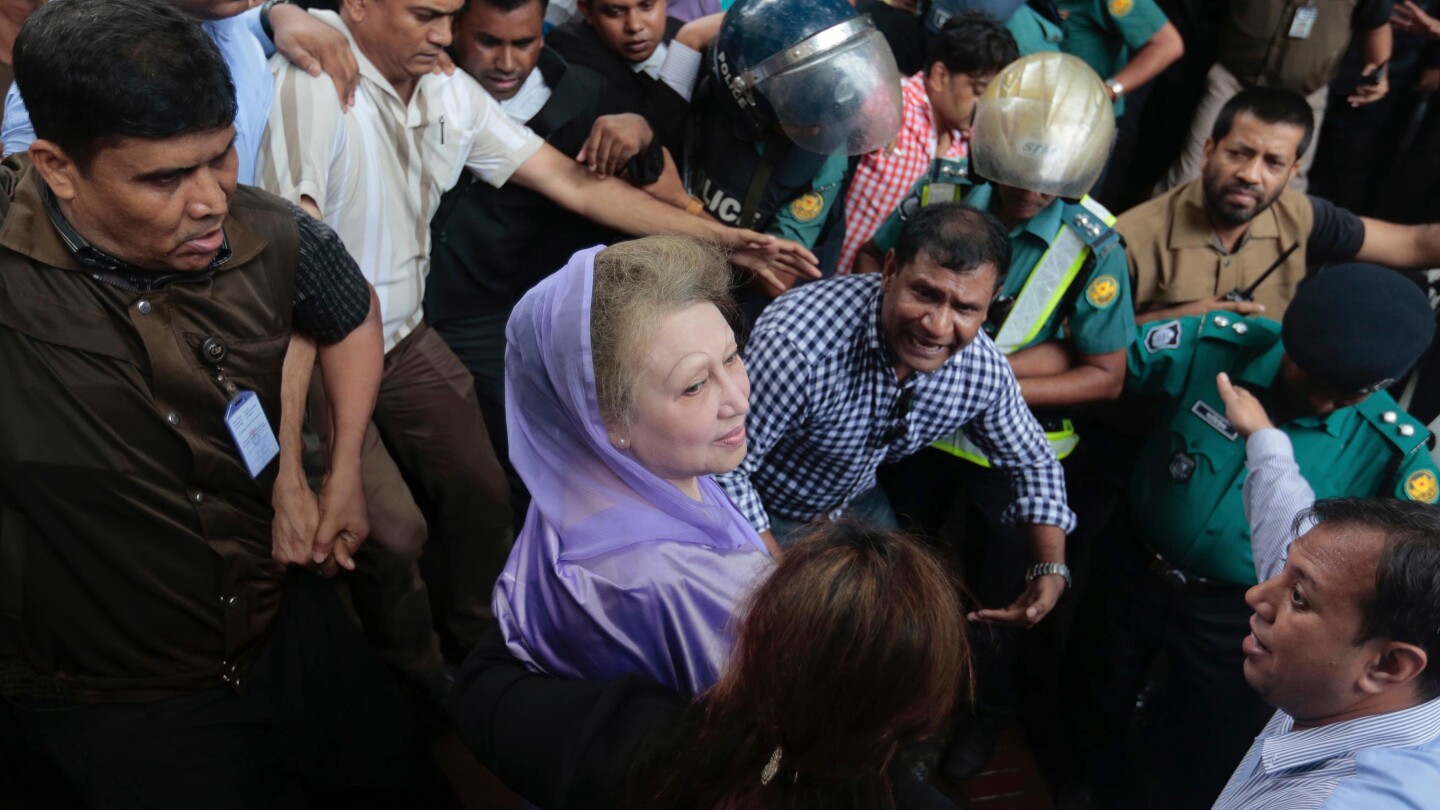
DHAKA, Bangladesh — The capital city witnessed an unprecedented outpouring of grief Wednesday as immense crowds gathered outside the national parliament building to pay final respects to former Prime Minister Khaleda Zia, who passed away Tuesday at age 80 following extended health complications.
From early morning, continuous streams of mourners from Dhaka and distant regions converged on Manik Mia Avenue, transforming the parliamentary precinct into a sea of solemnity. Emotional scenes unfolded as distraught supporters, many referring to Zia as ‘mother,’ traveled overnight from rural areas to participate in the funeral prayers. The collective mourning extended kilometers beyond the main venue, with major thoroughfares filling with citizens offering prayers simultaneously.
The state funeral attracted international attention, with dignitaries from India, Pakistan, Sri Lanka, and Nepal joining representatives from 32 nations according to local media reports. Zia’s flag-draped coffin was transported via security-escorted vehicle from the hospital to her residence before reaching the funeral site, where approximately 10,000 security personnel including military forces maintained order.
Interim authorities under Nobel laureate Muhammad Yunus declared a three-day national mourning period and a public holiday for Wednesday, with flags flying at half-mast nationwide. Zia will be laid to rest beside her husband, former President Ziaur Rahman, who was assassinated in the 1981 military coup.
Zia’s political journey began following her husband’s assassination, culminating in her 1991 election as Bangladesh’s first female prime minister through a landslide democratic victory that established parliamentary governance. She led the Bangladesh Nationalist Party (BNP) until her death, maintaining a historic rivalry with former Prime Minister Sheikh Hasina of the Awami League.
The political landscape remains charged as Zia’s eldest son, Tarique Rahman, currently leads BNP as the front-running party for February’s elections. Meanwhile, Hasina remains in exile in India since August 2024 after receiving a death sentence in November for crimes against humanity related to last year’s mass uprising.