Eight decades after the atomic devastation of Nagasaki, the overlooked narrative of Allied prisoners of war who endured both Japanese captivity and nuclear destruction is finally emerging through dedicated research and reconciliation efforts. On August 9, 1945, when the United States dropped the “Fat Man” plutonium bomb, hundreds of POWs from Allied nations were held in brutal camps across Nagasaki, their existence largely absent from historical accounts.
Recent commemorations have brought together descendants of Dutch POWs and Japanese atomic bombing survivors, united in honoring all victims of that catastrophic day. The POWs, primarily Dutch servicemen captured in Indonesia, were transported via notorious “hell ships” to Nagasaki, where they were imprisoned at Fukuoka Camp No. 2 and Camp No. 14. According to the POW Research Network Japan, approximately 150,000 Allied prisoners were held across Asia during WWII, with 36,000 forcibly relocated to Japan to address wartime labor shortages.
The atomic impact varied dramatically between camps. Camp No. 2, situated approximately 10 kilometers from ground zero, experienced shattered windows and structural damage but no immediate fatalities. In stark contrast, Camp No. 14—located much closer to the epicenter—suffered complete destruction, resulting in eight POW deaths and dozens injured. Survivor accounts describe the terrifying moment of detonation: a colossal orange fireball, purple smoke, and the iconic triple-layer mushroom cloud.
Post-war trauma extended far beyond physical injuries. Johan Willem Schram, a Dutch sailor imprisoned at Camp No. 2, returned to the Netherlands but remained emotionally scarred, feeling both Japan and his homeland had treated POWs with disrespect. His son Andre documented these experiences in “Johan’s Story,” highlighting the complex legacy of suffering and the need for genuine reconciliation.
Despite Japanese laws providing medical support for certified atomic bombing survivors—currently numbering 99,000, down from 372,000 in 1980—only 11 former POWs (seven Dutch, three Australian, and one British) have received official recognition. Researchers like Taeko Sasamoto of the POW Research Network note that the issue has been “swept under the rug,” requiring meticulous examination of neglected historical documents.
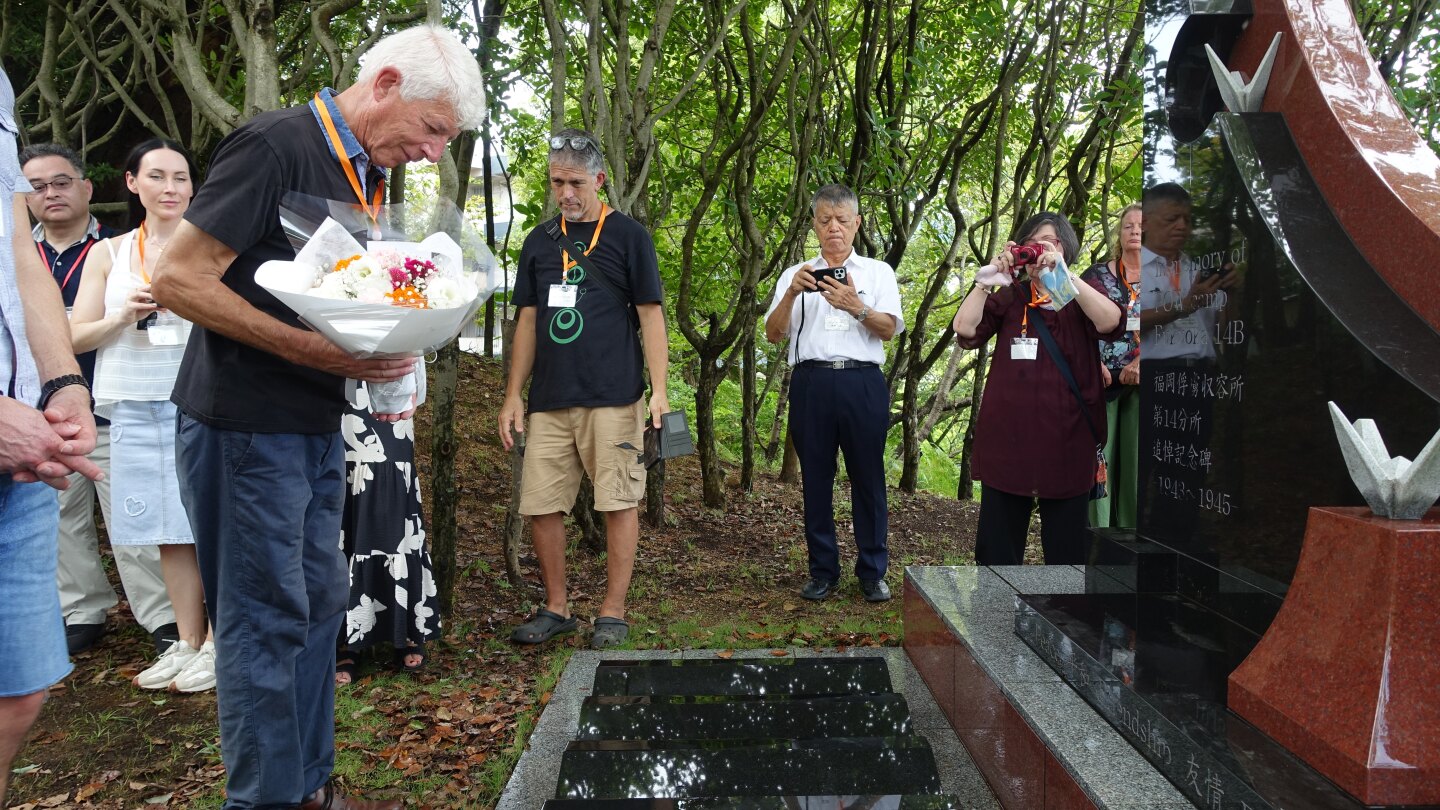
The recent granite monument in Nagasaki, featuring three inscribed panels, symbolizes growing efforts to acknowledge this dual tragedy. As Kazuhiro Ihara, whose father survived the bombing and dedicated himself to POW reconciliation, emphasizes: these commemorations represent a crucial step toward healing wounds that have persisted for generations.