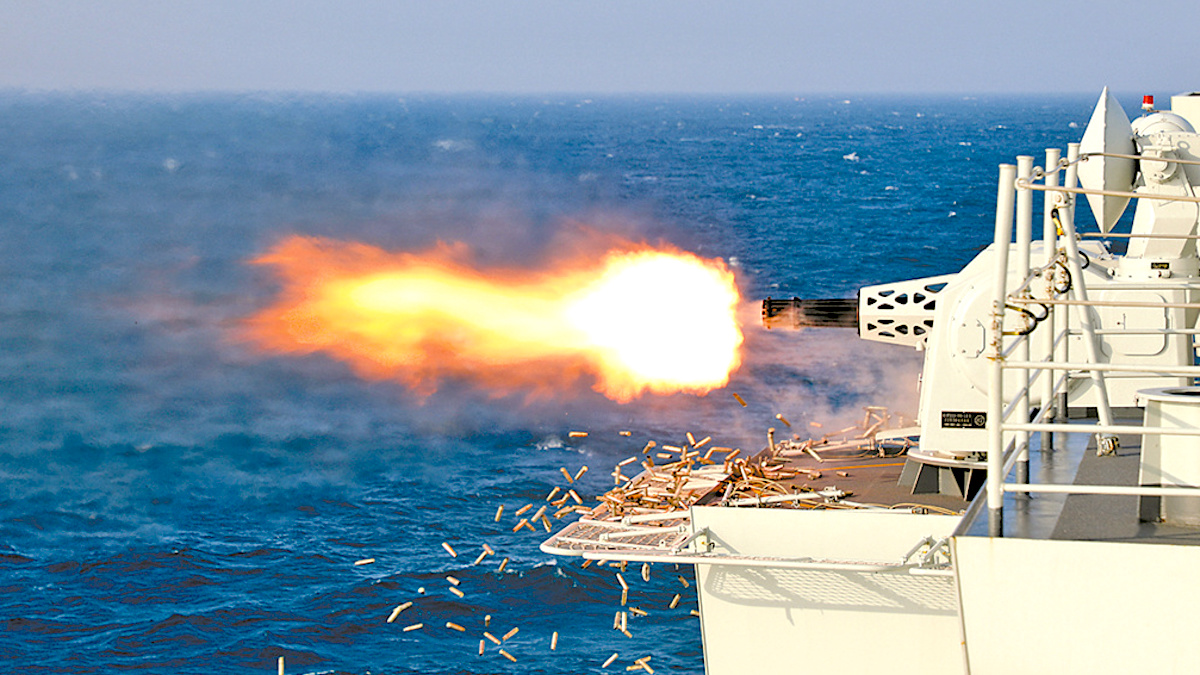
The Chinese People’s Liberation Army has initiated a new series of comprehensive military exercises encircling Taiwan, marking a significant escalation in regional tensions following Washington’s approval of an $11 billion arms package to Taipei. These maneuvers, conducted by the PLA’s Eastern Theater Command, incorporate advanced joint operations featuring naval flotillas and aircraft conducting simulated strikes against maritime and terrestrial targets, air superiority missions, and anti-submarine warfare protocols.
The military demonstrations coincide with sophisticated information warfare campaigns designed to undermine confidence in Taiwan’s defensive capabilities. According to analyses from overseas military commentators, Beijing’s strategy aims to convince international audiences that Taiwanese forces would be incapable of withstanding a concerted PLA assault.
This recent surge in military posturing directly responds to the United States’ December 18 announcement of its largest-ever arms sale to Taiwan, including sophisticated rocket artillery systems, long-range missiles, self-propelled howitzers, and unmanned surveillance platforms.
Chinese Foreign Minister Wang Yi condemned the weapons transfer as a provocative measure supporting what he termed ‘Taiwan independence’ elements. ‘The Taiwan question represents China’s internal affair and sits at the core of our national interests,’ Wang stated during the Symposium on the International Situation and China’s Foreign Relations. ‘Achieving complete national reunification constitutes both a lawful action to safeguard sovereignty and territorial integrity and a historical mission we must fulfill.’
Academic analyses from institutions like Wuhan University’s Institute of Taiwan Studies characterize Taiwan’s leadership under Lai Ching-te as intensifying independence efforts through military enhancement and American alignment, describing this approach as ‘walking further down the wrong road of destroying Taiwan.’
The Pentagon’s recent assessments outline four potential invasion scenarios Beijing might consider: coercive measures short of open warfare, joint firepower strike campaigns, sustained blockade operations, and comprehensive amphibious invasion. Concurrently, classified US military evaluations suggest American forces could face significant challenges in a Taiwan conflict scenario, citing China’s advanced hypersonic weapons inventory and counter-space capabilities.
Information warfare tactics have evolved beyond traditional propaganda methods, with recent revelations exposing sophisticated influencer recruitment strategies. An Italian-based military commentator disclosed offers of substantial compensation to promote narratives questioning Taiwan’s defensive capabilities while maintaining apparent neutrality. These efforts align with broader psychological operations aimed at diminishing Taiwanese morale and resistance willingness before potential military action.