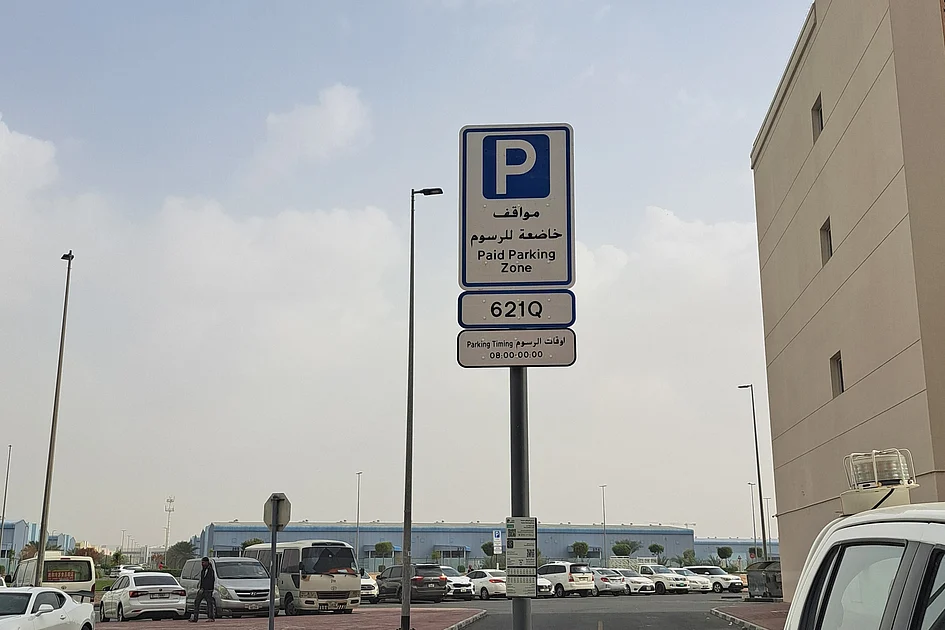
Dubai’s transportation landscape is set for a significant transformation as International City prepares to introduce paid parking facilities effective February 1, 2026. This development marks one of the final major residential communities in the emirate to transition from free to regulated parking systems.
Authorities have already commenced infrastructure preparations, with official signage installed throughout the France and China clusters indicating forthcoming parking regulations. While parking meters remain to be installed, the visible notifications confirm the area’s classification under Code Q parking regulations, operational from 8:00 AM to midnight daily.
The Parkin Company, Dubai’s official parking management entity, has published tariff structures indicating charges starting at Dh2 for thirty minutes, scaling up to Dh25 for extended sixteen-hour periods. This implementation follows similar recent rollouts in Academic City, Sports City, Studio City, and Outsource City throughout 2025.
Residents have expressed widespread support for the measure, citing critical parking shortages that have plagued the community during evening hours. The affordability of International City has attracted numerous rent-a-car companies and commercial vehicles that dominate available spaces, creating particular challenges for residents returning from work after peak hours.
Waqas Khan, a delivery professional residing in the area, noted: ‘Finding evening parking has become exceptionally difficult. This regulated system should guarantee available spaces when residents need them most.’
The implementation aligns with Dubai’s broader Variable Parking Tariff Policy initiated in April 2025, which employs dynamic pricing during peak congestion periods (8-10 AM and 4-8 PM) to optimize space utilization and traffic flow. Off-peak hours maintain standard pricing structures, with exemptions applying on Sundays and public holidays.
Property owner Najam Ahmed revealed the parking situation had previously compelled him to relocate to Al Qusais despite maintaining International City property: ‘As a businessman returning late with multiple vehicles, parking availability directly influenced my living arrangements. These changes may prompt my return to the community.’
This systematic expansion of paid parking infrastructure represents Dubai’s continued commitment to addressing urban congestion through managed mobility solutions while balancing residential needs with commercial activities.