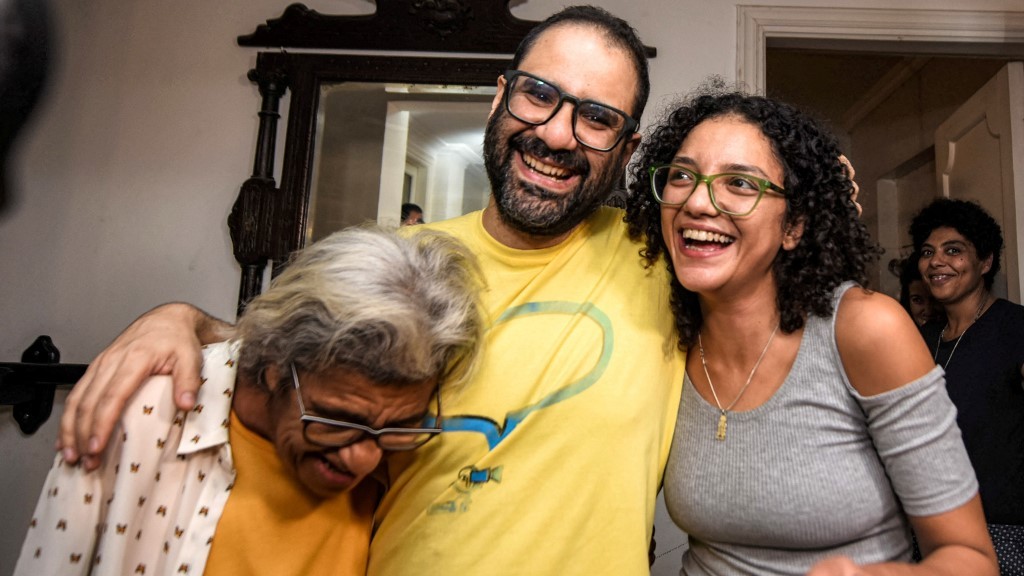
A contentious political battle has emerged in the United Kingdom regarding the citizenship status of British-Egyptian activist Alaa Abd el-Fattah, with human rights organizations warning that proposed measures could establish a dangerous precedent for fundamental freedoms.
The 44-year-old prominent figure of the 2011 Arab Spring uprising recently arrived in the UK following his release from Egyptian imprisonment, where he had spent most of the past decade after Abdel Fattah el-Sisi’s military takeover in 2013. His arrival, initially welcomed by Prime Minister Keir Starmer, quickly turned controversial when opposition politicians uncovered social media posts dating back to 2008 that they characterized as antisemitic and advocating violence.
Reform UK leader Nigel Farage announced he had reported Abd el-Fattah to the Metropolitan Police’s counterterrorism unit, while Conservative Party leader Kemi Badenoch publicly advocated for stripping his citizenship through a Daily Mail column. Despite the activist’s comprehensive apology on Monday, in which he explained many posts were misinterpreted sarcasm or expressions of youthful anger during regional conflicts, demands for citizenship revocation persist.
Legal organization Reprieve condemned the proposals as “alarming authoritarian overreach” that threatens rule of law principles. Deputy Chief Executive Dan Dolan emphasized that permitting politicians to strip citizenship based on social media content establishes a dangerous precedent that disproportionately targets non-white citizens with dual nationality.
Abd el-Fattah’s complex history includes significant activism during Egypt’s democratic revolution, subsequent imprisonment under both Muslim Brotherhood and Sisi regimes, and recent removal from terrorism watchlists two months before his release. Human rights experts warn that forced return to Egypt would likely result in renewed persecution, arbitrary detention, or fabricated charges by Egyptian authorities.
The case has become instrumentalized by both UK right-wing groups and pro-government Egyptian media, creating psychological distress for Abd el-Fattah’s family while potentially undermining his legal status in an increasingly unstable global environment. The Home Office has remained silent on whether deportation proceedings are being considered.