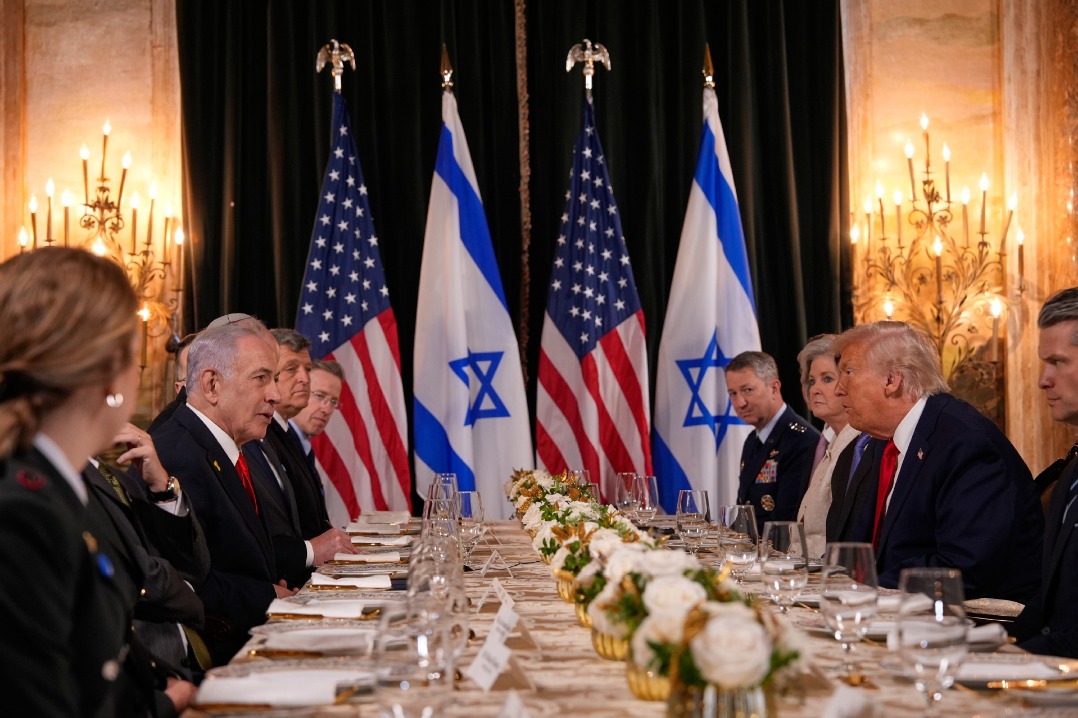
In a significant diplomatic engagement at his Mar-a-Lago resort in Florida, former US President Donald Trump delivered forceful warnings to both Hamas and Iran during a joint media appearance with Israeli Prime Minister Benjamin Netanyahu on December 29. The meeting underscored the complex dynamics of Middle Eastern politics and the ongoing conflict in Gaza.
Trump issued an uncompromising ultimatum to Hamas, demanding complete disarmament or facing severe consequences, which he dramatically characterized as ‘hell to pay.’ This强硬 stance comes amid stalled progress on the US-brokered Gaza ceasefire agreement, with recent developments suggesting Israel’s commitment to the peace process has been less than wholehearted.
The former president maintained that Israel had fully complied with existing agreements, asserting they had ‘lived up to the plan, 100 percent.’ This declaration appears contradictory to reports from Gaza, where approximately 400 casualties have been recorded since the October ceasefire. The humanitarian situation remains dire, with Palestinians enduring extreme weather conditions including flooding and cold temperatures while facing critical shortages of essential supplies.
According to UNRWA assessments, months of sustained conflict and mass displacement have forced Gaza’s population to survive amid crumbling infrastructure, with many sheltering in flimsy tents or makeshift arrangements. The recent Storm Byron, which struck the region in mid-December, exacerbated the crisis, causing structural collapses and damaging over 42,000 shelters, affecting at least 235,000 vulnerable individuals.
Regional experts have interpreted the Trump-Netanyahu meeting as signaling a shift in US foreign policy approach. Abdolreza Alami of the Asia West East Centre noted that the engagement represented less a genuine diplomatic effort and more a return to ‘political blackmail’ tactics. He suggested Trump’s rhetoric indicates a transformation of America’s role from neutral mediator to active participant in the conflict.
Regarding Iran, Trump expressed serious concerns about Tehran’s nuclear capabilities and ballistic missile program, threatening new preventive actions. He pledged unequivocal support for potential Israeli strikes against Iran, characterizing the missile program as an ‘existential threat’ that demanded a robust response.
Analysts warn that this confrontational approach may prove counterproductive, potentially driving Tehran toward more advanced defensive strategies and ultimately undermining regional stability. Historical patterns suggest that pressure tactics against Iran typically result in hardened positions and accelerated weapons development rather than diplomatic concessions.