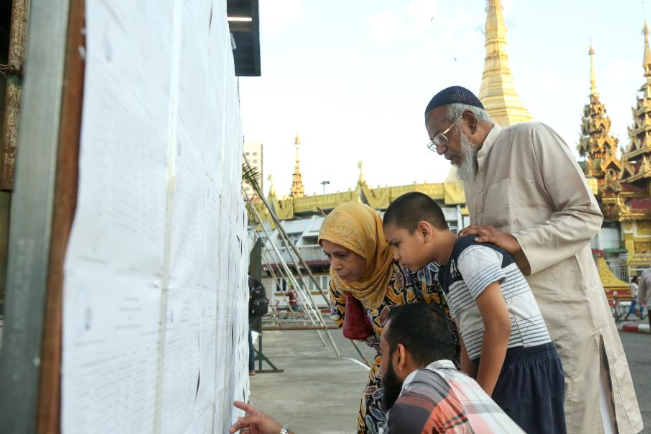
Myanmar has commenced its inaugural phase of multiparty democratic elections, marking a significant political milestone following the military’s seizure of power in February 2021. The initial voting stage unfolded across 102 townships on Sunday, representing the country’s first electoral process since the establishment of the State Administration Council after the ousting of Aung San Suu Kyi’s democratically elected government.
Military Chief Min Aung Hlaing, who has maintained his position as acting president following the lifting of the state of emergency in July, assured international observers of the election’s legitimacy. “We guarantee it to be a free and fair election,” Hlaing stated during a press briefing in the capital Nay Pyi Daw. “It is organized by the military; we can’t let our name be tarnished.”
The electoral landscape features over 5,000 candidates representing 57 political parties competing for approximately 950 parliamentary seats across various legislative bodies. Only six parties, including the prominent pro-military Union Solidarity and Development Party, are competing nationwide for Union parliament representation.
International observation teams from China, India, Kazakhstan, Russia, and Vietnam are monitoring the process, which state media outlet The Global New Light of Myanmar described as “opening the new chapter of Myanmar’s political landscape” in a Sunday editorial. The publication further characterized the election as “a bridge for the people of Myanmar to reach a prosperous future.”
The electoral process is scheduled to unfold in three phases, with subsequent voting scheduled for January 11 and January 25 in 100 and 63 townships respectively. While vote counting and result announcement timelines remain unspecified, constitutional provisions mandate that a new parliament must convene within 90 days of the election’s commencement to select leadership and form a new government.
Analysts emphasize that the election’s ultimate success will be measured not merely by the voting process itself, but by post-electoral progress in national reconciliation, public welfare improvement, and effective responses to security and development challenges. The elections occur against a backdrop of significant humanitarian concerns, with the United Nations reporting approximately 3.6 million displaced persons due to ongoing conflicts and natural disasters—a figure projected to reach 4 million in the coming year. Additionally, the World Food Programme has warned that over 12 million Myanmar citizens may face acute food insecurity in the near future.