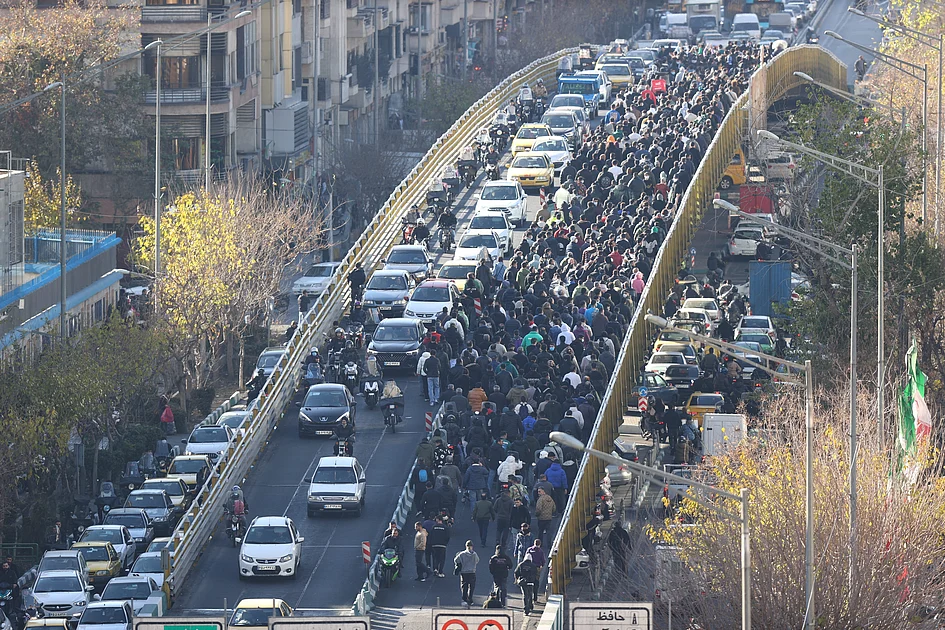
Iranian President Masoud Pezeshkian has called upon his government to address the legitimate grievances of protesters demonstrating against severe economic hardship, as reported by state media on Tuesday. This appeal follows widespread shopkeeper demonstrations in Tehran that prompted temporary business closures across the capital.
The unrest erupted after Iran’s national currency plummeted to unprecedented lows on unofficial markets, with the U.S. dollar reaching approximately 1.42 million rials—a drastic depreciation from 820,000 rials just one year earlier. While the currency experienced marginal recovery by Tuesday, the economic damage had already triggered significant public outcry.
Visual documentation from Fars news agency indicated security forces deployed tear gas to disperse demonstrators, though central Tehran shops and cafes largely resumed operations by Tuesday under heightened police surveillance. Merchants expressed profound frustration over the government’s inadequate response to soaring import costs that have crippled retail businesses.
An anonymous trader conveyed to Etemad newspaper: ‘Officials displayed no concern regarding how currency fluctuations devastate our livelihoods. With current exchange rates, we cannot even sell basic items like phone cases, yet authorities remain indifferent to our struggles.’
President Pezeshkian, operating within Iran’s political structure where ultimate authority rests with Supreme Leader Ali Khamenei, communicated via social media: ‘I have instructed the interior minister to engage in dialogue with protest representatives to address their legitimate demands, enabling the government to resolve these issues responsibly.’
Parallel to presidential appeals, parliamentary speaker Mohammad Bagher Ghalibaf emphasized the necessity of ‘implementing measures focused on enhancing purchasing power’ and addressing economic grievances through responsible dialogue.
The economic turmoil prompted judicial intervention, with Chief Justice Gholamhossein Mohseni Ejei demanding ‘swift punishment for those responsible for currency fluctuations.’ Simultaneously, the government announced the appointment of former finance minister Abdolnasser Hemmati as central bank governor, replacing his predecessor amid the crisis.
Iran’s economy faces compounded challenges including 52% annual inflation according to official statistics—though actual price increases for essentials likely exceed reported figures. The nation’s financial stability has been further undermined by reinstated international sanctions linked to its nuclear program, which Western nations and Israel allege pursues weapons development despite Tehran’s denials.