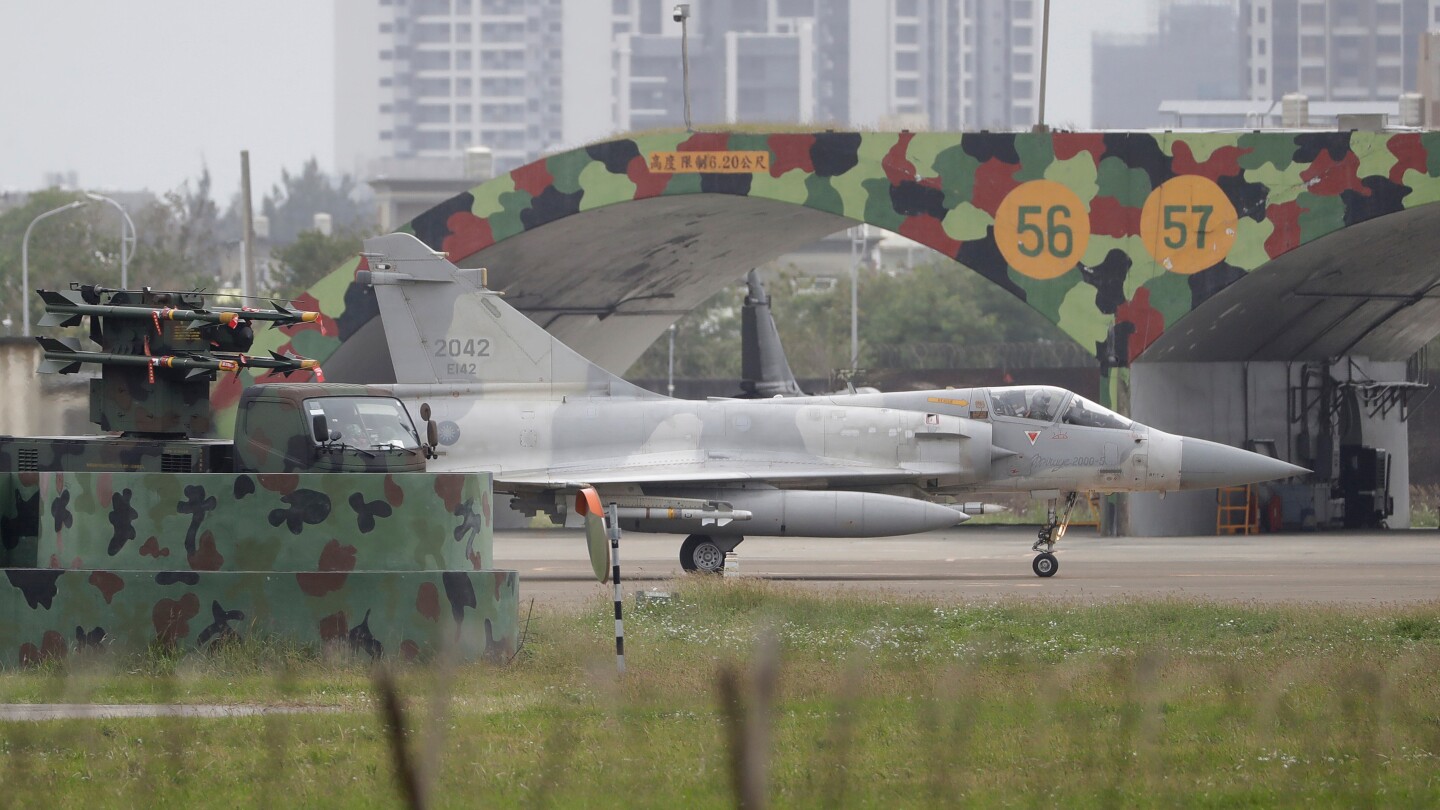
China’s People’s Liberation Army intensified its military presence around Taiwan with large-scale exercises dubbed ‘Justice Mission 2025,’ entering a second day of operations on Tuesday. The Eastern Theater Command deployed destroyers, frigates, fighter jets, and bombers to waters north and south of the island, conducting comprehensive sea-air coordination drills and live-fire artillery exercises that officials claimed achieved ‘desired effects.’
The maneuvers significantly heightened tensions across the Taiwan Strait as 2025 concluded, with tangible impacts on civilian aviation. Taiwan’s Civil Aviation Administration reported seven temporary ‘dangerous zones’ established around the strait, potentially disrupting both international and domestic flight operations.
According to Taiwan’s Defense Ministry, surveillance detected 130 Chinese military aircraft, including fighters and bombers, alongside 14 naval vessels and eight other official ships operating near the island within a 24-hour period. Notably, 90 aircraft crossed the median line of the strait, entering Taiwan’s air defense identification zone, while a Chinese balloon was also observed. Long-range artillery units from China’s Fujian province conducted live-fire exercises targeting zones approximately 44 kilometers off Taiwan’s northern coast.
Chinese officials framed the exercises as a ‘stern warning’ against what they characterize as Taiwan independence separatist forces and external interference. Through its official Xinhua News Agency, Beijing accused Taiwan’s ruling Democratic Progressive Party of binding the island to a ‘catastrophic secessionist chariot’ through arms purchases and alignment with the United States.
The developments occurred against the backdrop of recent U.S.-Taiwan defense agreements, with Washington announcing arms sales valued at over $10 billion—a move that prompted Beijing to impose sanctions against 20 U.S. defense companies and 10 executives. The situation also drew responses from regional powers, with Japan’s government suggesting potential military involvement if China takes action against Taiwan, further complicating the geopolitical landscape.
Despite the escalated tensions, U.S. President Donald Trump expressed limited concern, highlighting his relationship with Chinese President Xi Jinping and suggesting he didn’t anticipate military action against Taiwan. The historical context of the dispute traces back to 1949, when Communist forces took control of mainland China, and Nationalist forces retreated to Taiwan, establishing separate governance systems that have persisted for decades.