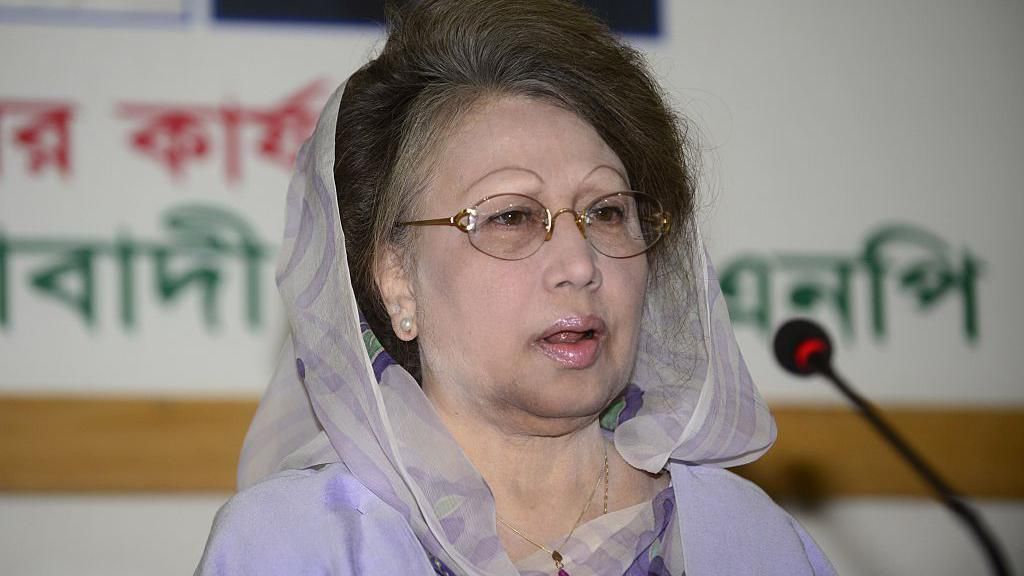
Khaleda Zia, Bangladesh’s pioneering female prime minister who shaped the nation’s political landscape for decades, has passed away at age 80 in Dhaka. Her death marks the end of an era for Bangladeshi politics, closing a chapter on one of the most consequential and controversial political figures in the country’s history.
Born in 1945 in West Bengal, Zia’s journey from a tea trader’s daughter to the highest office of government was nothing short of extraordinary. Her transformation began after the 1981 assassination of her husband, President Ziaur Rahman, a war hero who had played a pivotal role in Bangladesh’s independence struggle. Despite being characterized as a “shy housewife” during her husband’s presidency, she emerged from his shadow to lead the Bangladesh Nationalist Party (BNP) and eventually the nation.
Zia’s political career was defined by both groundbreaking achievements and fierce controversies. She made history in 1991 when she became Bangladesh’s first female prime minister and only the second woman to lead a Muslim-majority nation. During her two non-consecutive terms (1991-1996 and 2001-2006), she implemented significant educational reforms, including making primary education free and compulsory in a country where children averaged just two years of schooling. She also championed women’s political representation through constitutional amendments reserving parliamentary seats for female lawmakers.
Her tenure coincided with Bangladesh’s brutal political landscape, where she engaged in a decades-long power struggle with her principal rival, Sheikh Hasina of the Awami League. This rivalry defined Bangladeshi politics, with the two women alternating power for nearly twenty years until both found themselves embroiled in corruption cases following the 2006 military intervention.
Zia’s later years were marred by legal battles and health challenges. In 2018, she was convicted and sentenced to five years imprisonment for embezzling approximately $252,000 intended for an orphanage trust established during her premiership. The charges, which she consistently denied as politically motivated, resulted in her being disqualified from seeking public office.
Her fortunes shifted dramatically in 2024 when widespread anti-government protests toppled Sheikh Hasina’s administration. The interim government that assumed power ordered Zia’s release and unfroze her assets. By this time, she was battling multiple life-threatening conditions including liver cirrhosis and kidney damage. In January 2025, she was permitted to travel to London for medical treatment but ultimately returned to Dhaka, where she spent her final months.
Zia is survived by her elder son Tarique Rahman, who returned from exile in London and is widely considered a frontrunner for Bangladesh’s leadership. Her younger son, Arafat “Koko” Rahman, who was implicated in the corruption cases against her, predeceased her in 2015.
Her passing leaves a complex legacy: a trailblazer for women in politics who broke gender barriers in a conservative Muslim society, yet also a figure whose career was overshadowed by allegations of corruption and political vendettas that reflected the turbulent nature of Bangladeshi democracy.