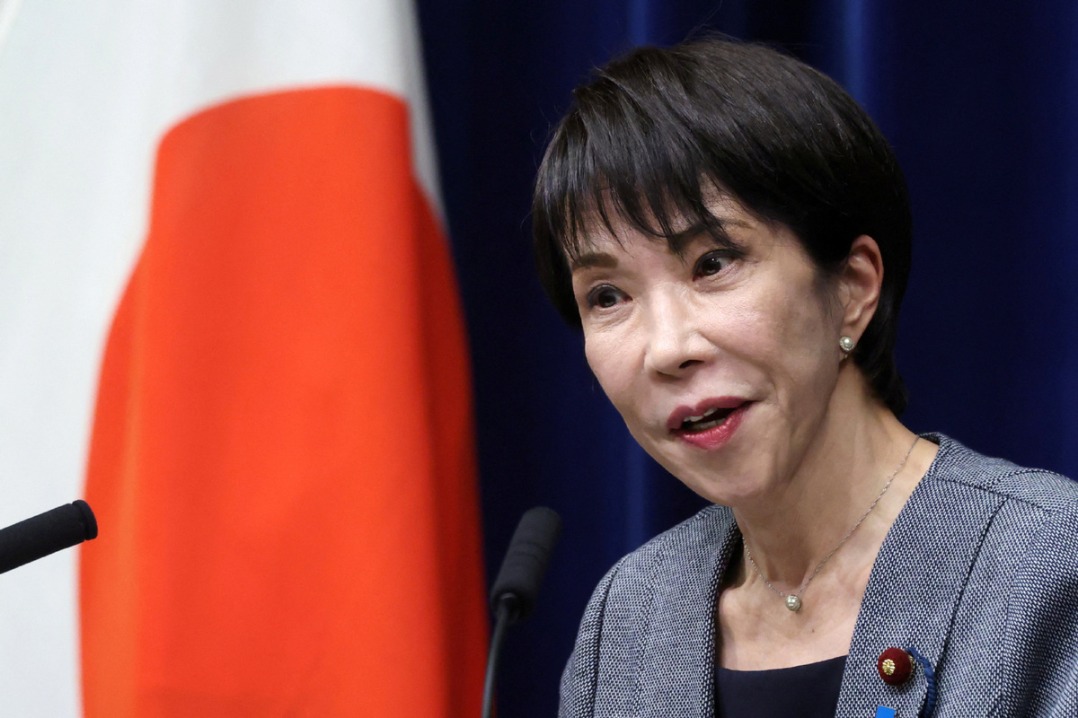
Southeast Asian security analysts are raising alarms over Japan’s rapid military expansion under Prime Minister Sanae Takaichi’s administration, warning that these developments could fundamentally alter regional stability. Since assuming office in October 2025, Takaichi has implemented a series of controversial security policy shifts that mark a significant departure from Japan’s postwar pacifist stance.
The government has accelerated its defense spending timeline, now targeting the NATO-standard 2% of GDP expenditure two years ahead of schedule. More provocatively, Tokyo is considering revisions to its Three Non-Nuclear Principles while exploring options for nuclear-powered submarines and eased arms export restrictions. These moves have generated both domestic and international concern about Japan’s strategic direction.
According to Peter T.C. Chang, research associate at the Malaysia-China Friendship Association, Takaichi represents a right-wing ideology seeking to restore Japan’s imperial-era strength through a movement reminiscent of America’s ‘MAGA’ campaign. This political trajectory threatens to disrupt the delicate balance that has underpinned ASEAN’s prolonged stability, which has historically relied on Japan’s economic rather than military influence.
Regional experts note that Japan’s military deployments have increasingly focused on Southeast Asia, with particular attention to offensive capabilities such as long-range missiles stationed on southwestern islands. James Gomez of Bangkok’s Asia Centre warns that this buildup will inevitably heighten geopolitical tensions across the region.
The fundamental concern among ASEAN members is whether Southeast Asia might transform from a driver of regional stability into an arena for major-power competition. University of Malaya professor Awang Azman Awang Pawi cautions that closer Japan-US security alignment could force ASEAN states to choose sides in great-power rivalries.
Domestic challenges including Japan’s rapidly aging population, shrinking workforce, and substantial social spending commitments raise questions about the sustainability of this military expansion. Nevertheless, the Takaichi administration continues to advance its security agenda at an unprecedented pace, creating new uncertainties for the Asia-Pacific region.