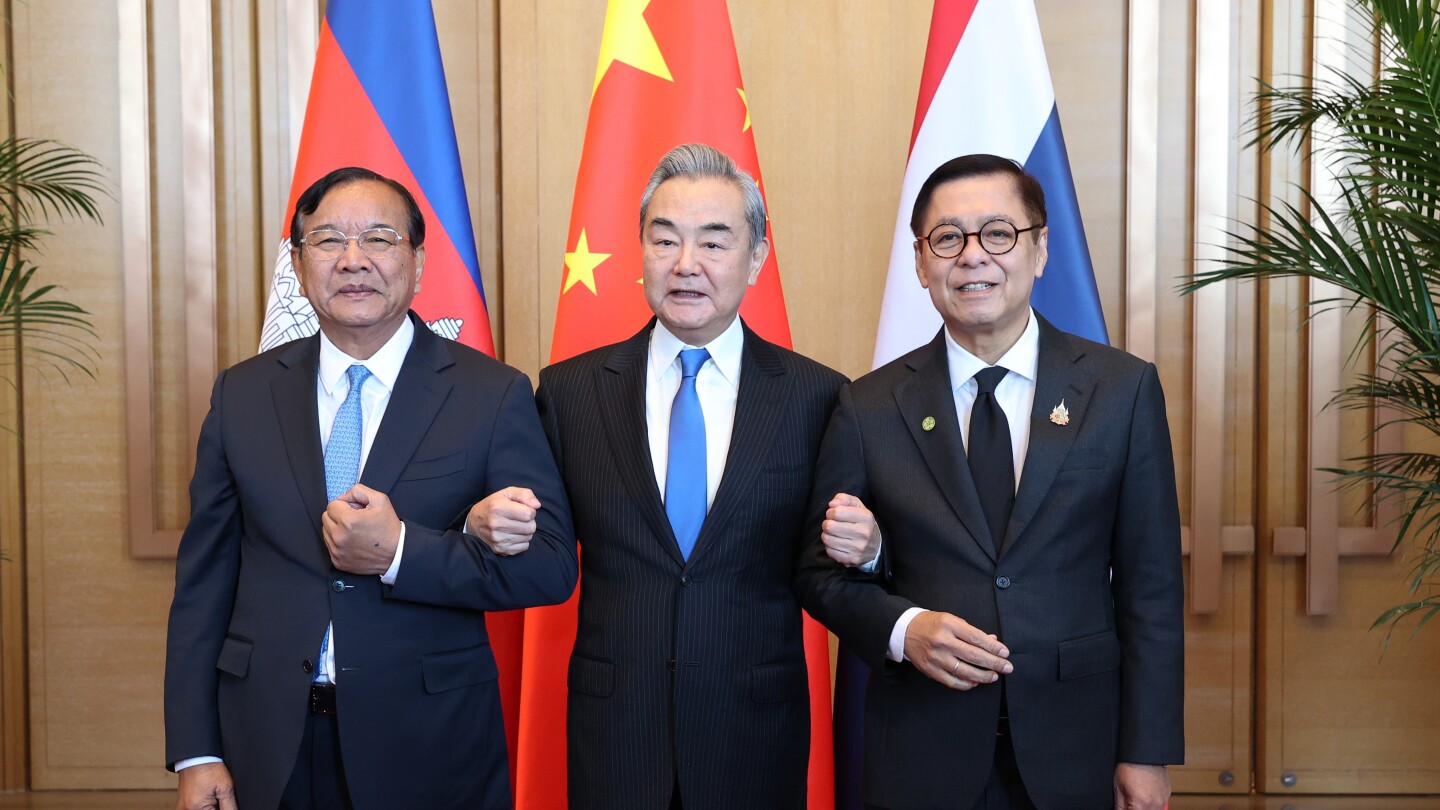
In a significant diplomatic development, Chinese Foreign Minister Wang Yi hosted his counterparts from Cambodia and Thailand for trilateral talks aimed at consolidating a fragile ceasefire between the Southeast Asian neighbors. The meeting, convened in China’s Yunnan province near the contested border region, represents Beijing’s latest effort to position itself as a regional peace broker.
The diplomatic gathering followed Saturday’s bilateral ceasefire agreement between Thailand and Cambodia, which concluded weeks of hostilities that resulted in over 100 casualties and the displacement of hundreds of thousands of civilians. Thai Foreign Minister Sihasak Phuangketkeow characterized the discussions as producing ‘progress in the right direction,’ emphasizing the priorities of maintaining the truce and rebuilding mutual trust.
Strategic significance emerged from the meeting’s location in Yunnan province—approximately 2,500 kilometers southwest of Beijing—demonstrating China’s geographical and diplomatic proximity to Southeast Asian affairs. Minister Wang articulated China’s stance, stating, ‘Allowing the flames of war to be reignited is absolutely not what the people of the two countries want and not what China, as your friend, wants to see.’
The parties reached consensus on implementing the ceasefire without reversal, restoring diplomatic channels, and gradually normalizing relations. China committed to providing immediate humanitarian assistance to displaced populations while the three nations agreed to enhance cooperation against transnational crimes, including telecommunications fraud and online scams.
The conflict dynamics reveal complex regional interplay. An initial July ceasefire, brokered by Malaysia under U.S. pressure, collapsed into renewed December hostilities accompanied by propaganda warfare. The current agreement includes provisions for Thailand to repatriate 18 captured Cambodian soldiers after 72 hours of sustained ceasefire and mutual commitments to landmine non-proliferation.
Cambodian Prime Minister Hun Manet reflected on the asymmetric nature of the conflict, acknowledging that while ‘we can still fight, as a small country we still have nothing to gain from prolonging the fighting.’ The diplomatic movement signals China’s growing influence in mediating regional disputes as it expands its global diplomatic footprint.