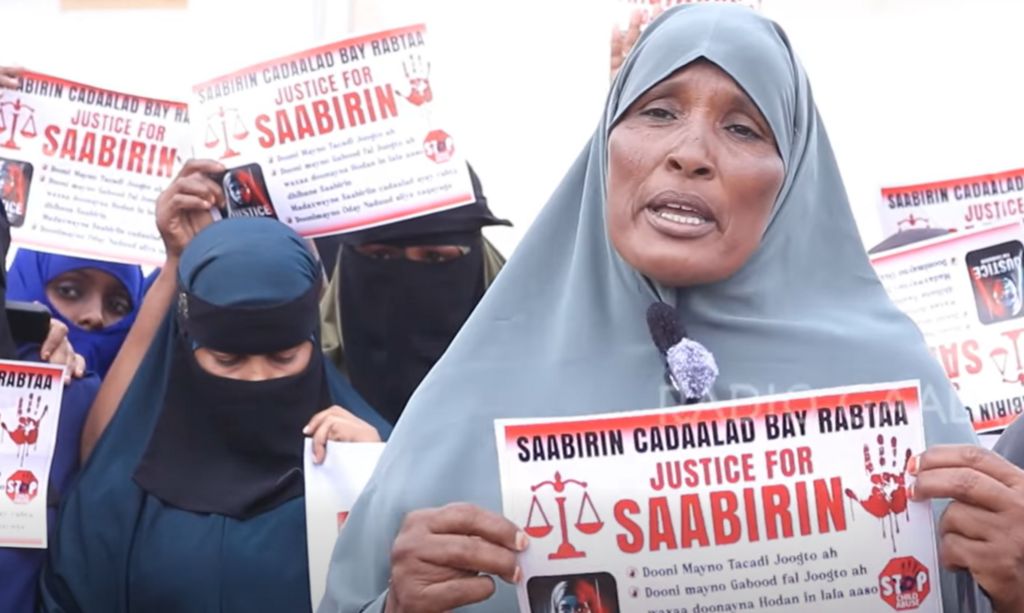
A landmark legal case in Somalia has drawn unprecedented attention to systemic failures in child protection, following the conviction of 34-year-old Hodan Mohamud Diiriye for the murder of 14-year-old orphan Saabirin Saylaan. The case, which has ignited nationwide protests and digital activism, represents one of the rare instances where Somalia’s judicial system has imposed the death penalty for child abuse.
The victim, orphaned in infancy and subsequently cared for by her late mother’s aunt, was transferred to Diiriye’s household in September as a domestic helper. Police investigations revealed that during her two-month residence, Saabirin endured systematic physical torture. Digital evidence recovered from Diiriye’s phone, including audio recordings where she stated ‘I’m enjoying your pain,’ documented the prolonged abuse. A post-mortem examination confirmed multiple injuries and deep stab wounds consistent with sustained violence.
The case has exposed critical gaps in Somalia’s child protection framework, particularly regarding children within extended family structures traditionally considered safe spaces. Public outrage culminated in mass demonstrations throughout Galkayo, where protesters clashed with police resulting in one fatality. Online campaigns under hashtags invoking Saabirin’s name have amplified calls for systemic reform.
Legal proceedings were broadcast live to ensure transparency, resulting in Diiriye’s murder conviction and death sentence pending appeal. Her husband received a one-year prison term and fine for negligence. The case has sparked complex debates about cultural traditions, particularly the role of clan elders in resolving cases through customary reconciliation rather than criminal prosecution.
This tragedy coincides with Somalia’s recent ratification of the African Charter on the Rights and Welfare of the Child, though its implementation remains constrained by religious and cultural considerations. Child rights organizations highlight that most abuse cases never reach authorities due to limited police capacity, elder mediation, and children’s unawareness of reporting mechanisms. While officials point to existing youth protection programs, activists demand concrete enforcement measures to prevent similar tragedies.