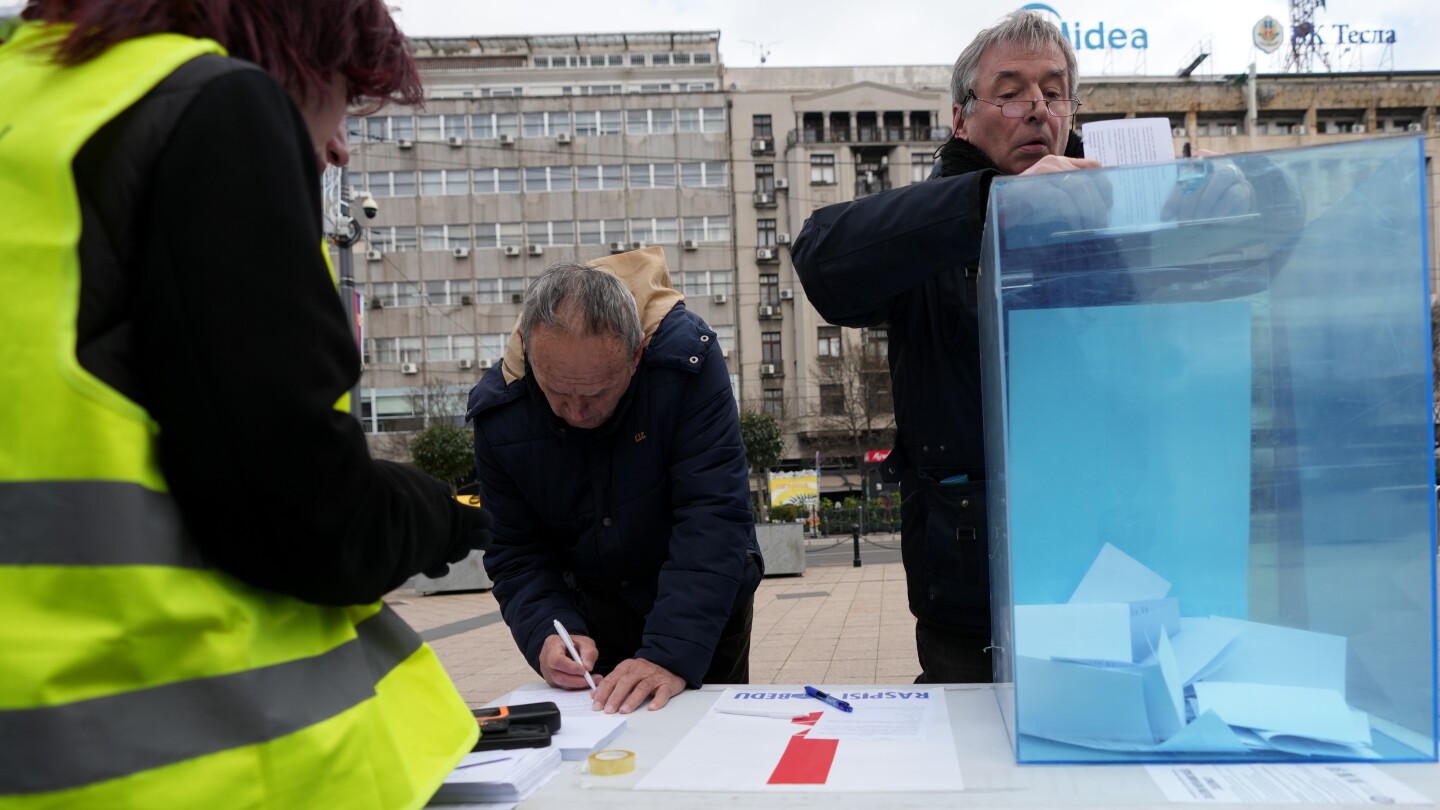
BELGRADE, Serbia — In a bold demonstration of political dissent, Serbian university students orchestrated a nationwide signature-gathering initiative on Sunday, demanding early parliamentary elections to challenge President Aleksandar Vucic’s administration. Defying frigid temperatures, protesters established approximately 500 collection points across cities, towns, and villages throughout the Balkan nation.
This mobilization represents the latest escalation in a sustained youth-led movement that has emerged as the most significant challenge to Vucic’s populist regime during his 13-year tenure. The protest movement initially gained momentum following the November 2024 train station catastrophe in Novi Sad, where 16 lives were lost due to a concrete canopy collapse. The tragedy has been widely attributed to systemic corruption and blatant disregard for construction safety protocols during station renovations, with no officials yet held accountable.
While the signature drive does not constitute a formal petition, organizers describe it as both a barometer of public support and a mechanism to intensify pressure on the government. Igor Dojnov, a student coordinator at a Belgrade collection point, emphasized the campaign’s purpose: “We have stands that serve to connect with the citizens.”
The political landscape has already shown signs of strain under protest pressure, culminating in the resignation of Serbia’s populist prime minister in January. Vucic subsequently initiated a crackdown on demonstrators that drew international condemnation. Although street protests have diminished recently, underlying discontent remains pervasive among the populace.
Belgrade resident Milca Cankovic Kadijevic expressed solidarity with the students, stating, “I support them because I have a desire to live decently — me, my children and my grandchildren.”
Vucic has dismissed calls for immediate early voting, suggesting potential elections might occur next year rather than waiting until the scheduled 2027 parliamentary and presidential votes. The president has accused protesters of attempting to orchestrate a Western-backed “color revolution” — a term referencing early 21st-century mass movements that toppled governments in post-Soviet states and other regions.
Despite his formal commitment to European Union integration, Vucic maintains strong ties with Russia and China while facing persistent allegations of eroding democratic institutions and tolerating corruption and organized crime networks.