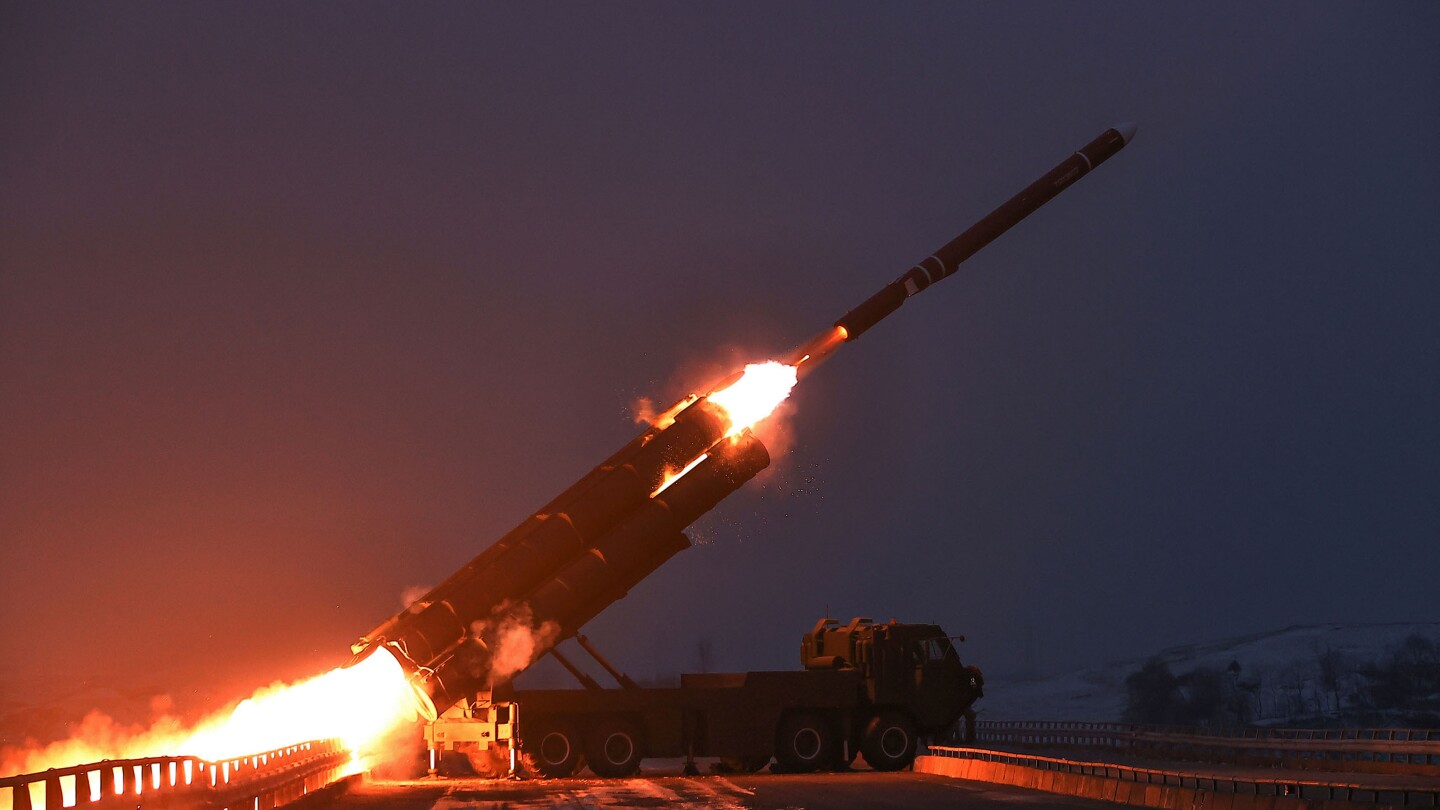
North Korea has confirmed the successful test-firing of long-range strategic cruise missiles into the western sea, characterizing the exercise as a critical assessment of its nuclear deterrence capabilities. The Sunday launches represent Pyongyang’s latest military demonstration ahead of its anticipated Workers’ Party congress scheduled for early next year—the first such gathering in five years.
Leader Kim Jong Un expressed considerable satisfaction with the missile tests, according to the state-run Korean Central News Agency. Kim emphasized that these operations constitute a legitimate exercise of self-defense rights amid perceived external security threats. The tests occurred shortly after North Korea showcased significant advancements in its inaugural nuclear-powered submarine project.
South Korea’s Joint Chiefs of Staff reported detecting multiple cruise missile launches originating from the North Korean capital region. Seoul maintains that its military remains prepared to counter any potential provocations through its strategic alliance with the United States.
While United Nations Security Council resolutions explicitly prohibit North Korea from testing ballistic missiles, cruise missile launches remain technically permissible. However, military analysts note these weapons present substantial regional security concerns due to their high maneuverability, low-altitude flight capabilities, and radar evasion characteristics. Experts suggest North Korea intends to deploy cruise missiles primarily against U.S. naval assets, including warships and aircraft carriers, in potential conflict scenarios.
Recent weeks have witnessed intensified weapons testing from Pyongyang, including new anti-air missile trials and the unveiling of a nearly complete nuclear-powered submarine hull. North Korea has indicated intentions to equip this submarine with nuclear armaments—a key component of Kim’s promised advanced weapons systems designed to counter perceived U.S.-led security threats.
This military expansion occurs alongside North Korea’s growing alignment with Russia, including providing military support for Moscow’s operations in Ukraine. Some analysts speculate this partnership may have facilitated technology transfers benefiting Pyongyang’s weapons programs.
Since the collapse of denuclearization talks with the Trump administration in 2019, North Korea has concentrated on enhancing its nuclear arsenal. However, Kim suggested in September potential willingness to resume negotiations if Washington abandons its “delusional obsession” with denuclearization—a stance experts believe reflects confidence that expanded nuclear capabilities would strengthen Pyongyang’s bargaining position in future diplomatic engagements.