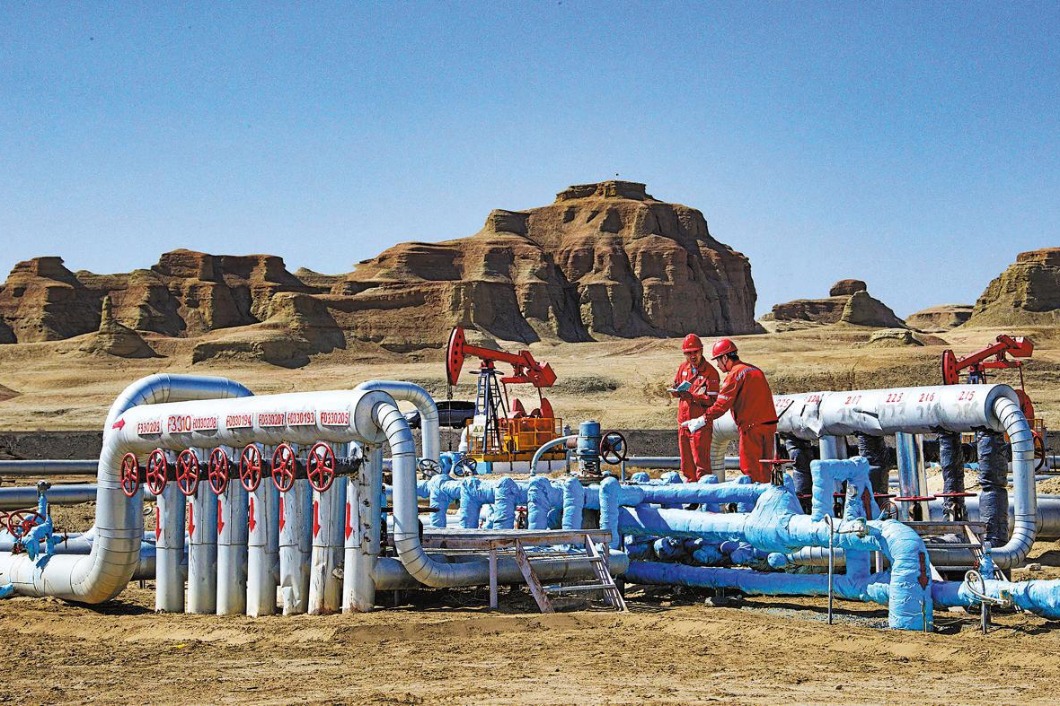
China’s northwestern Xinjiang Oilfield has reached a significant environmental milestone by successfully storing over one million tonnes of carbon dioxide annually through advanced carbon capture, utilization and storage (CCUS) technologies. This achievement, announced by China National Petroleum Corporation (CNPC) on December 28, 2025, represents a major advancement in China’s large-scale application of emission-reduction solutions.
Located in the Junggar Basin of Xinjiang Uygur Autonomous Region, this historic oil production facility has pioneered CO2-enhanced oil recovery (CO2 EOR) methods that capture industrial emissions and reinject them underground. This innovative approach not only reduces atmospheric carbon but also enhances oil extraction efficiency by creating concentrated oil banks, enabling sustained production through low-carbon methodologies.
According to Shi Daohan, Executive Director and Party Secretary of Xinjiang Oilfield, the environmental impact of this achievement is substantial. ‘One million tonnes of sequestered CO2 equates to the carbon absorption capacity of nearly nine million trees,’ Shi noted, highlighting the project’s significant contribution to emissions reduction.
The oilfield’s technological journey has been marked by rapid progress, with annual CO2 injection rates surging from 126,000 tonnes in 2022 to the current million-tonne capacity. Cumulative injections have now exceeded two million tonnes, demonstrating scalable success in CCUS implementation.
Ding Chao, head of the development division at Xinjiang Oilfield, emphasized the dual benefits of these technologies. ‘CCUS applications are delivering a win-win scenario by simultaneously reducing emissions while enhancing oil production, supporting both China’s carbon neutrality goals and national energy security.’
Assessment data reveals even greater potential, with estimated carbon storage capacity in suitable oil fields and saline aquifers reaching approximately two billion tonnes. This substantial capacity provides a foundation for developing a comprehensive CCUS industrial cluster in the region.
Looking ahead, Xinjiang Oilfield plans to expand its CCUS capacity to ten million tonnes during the 15th Five-Year Plan period (2026-2030). The development strategy includes integrated power projects combining renewable energy, coal-fired power with carbon capture, and CCUS technologies to accelerate the green transformation of China’s energy sector.
This breakthrough supports China’s broader climate commitments to peak carbon emissions by 2030 and achieve carbon neutrality by 2060, positioning low-carbon technologies as drivers of both environmental progress and economic value creation.