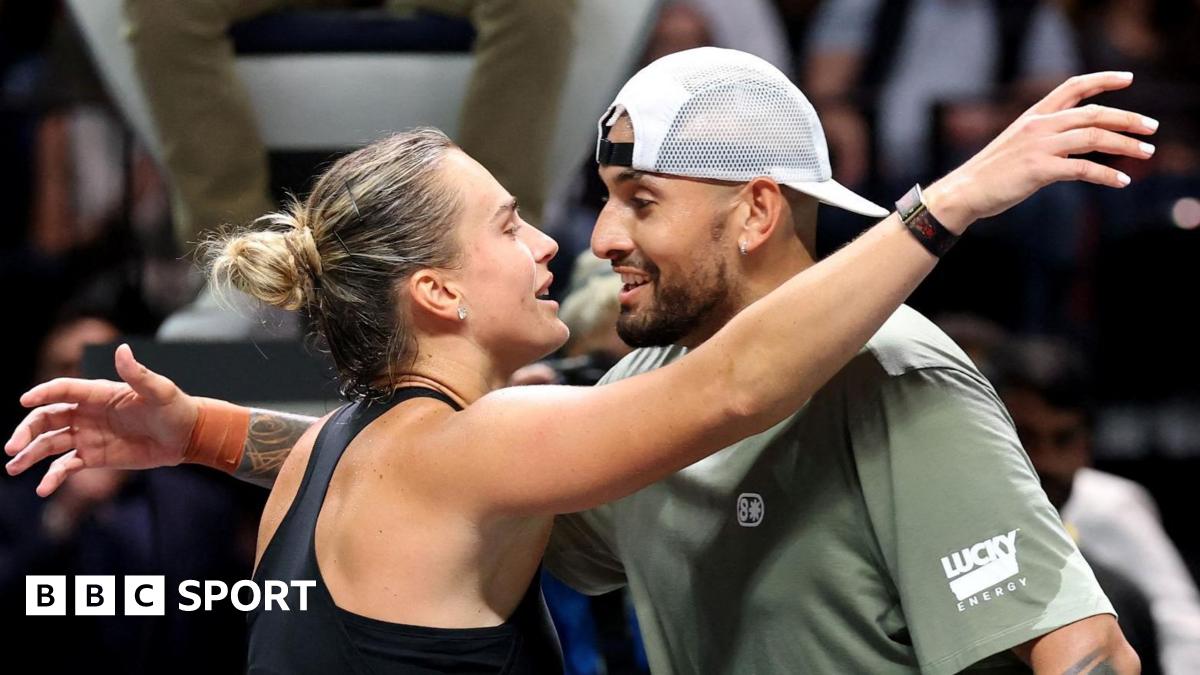
In a much-publicized exhibition match dubbed the modern ‘Battle of the Sexes,’ Australian tennis star Nick Kyrgios secured a straightforward victory over women’s world number one Aryna Sabalenka in Dubai on Sunday. The 6-3, 6-3 outcome failed to deliver the intensity promised by the pre-event buildup, leaving spectators and analysts questioning the contest’s ultimate purpose and value.
The unconventional pairing pitted Sabalenka, who recently concluded her second consecutive season as top-ranked women’s player with four titles including the US Open, against Kyrgios, currently ranked 671st following a career-threatening wrist injury. While Kyrgios viewed the exhibition as an opportunity to maintain relevance ahead of a potential 2026 ATP Tour comeback, critics questioned what Sabalenka stood to gain from facing a male opponent whose competitive form has significantly declined.
Organizers implemented several rule modifications intended to create a more level playing field. Sabalenka’s receiving court dimensions were reduced by 9%, theoretically limiting Kyrgios’s target area. Both players were restricted to a single serve per point—a rule that ultimately hampered Sabalenka more significantly as she struggled with first-serve consistency during crucial moments.
Despite these adjustments, the match proceeded at what observers described as a ‘pedestrian pace,’ lacking the competitive fire of serious tournament play. Former British number one Annabel Croft noted that while Sabalenka ‘didn’t embarrass herself,’ the exhibition failed to showcase her full capabilities as an elite athlete.
The event’s entertainment aspects included Sabalenka performing the Macarena during a mid-match timeout when the dance classic played through the arena speakers—a moment that underscored the exhibition’s lighthearted nature rather than its competitive legitimacy.
Both players defended the event afterward, with Sabalenka asserting it brought increased attention to tennis and Kyrgios calling it ‘a great stepping stone forward for the sport.’ However, the match drew criticism from tennis purists who noted it bore little resemblance to Billie Jean King’s seminal 1973 match against Bobby Riggs, which carried genuine social significance for gender equality.
The atmosphere at Dubai’s Coca-Cola Arena remained relatively flat throughout the contest, with attendance limited to lower tiers despite a sell-out crowd. As Kyrgios closed in on victory, television cameras captured a young child sleeping in their mother’s arms—an image that perhaps best encapsulated the event’s failure to deliver compelling entertainment.