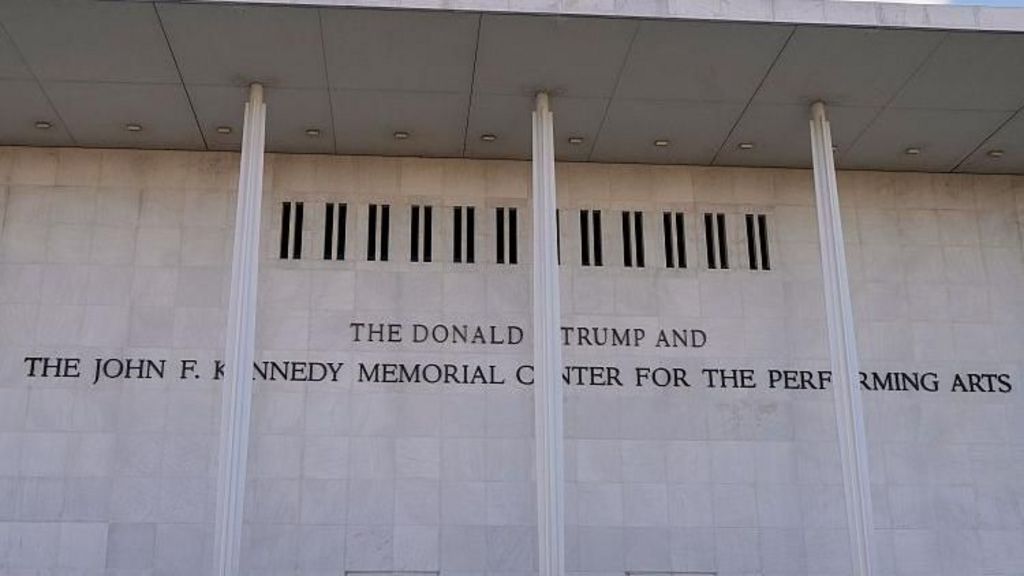
Washington D.C.’s prestigious Kennedy Center has become the epicenter of a cultural and political storm following its controversial renaming to honor former President Donald Trump. The institution’s leadership, now operating as The Donald J Trump and John F Kennedy Memorial Center for the Performing Arts, has demanded $1 million in damages from jazz musician Chuck Redd after he canceled his annual Christmas Eve performance in protest of the name change.
Richard Grenell, president of the newly renamed center, characterized Redd’s cancellation as a ‘political stunt’ that has caused significant financial harm to the nonprofit arts organization. In a sharply worded letter, Grenell cited dismal ticket sales and lack of donor support exacerbated by the last-minute cancellation as justification for the substantial monetary claim.
The controversy stems from a unanimous vote by the center’s board—which Trump had reconstituted with allies after dismissing previous members shortly after taking office—to add the former president’s name to the institution. The decision was reportedly made in recognition of Trump’s renovation efforts, though the move has drawn criticism from Democrats, artists, and members of the Kennedy family.
Visual evidence of the renaming emerged quickly as crews etched Trump’s name onto the building’s façade, while digital properties including the center’s website and social media accounts were simultaneously updated. The rapid implementation preceded formal congressional approval, prompting Ohio Congresswoman Joyce Beatty to file a lawsuit arguing that the 1964 law that established the Kennedy Center as a living memorial to the assassinated president requires legislative action to alter its name.
The legal challenge reveals additional controversy, as Beatty claims she was muted when attempting to voice opposition during the board meeting that approved the name change. This development highlights the ongoing tension between the institution’s artistic mission and its increasingly politicized governance structure, raising fundamental questions about the intersection of culture, politics, and public memory in American society.