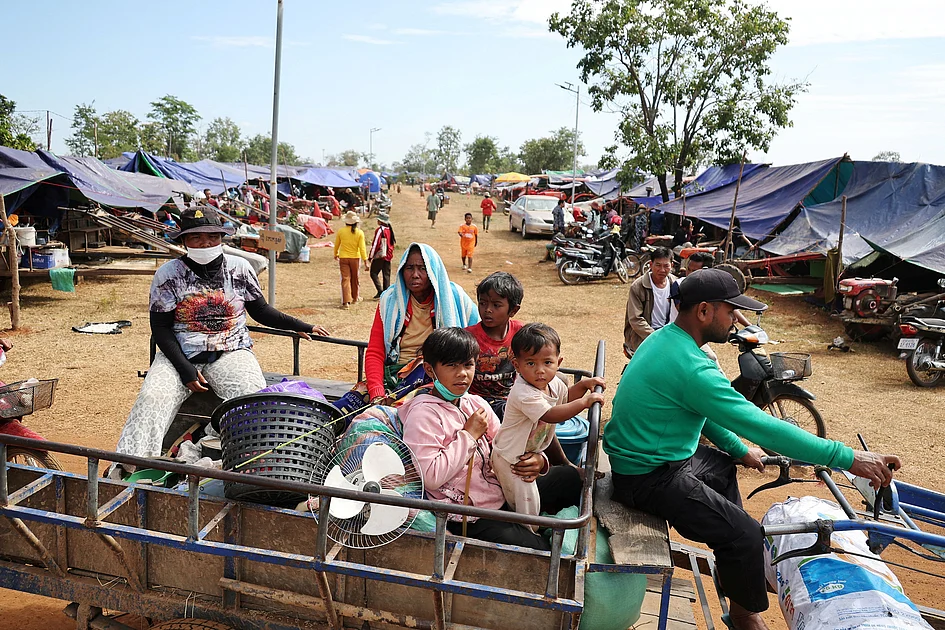
Thailand and Cambodia have reached a significant diplomatic breakthrough by agreeing to an immediate cessation of hostilities following three weeks of intense border conflict that resulted in substantial casualties and displacement. The neighboring Southeast Asian nations formalized their commitment through a joint statement signed by defense ministers at a border checkpoint on the Thai side on December 27, 2025.
The agreement, which took effect at 12:00 local time on the signing date, mandates a complete weapons freeze encompassing artillery, tanks, drones, and jet attacks against both military targets and civilian infrastructure. Official records indicate the recent hostilities claimed at least 47 lives and forced over one million residents from their homes across multiple border provinces.
Beyond the ceasefire, the comprehensive agreement includes provisions for freezing all troop movements, facilitating the safe return of displaced civilians, initiating cooperative demining operations, and enhancing cybersecurity collaboration. In a confidence-building measure, Thailand committed to repatriating 18 captured Cambodian soldiers within 72 hours of the agreement’s signing.
Thai Defence Minister Nattaphon Narkphanit characterized the initial three-day period as an “observation phase to verify the ceasefire’s authenticity,” while simultaneously describing the truce as “a portal to peaceful conflict resolution.” Despite official assurances, displaced civilians expressed cautious optimism, with Cambodian evacuee Oeum Raksmey noting, “While delighted about potential homecomings, I remain apprehensive and distrustful of Thai intentions.”
The diplomatic resolution emerged following intensive border negotiations convened after emergency consultations among foreign ministers of the Association of Southeast Asian Nations (ASEAN). Both nations, as ASEAN members, responded to international pressure from global powers including the United States and China. Further diplomatic engagement is scheduled for late January, when Thai and Cambodian foreign ministers will conduct trilateral talks with China’s top diplomat Wang Yi in Beijing.
This conflict represents the most recent escalation in a longstanding territorial dispute originating from colonial-era demarcation inconsistencies along the 800-kilometer shared border. While the current agreement halts active combat, the fundamental issue of border delineation, particularly regarding ancient temple claims, remains unresolved and requires continued diplomatic attention.