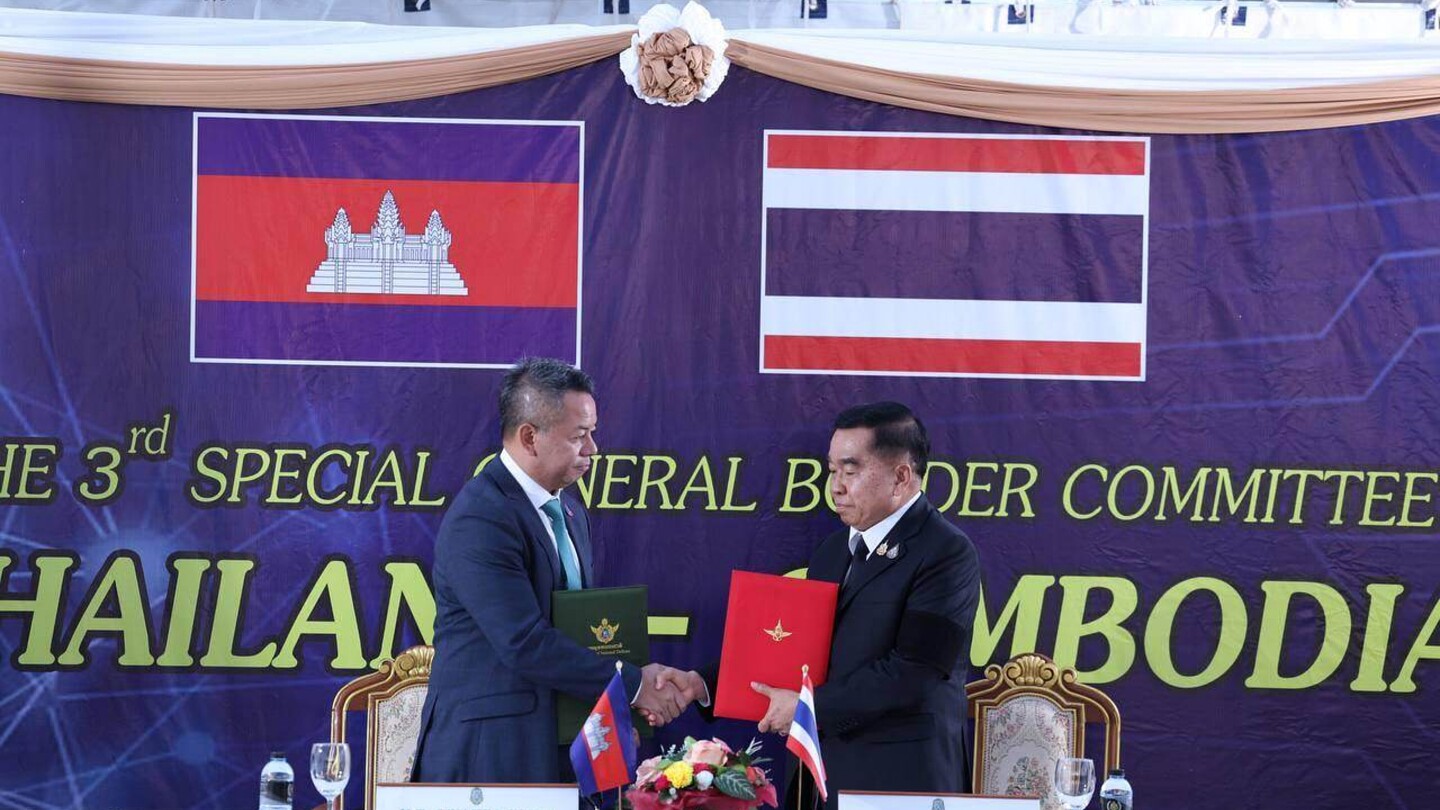
BANGKOK — In a significant diplomatic breakthrough, Thailand and Cambodia formalized a ceasefire accord on Saturday, effectively terminating weeks of intense military confrontation along their disputed border region. The pact, which became operational at noon local time, establishes stringent measures to prevent further escalation.
The agreement explicitly prohibits all military movements and bans any incursions into either nation’s airspace for combat purposes. This provision holds particular significance given Thailand’s acknowledged use of airstrikes against Cambodian positions, with the most recent offensive occurring just hours before the ceasefire implementation, as confirmed by Cambodia’s defense ministry.
A pivotal component of the arrangement mandates Thailand’s repatriation of 18 Cambodian soldiers detained since July’s initial hostilities, contingent upon the ceasefire remaining intact for 72 consecutive hours. The prisoners’ release had emerged as Cambodia’s primary negotiating objective throughout the discussions.
Both nations have reaffirmed their commitment to previous de-escalation frameworks, including the July ceasefire mediated by Malaysia under substantial international pressure. That initial agreement gained momentum after U.S. President Donald Trump threatened trade sanctions against both countries unless they pursued peaceful resolution. The terms were further elaborated during an October regional summit in Malaysia attended by Trump.
Despite these earlier diplomatic efforts, bilateral relations deteriorated through aggressive propaganda campaigns and persistent low-level border incidents throughout autumn. This friction culminated in early December with a severe outbreak of large-scale combat operations, necessitating the current reinforced ceasefire agreement.