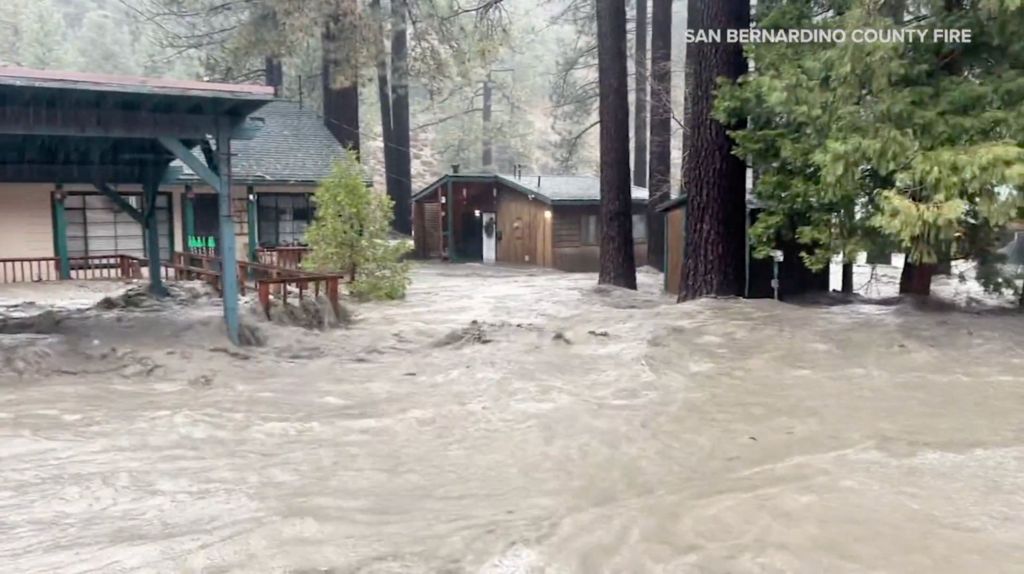
A series of powerful atmospheric rivers has unleashed catastrophic flooding across California, resulting in at least three fatalities and widespread destruction during the busy holiday travel period. The relentless storms, which began over the weekend and are forecasted to persist through Friday, have transformed streets into raging waterways and triggered dangerous mudslides in vulnerable areas.
According to local authorities, the extreme weather has claimed lives through multiple tragic incidents. A 64-year-old San Diego man perished when a tree collapsed on Wednesday morning, while a 74-year-old individual drowned over the weekend during a vehicle rescue attempt in Redding. Earlier, a woman in her seventies was swept to her death by massive waves at MacKerricher State Park.
The meteorological onslaught has delivered unprecedented rainfall measurements, with Los Angeles County recording up to 11 inches (27 centimeters) of precipitation. The National Weather Service’s Prediction Center has issued grave warnings about continuing flash flood risks and potential river overflows throughout the region.
Governor Gavin Newsom declared a state of emergency Wednesday for multiple Southern California counties as emergency crews conducted numerous water rescues for motorists trapped by rapidly rising floodwaters. The severe conditions have forced road closures, prompted evacuation orders for residents in San Bernardino County, and left approximately 100,000 households without electricity as of Thursday evening.
Particular concern has focused on burn scar regions where previous wildfires have reduced the land’s ability to absorb water. In Altadena, near Los Angeles, CBS News reported significant mudslides resulting from this vulnerability.
San Francisco Bay Area experienced hurricane-force winds exceeding 100 mph (161 km/h) near San Jose, adding to the system’s destructive power. Los Angeles Mayor Karen Bass joined state officials in declaring a local emergency while urging extreme caution for residents compelled to travel during the hazardous conditions.
The converging atmospheric rivers have transported massive tropical moisture plumes to the West Coast during one of the year’s heaviest travel weeks, creating what officials describe as a particularly dangerous and complex weather scenario that continues to evolve.