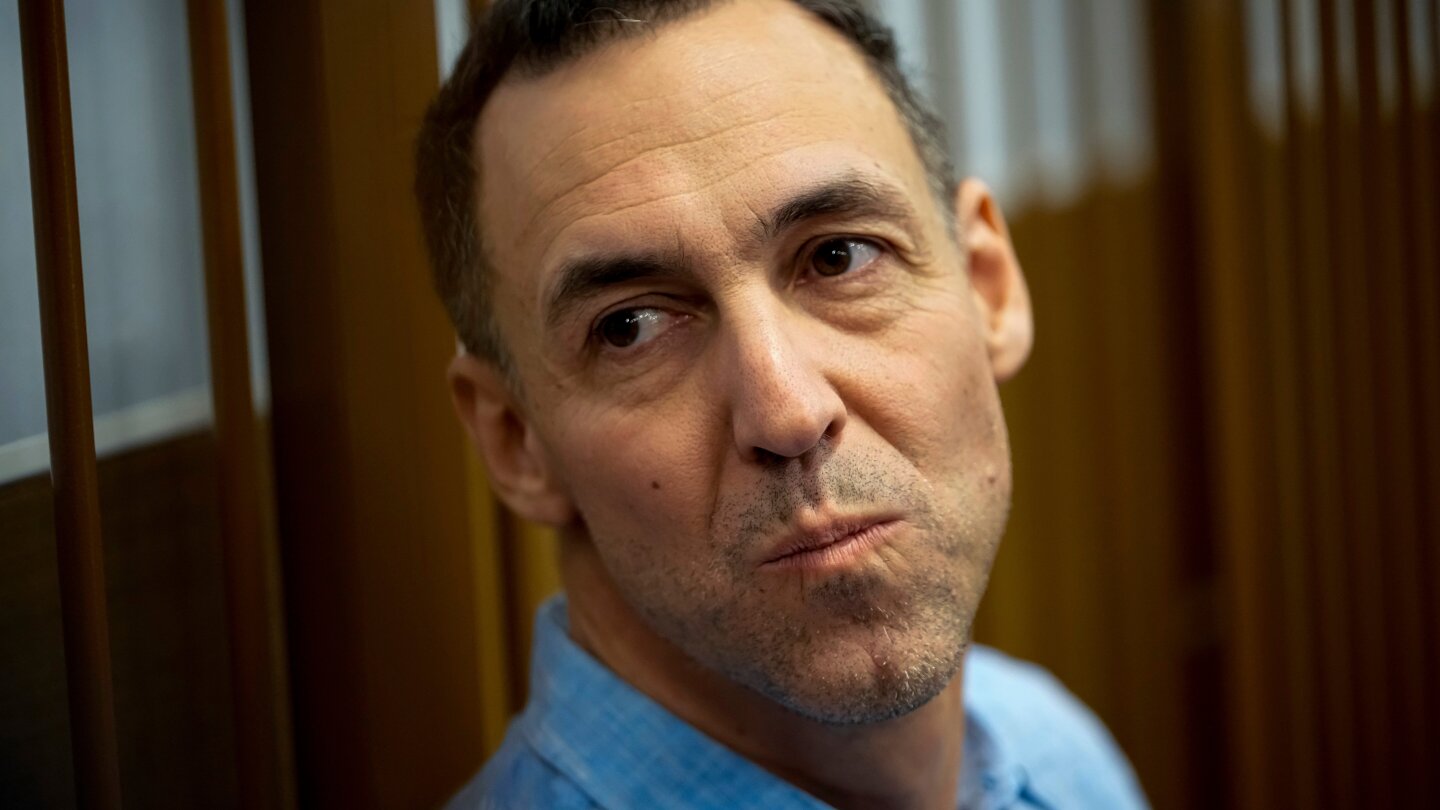
Diplomatic channels between Moscow and Paris have activated regarding the controversial case of Laurent Vinatier, a French political scholar imprisoned in Russia who now confronts additional espionage allegations. Kremlin spokesperson Dmitry Peskov confirmed ongoing communications with French authorities, stating Russia had extended “an offer to the French” regarding Vinatier’s situation, with the response now awaiting France’s decision. Peskov declined to elaborate further due to the sensitive nature of the discussions.
The French Foreign Ministry maintained a position of no comment on Thursday, reflecting the delicate diplomatic standoff. The developments follow President Vladimir Putin’s recent encounter with journalist Jérôme Garro during his annual news conference, where questions were raised about potential presidential pardons or prisoner exchanges for Vinatier. Putin initially claimed unfamiliarity with the case but committed to examination.
Vinatier’s legal troubles began with his June 2024 arrest in Moscow for allegedly failing to register as a “foreign agent” while gathering intelligence on Russia’s military operations—activities prosecutors claimed threatened national security. Despite defense requests for leniency, October 2024 saw Vinatier receive a three-year prison term, a sentence France’s Foreign Ministry decried as “extremely severe” while demanding his immediate release.
The case emerges against heightened Franco-Russian tensions following French President Emmanuel Macron’s statements concerning potential troop deployments to Ukraine. This context has intensified scrutiny of Russia’s increasingly frequent detentions on espionage-related charges since the February 2022 invasion of Ukraine.
France has additionally called for the abolition of Russia’s foreign agent legislation, which subjects designated individuals to enhanced government scrutiny and restrictions. The French Foreign Ministry contends these laws systematically violate fundamental freedoms including association, opinion, and expression.
Vinatier, an advisor for the Switzerland-based Centre for Humanitarian Dialogue, has received organizational support throughout his ordeal. His defense highlighted family responsibilities, including two children and elderly parents requiring care.
The August 2025 revelation of new espionage charges—carrying potential 10-20 year sentences—follows Russia’s pattern of arresting foreigners before eventual prisoner exchanges. The August 2024 multinational swap that freed journalists Evan Gershkovich, Alsu Kurmasheva, American Paul Whelan, and Russian dissidents marked the largest Cold War-era style exchange, suggesting potential resolution pathways for Vinatier’s case.