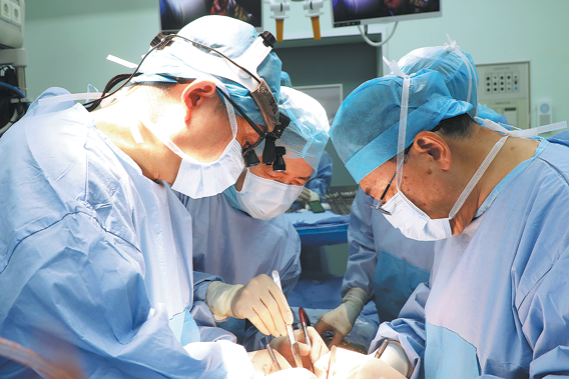
In a groundbreaking medical achievement, a five-year-old Chinese girl has been given a second chance at life following an unprecedented series of cardiac procedures. Xiaoni, weighing merely 12.2 kilograms and diagnosed with restrictive cardiomyopathy—an exceptionally rare heart condition representing just 2% of cardiomyopathy cases—has successfully recovered after 110 days of intensive treatment involving two high-risk surgeries.
The medical breakthrough occurred when a collaborative team led by Professor Liu Xiaocheng from TEDA International Cardiovascular Hospital in Tianjin and Professor Mo Xuming from Nanjing Children’s Hospital determined that conventional treatment options were exhausted. Facing end-stage heart failure without available donor hearts, the medical professionals pioneered a dual artificial heart implantation strategy—a procedure never before attempted on a patient of such low body weight.
Xiaoni’s condition presented extraordinary challenges: her cardiac chambers were significantly undersized even for her age, and she suffered from simultaneous biventricular heart failure requiring biventricular assist device (BiVAD) support. Within a remarkable 13-day timeframe, engineers from Rocor Medical Technology Co collaborated with the medical team to modify their second-generation ‘Rocket Heart’ technology, creating fully magnetically levitated ventricular assist devices specifically tailored to Xiaoni’s anatomical requirements. Each pump weighed a mere 69 grams, with the sewing ring’s outer diameter reduced from 29 millimeters to 22.4 millimeters and its weight dramatically decreased from 6.4 grams to just 1.17 grams.
Professor Liu highlighted the significance of this achievement, noting that pediatric heart failure devices in developed countries typically rely on bulky extracorporeal pneumatic systems that severely restrict mobility and carry elevated risks of infection and thrombosis. The successful implantation of these miniaturized devices marks China’s entry into the forefront of pediatric artificial heart research and development.
Following forty days of BiVAD support, Xiaoni received a matching donor heart, enabling a successful transplant that completed her extraordinary medical journey. The achievement has attracted international attention, with several top cardiac centers in the United States, Canada, and Germany expressing interest in clinical collaboration for the innovative technology.
This medical milestone not only saved a young life but has potentially created new therapeutic avenues for children worldwide suffering from end-stage heart failure, demonstrating how targeted innovation can overcome seemingly insurmountable medical challenges.