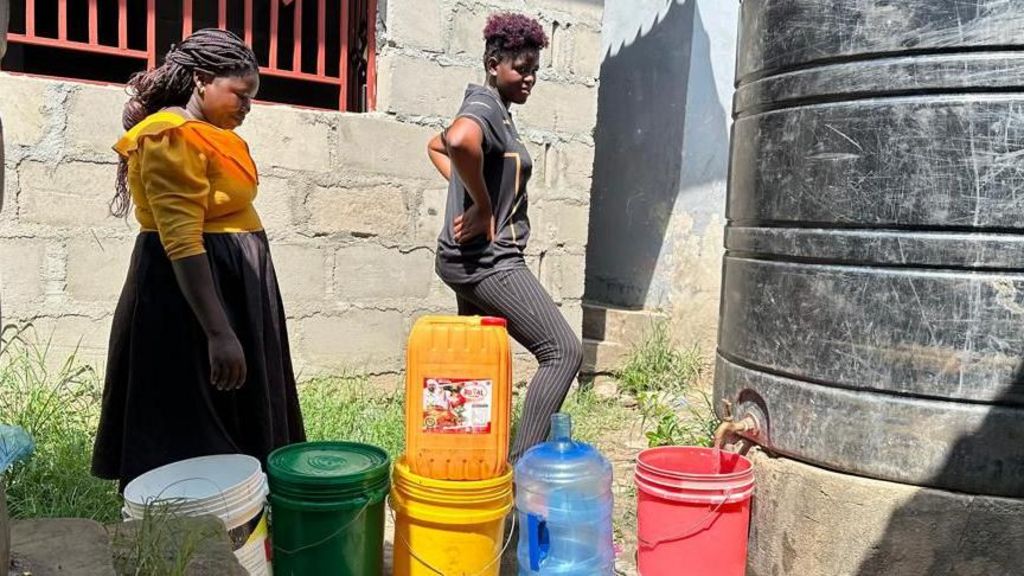
Dar es Salaam, Tanzania’s bustling economic center with over six million residents, is grappling with an unprecedented water shortage that has cast a shadow over Christmas festivities. The city’s water distribution system has collapsed to the point where households receive water only once weekly, with some enduring weeks-long waits between supplies.
The crisis stems from a prolonged drought following the May rainy season conclusion, drastically reducing water levels in the Ruvu River—which provides approximately 70% of the city’s drinking water. Compounding the problem are leaking distribution pipes and skyrocketing demand in one of Africa’s fastest-growing urban centers, whose population has more than doubled in two decades.
Residents have developed coping mechanisms that include stacking plastic containers outside homes ready for deployment when taps briefly flow, typically during late nighttime hours. Many depend on private vendors who extract water from boreholes and tanks, though prices have surged from $4 to $10 per 1,000 liters—creating severe financial strain for low-income families.
Cedric Ndosi from Madale district expresses his holiday concerns: ‘Christmas is here without tap water. We must purchase water for cooking from shops and from trucks for bathing, creating unexpected expenses where we previously allocated funds for celebrations.’
The crisis disproportionately affects women and small businesses. Food vendors, salon operators, and car wash services have reduced operating hours or increased prices. Furaha Awadhi, a mother of two in Tegeta, confirms the price hikes have fundamentally altered household economics.
Government officials acknowledge the severity while proposing long-term solutions. Water Minister Juma Aweso revealed plans for dam construction to aggregate freshwater from multiple sources and increased borehole drilling investments to climate-proof the city’s water supply.
The Dar es Salaam Water and Sanitation Authority has issued apologies and conservation appeals, though critics demand improved communication, transparent rationing schedules, and accelerated infrastructure projects. As temperatures hover around 33°C (91°F), some residents like Joyce Fredrick are temporarily relocating to cooler regions with better water access, clinging to hope that next year will bring improvement to Tanzania’s parched economic capital.