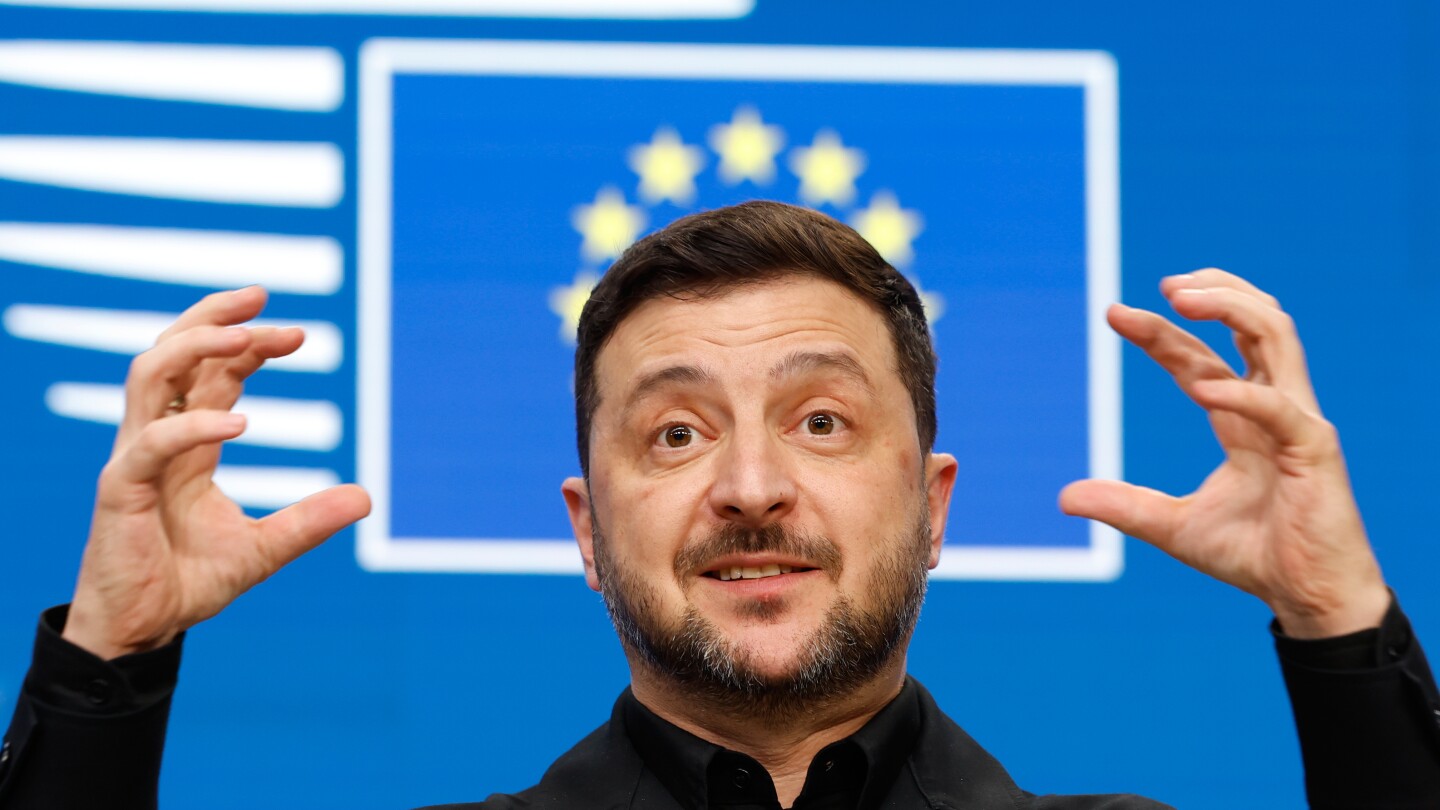
KYIV, Ukraine — Ukrainian President Volodymyr Zelenskyy has announced that the United States and Ukraine have achieved substantial alignment on a comprehensive 20-point peace framework designed to conclude the nearly four-year conflict, though critical disagreements persist regarding territorial control in eastern Ukraine and management of the Zaporizhzhia Nuclear Power Plant.
The proposed plan, developed during intensive negotiations in Florida, has been presented to Russian officials with an anticipated response from Moscow expected Wednesday. While Zelenskyy characterized most positions as significantly reconciled, he identified two particularly contentious elements: the status of the Donbas region (Point 14) and the operational control of the Zaporizhzhia facility (Point 12).
The most challenging negotiation point concerns the disputed territories of Donetsk and Luhansk, collectively known as Donbas. Russia maintains maximalist demands for Ukraine to relinquish remaining unoccupied portions of these regions, while Ukraine firmly rejects territorial concessions. As a potential compromise, the United States has proposed establishing free economic zones in these areas. Ukraine insists any such arrangement must be ratified by national referendum, requiring a 60-day ceasefire to facilitate the democratic process.
President Zelenskyy emphasized that Ukraine demands complete demilitarization of the region with international forces stationed to ensure stability. “The Americans are attempting to find a solution that doesn’t constitute our withdrawal—which we oppose—through formats like demilitarized zones or free economic zones that might accommodate both perspectives,” he explained.
Regarding the Zaporizhzhia Nuclear Power Plant, Europe’s largest nuclear facility currently under Russian occupation, the U.S. proposes a tripartite consortium with equal stakes for Ukraine, Russia, and the United States, with American leadership in management. Ukraine has counter-proposed a bilateral venture with the U.S., wherein Americans would independently determine how to allocate their 50% share, potentially to Russia. Zelenskyy questioned the practicality of joint commercial operations with Russia given current circumstances.
The draft agreement includes robust security guarantees for Ukraine mirroring NATO’s Article 5, obligating partners to respond to renewed Russian aggression. A separate bilateral document with the U.S. will outline detailed security conditions and establish monitoring mechanisms using satellite technology and early warning systems.
Additional elements include maintaining Ukraine’s military at 800,000 personnel during peacetime, establishing a specific timeline for EU accession, accelerating free trade agreements with the U.S., and creating an $800 billion reconstruction fund through combined equity, grants, loans, and private sector contributions. The proposal also requires Ukraine to conduct post-agreement elections and mandates the immediate release of all prisoners detained since 2014.