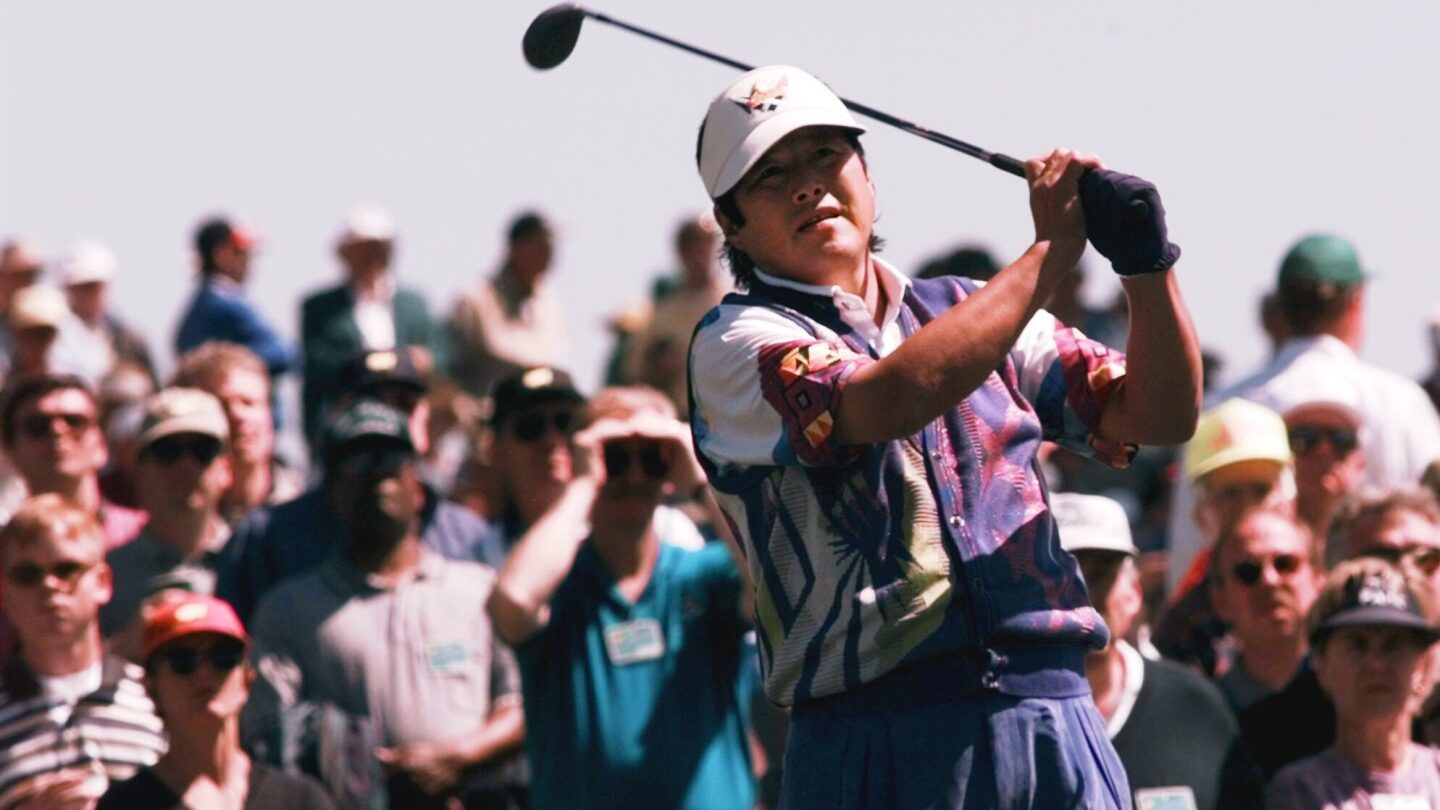
The golf world mourns the passing of Japanese icon Masashi “Jumbo” Ozaki, who died Wednesday at age 78 following a prolonged struggle with colon cancer. The Japan Golf Tour confirmed the demise of the nation’s most accomplished golfer, whose extraordinary career spanned nearly three decades and redefined Japanese golf excellence.
Ozaki’s remarkable record of 113 worldwide victories remains unmatched by any Japanese player in history. His dominance on the Japan Golf Tour was particularly astounding, with 94 tournament wins over 29 competitive years. His final victory came at the 2002 ANA Open when he was 55 years old, demonstrating his exceptional longevity in the sport.
In 1996, Ozaki achieved a career-high world ranking of No. 5 at age 49, a testament to his sustained excellence. While his success came primarily within Japan—with his sole international victory being the New Zealand PGA Championship—his impact transcended borders. This legacy was formally recognized in 2011 when he was inducted into the World Golf Hall of Fame.
The Japan Golf Tour memorialized Ozaki as “an indispensable, one-of-a-kind figure in discussing men’s golf, both now and in the future.” His influence inspired subsequent generations of Japanese golfers, including Isao Aoki (the first Japanese Hall of Famer) and Hideki Matsuyama (Japan’s first major champion at the 2021 Masters).
Ozaki’s major championship record included 49 appearances, with his finest performance occurring at the 1989 U.S. Open at Oak Hill where he finished just three strokes behind winner Curtis Strange. He competed in his final Masters Tournament in 2000 at age 53, tying for 28th place.
Beyond his tournament victories, Ozaki’s statistical achievements were staggering: five Japan Open titles, six Japan PGA Championships, and a record 12 money list titles on the Japan Golf Tour—including five consecutive from 1994-1998. He captured his final money title in 2002 at age 55.
Ozaki was celebrated not only for his powerful hitting but also for his distinctive style, often wearing silk shirts and baggy pants. His multifaceted talents extended beyond golf—he was a accomplished musician with three songs that reached Japan’s pop charts. Interestingly, his first professional pursuit was baseball, where he spent three years as a professional pitcher before transitioning to golf.
This baseball background influenced his teaching approach, as noted by protégé Ryo Ishikawa: “Jumbo used to be a baseball player, so he always tried to teach me the link from pitching or hitting to golf. Jumbo wanted me to hit the ball far.”
Ozaki traveled with an extensive entourage during international tournaments, often renting houses and bringing sushi chefs to maintain comfort for his team abroad. He came from a golfing family, with two younger brothers—Naomichi (Joe) and Tateo (Jet)—who also competed professionally.
His international team competition experience included the 1996 Presidents Cup, where he partnered with Vijay Singh to defeat the American duo of Fred Couples and Davis Love III. Though he qualified again in 1998, he declined the trip to Australia, with his brother Joe participating instead.
Upon his Hall of Fame induction, Ozaki expressed only one regret: not competing more frequently outside Japan. However, he noted: “I dedicated my life to Japanese golf and am extremely grateful the voters thought I was worthy of this honor.” He received 50% of the vote on the International ballot, cementing his status as Japan’s Arnold Palmer—a charismatic pioneer who transformed golf’s popularity in his nation.