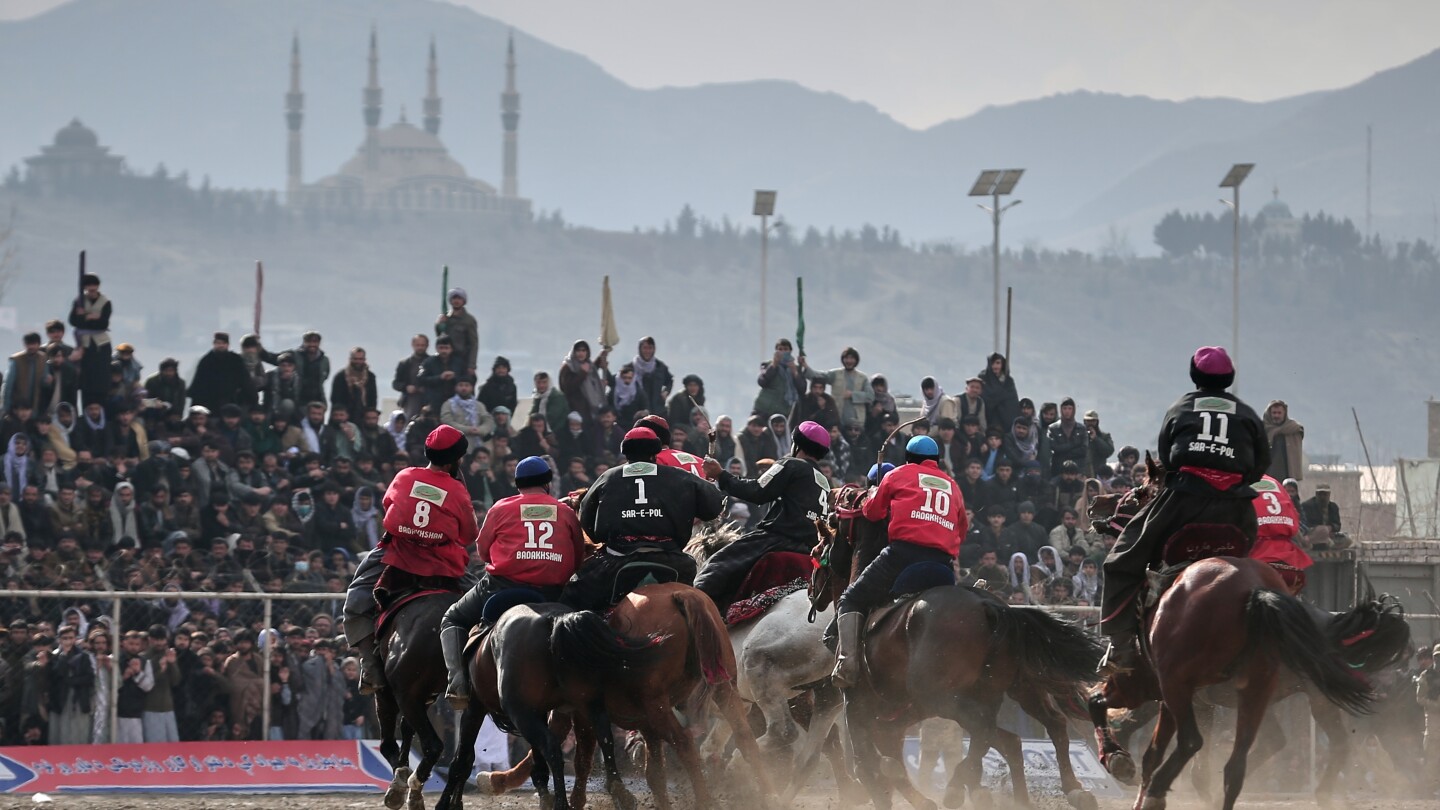
KABUL, Afghanistan — Amid clouds of dust stirred by thundering hooves, Afghanistan’s ancient equestrian tradition of buzkashi reached its dramatic climax in a national championship final. The northern province of Sar-e-Pul emerged victorious with a decisive 7-0 triumph over Badakhshan province in a match that showcased both athletic prowess and cultural preservation.
The brutal yet captivating sport, once banned during the Taliban’s previous regime, now operates with official sanction despite maintaining its characteristically violent scrums. Modern adaptations include replacing the traditional goat carcass with an artificial equivalent—crafted from leather and rope, then stuffed with straw and weights to mimic the original’s heft and dimensions.
Twelve riders per team demonstrated extraordinary equestrian skill, leaning perilously from their saddles to seize the simulated carcass and break away toward scoring zones. The tournament’s organization reflects evolving support structures, with corporate sponsorship from a gasoline company providing funding for substantial prizes including vehicles for the top four teams alongside traditional cups and medals.
Attendance revealed both the sport’s popularity and societal constraints: thousands of male spectators packed the Kabul arena, with some scaling trees and electricity pylons for better views. Notably absent were women, excluded under current Taliban restrictions that formalize previously informal social conventions regarding female attendance at such events.
The international dimension expanded this year with eight professional players from Tajikistan and Kyrgyzstan participating, according to Atal Mashwani, spokesman for Afghanistan’s General Directorate of Physical Education and Sports. The 11-day national league tournament, now in its eleventh edition, represents both cultural continuity and changing political realities in contemporary Afghanistan.