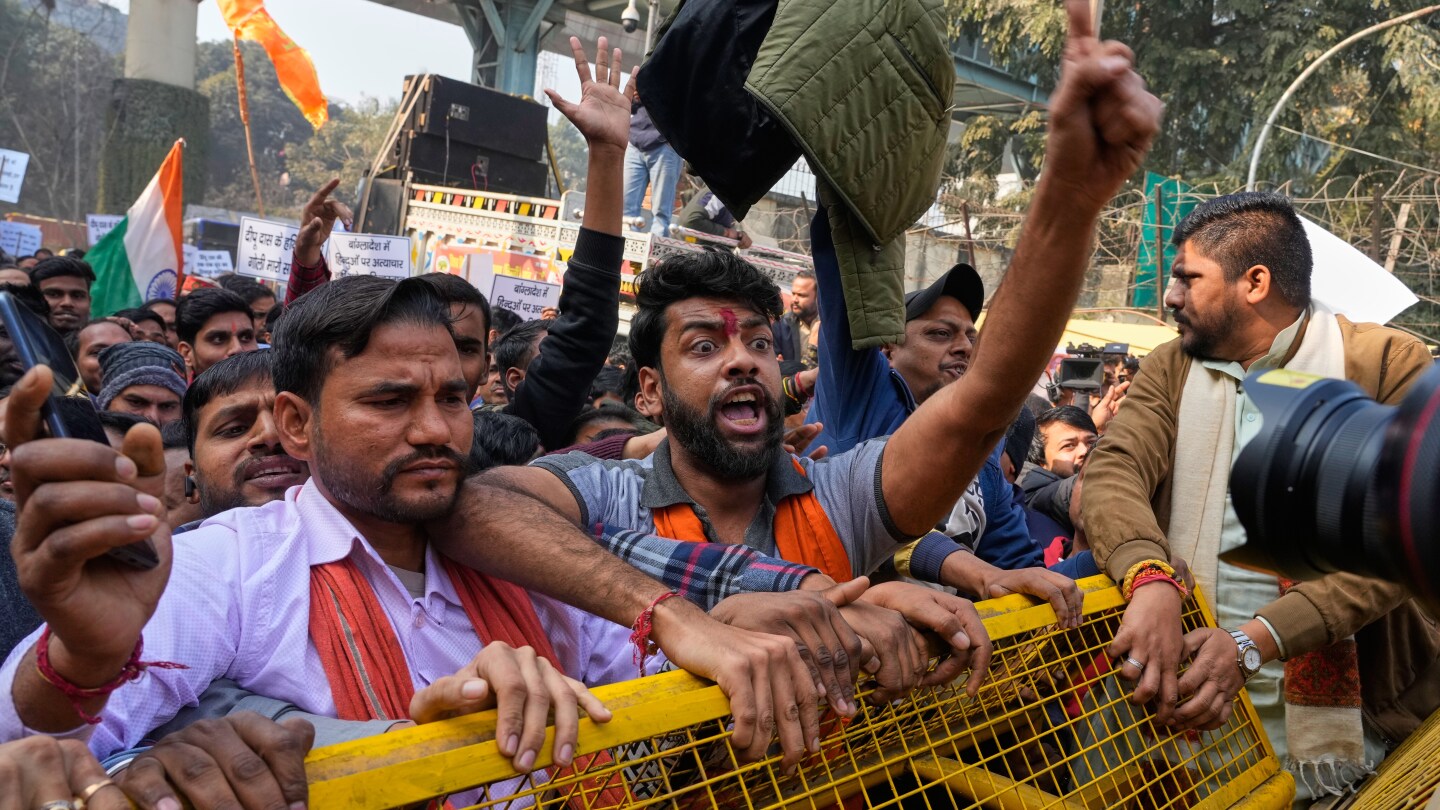
New Delhi witnessed heightened tensions on Tuesday as Hindu nationalist groups staged vigorous protests near Bangladesh’s diplomatic mission, responding to the brutal lynching and immolation of a Hindu man in neighboring Bangladesh. This incident has exposed deepening fractures in a bilateral relationship traditionally regarded as a stabilizing force in South Asia.
The demonstration, orchestrated primarily by the Vishva Hindu Parishad organization, saw hundreds of participants brandishing placards with messages such as “India will not tolerate torture of Hindus in Bangladesh” and “Our silence should not be mistaken as weakness.” Security forces responded with reinforced barricades and armored vehicles to contain the unrest.
This diplomatic deterioration stems from two interconnected tragedies: the recent killing of 25-year-old Dipu Chandra Das over blasphemy allegations in Bangladesh’s Mymensingh district, and the earlier death of student leader Sharif Osman Hadi—a prominent critic of both India and former Prime Minister Sheikh Hasina. Hadi’s shooting death in December triggered retaliatory violence in Dhaka that included attacks on Indian diplomatic facilities and newspaper offices.
The bilateral relationship has fundamentally shifted since the ouster of Hasina in August 2024, ending her 15-year administration that maintained strong ties with India. The current interim government under Nobel laureate Muhammad Yunus faces accusations from religious minorities alleging insufficient protection against growing violence.
International affairs analyst Sreeram Sundar Chaulia warns this rupture threatens cooperation on trade, border management, and regional connectivity. “Opposing India and alleging Indian conspiracies of interference in Bangladesh are being done to harden a blatantly Islamist and non-inclusive path for the country,” Chaulia stated, noting potential economic repercussions including reduced development assistance and increased Chinese influence in Bangladesh.
The diplomatic fallout has escalated through reciprocal summons of envoys, with Bangladesh expressing concerns about the security of its missions in New Delhi, Kolkata, and Agartala. This crisis marks a significant departure from the cooperative relationship that flourished under Hasina’s administration since 2009.