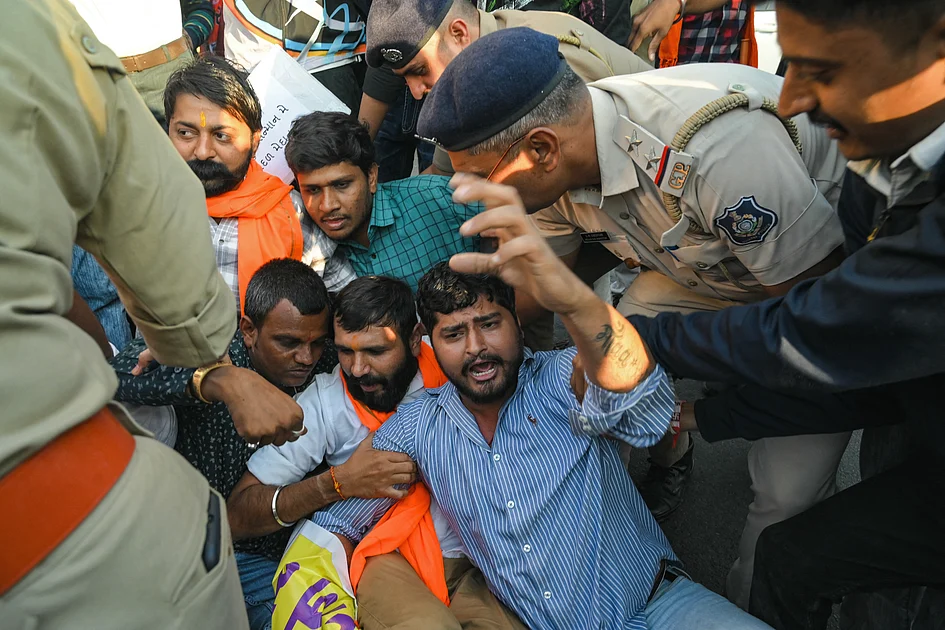
New Delhi witnessed significant demonstrations on Tuesday as hundreds of protesters gathered near Bangladesh’s High Commission, expressing outrage over the brutal lynching of a Hindu man in neighboring Bangladesh. The incident has severely strained diplomatic relations between the two South Asian nations just weeks before Bangladesh’s scheduled parliamentary elections in February.
The catalyst for these tensions emerged from the horrific death of 27-year-old factory worker Dipu Chandra Das, who was beaten and set ablaze in Bangladesh’s Mymensingh district after being accused of making derogatory remarks about the Prophet. Bangladeshi authorities have arrested at least ten individuals in connection with the religiously-motivated killing.
Television footage captured dramatic scenes as protesters, primarily representing Hindu organizations, clashed with police personnel while attempting to breach security barricades surrounding the diplomatic mission. Demonstrators chanted slogans and burned effigies while displaying posters advocating for the boycott of Bangladesh. ‘We needed to raise the voice of Hindus in Bangladesh in Delhi,’ one protester told India Today, adding that their community would remain vigilant ‘as long as even one Hindu is being harmed there.’
The diplomatic fallout has been substantial, with both nations suspending visa services indefinitely. Bangladesh’s government summoned the Indian envoy to express concerns about previous protests near its diplomatic missions, urging thorough investigations into what it described as ‘violent protests.’ India’s foreign ministry countered that Saturday’s demonstration involved only ’20-25 youths’ who were promptly dispersed by police, reaffirming India’s commitment to ensuring foreign mission security.
These tensions compound Bangladesh’s existing domestic turmoil following the recent assassination of youth leader Sharif Osman Hadi, who was shot during his campaign launch for the upcoming parliamentary elections. Hadi’s killing triggered widespread protests that escalated into arson attacks targeting major media outlets and cultural institutions, creating a complex crisis environment for the Bangladeshi government.
The current situation represents the most significant deterioration in India-Bangladesh relations since former Prime Minister Sheikh Hasina sought refuge in New Delhi following deadly protests against her administration last year.