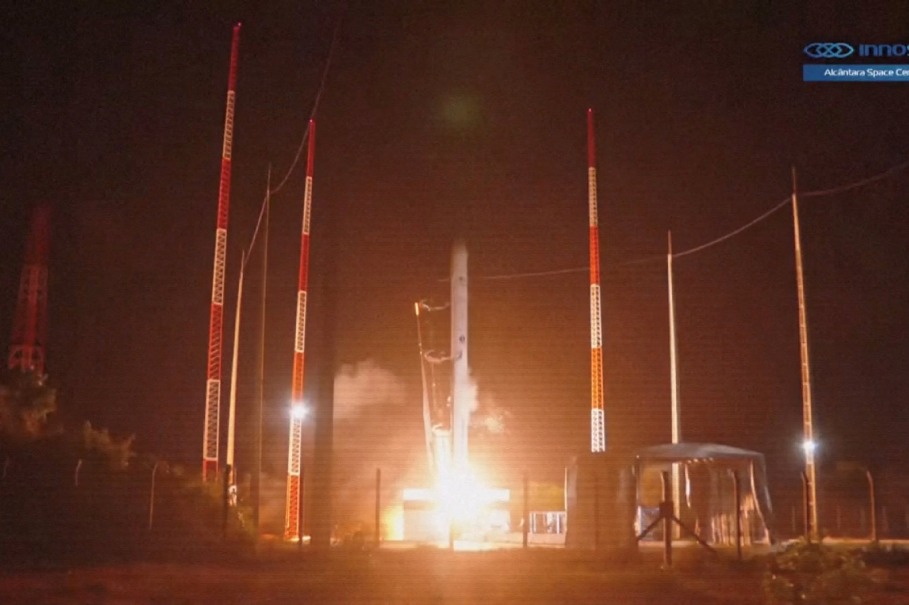
South Korea’s inaugural foray into the commercial space launch sector encountered a significant setback Tuesday when its Hanbit-Nano rocket failed shortly after liftoff from the Alcantara Space Center in Brazil. The launch vehicle, developed by private aerospace company Innospace, experienced an unspecified anomaly during its ascent that led to its presumed disintegration and explosion.
The critical mission commenced at approximately 10:13 AM local time (0113 GMT) with the rocket lifting off successfully from the Brazilian launch facility. However, moments into the flight, telemetry data indicated abnormal performance, culminating in the complete loss of the vehicle. South Korean news agency Newsis reported the incident, noting that the spacecraft failed to achieve its intended trajectory.
Innospace, which had positioned this launch as a milestone for South Korea’s commercial space capabilities, had not released an official statement regarding the failure at the time of initial reporting. The company’s silence following the incident has raised questions about the nature of the anomaly and potential implications for South Korea’s burgeoning private space industry.
The unsuccessful debut represents more than just a technical failure—it marks a stumbling block for South Korea’s ambitions to compete in the rapidly expanding global commercial space market. The Hanbit-Nano project was envisioned as a demonstration of Korean technological prowess and a stepping stone toward more advanced launch capabilities.
Space industry analysts are closely monitoring how Innospace will respond to this setback, particularly regarding investigation timelines, potential design modifications, and future launch schedules. The failure also highlights the inherent challenges and high-risk nature of space launch operations, even for established aerospace nations expanding into commercial ventures.