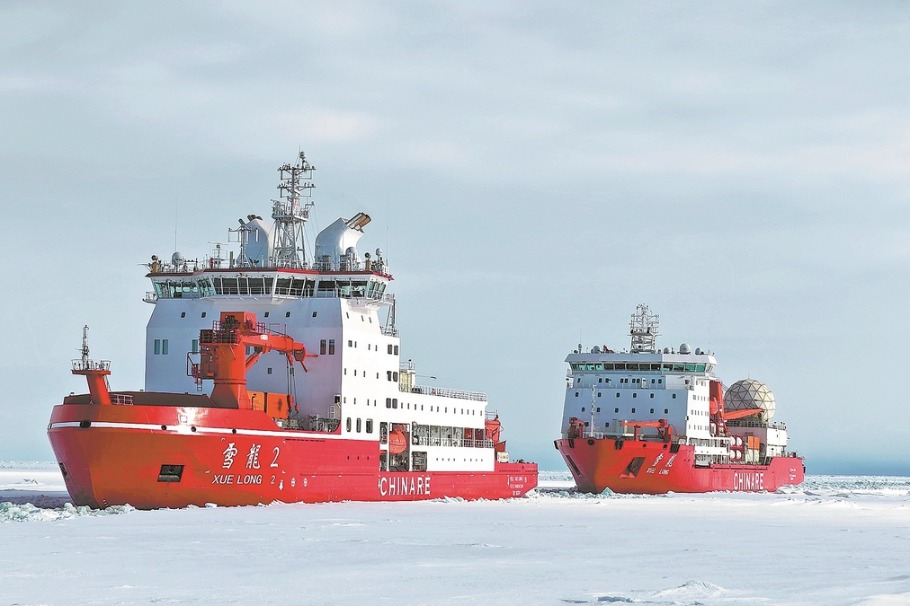
China is positioning itself for enhanced participation in Antarctic governance through comprehensive national legislation currently under legislative review. The draft Antarctic Activities and Environmental Protection Law, comprising seven chapters and 57 articles, represents Beijing’s strategic move to formalize its polar engagement policies and contribute Chinese approaches to international polar governance.
Submitted for first reading to the Standing Committee of the National People’s Congress, China’s top legislature, the proposed legislation emerges as Antarctic Treaty consultative parties increasingly rely on national laws to support their polar activities. Lu Xinshe, head of the NPC Environmental Protection and Resources Conservation Committee, emphasized that international Antarctic governance fundamentally depends on individual nations’ operational capabilities and their influence in shaping legal frameworks.
Research expert Tan Xianchun from the Chinese Academy of Sciences noted that China’s four decades of Antarctic research have transformed the country from mere participant to significant polar power, with research stations now covering all five major Antarctic regions. The draft legislation signals China’s evolution from capacity development to rule-making in polar affairs, integrating principles of peaceful use, environmental conservation, scientific advancement, and international cooperation into a comprehensive legal system.
The proposed framework establishes regulations for scientific expeditions, fisheries management, tourism activities, and shipping operations. It applies to both Chinese citizens and foreign individuals organizing Antarctic activities within China’s jurisdiction or departing from Chinese territory. The legislation explicitly prohibits military activities and mineral resource exploitation while encouraging scientific research, technological innovation, and environmentally sustainable practices.
Environmental regulation expert Ma Jun highlighted the legislation’s attention to Antarctic tourism management, noting the continent’s extreme ecological vulnerability. The draft addresses emerging concerns about invasive species, habitat degradation, and pollution risks associated with increasing tourist numbers through environmental impact assessment requirements, emergency response protocols, and specific conservation measures for wildlife, waste management, and marine protection.
The legislative initiative demonstrates China’s commitment to fulfilling international treaty obligations while asserting its role as responsible stakeholder in Antarctic governance, potentially influencing global approaches to managing the world’s last great wilderness.