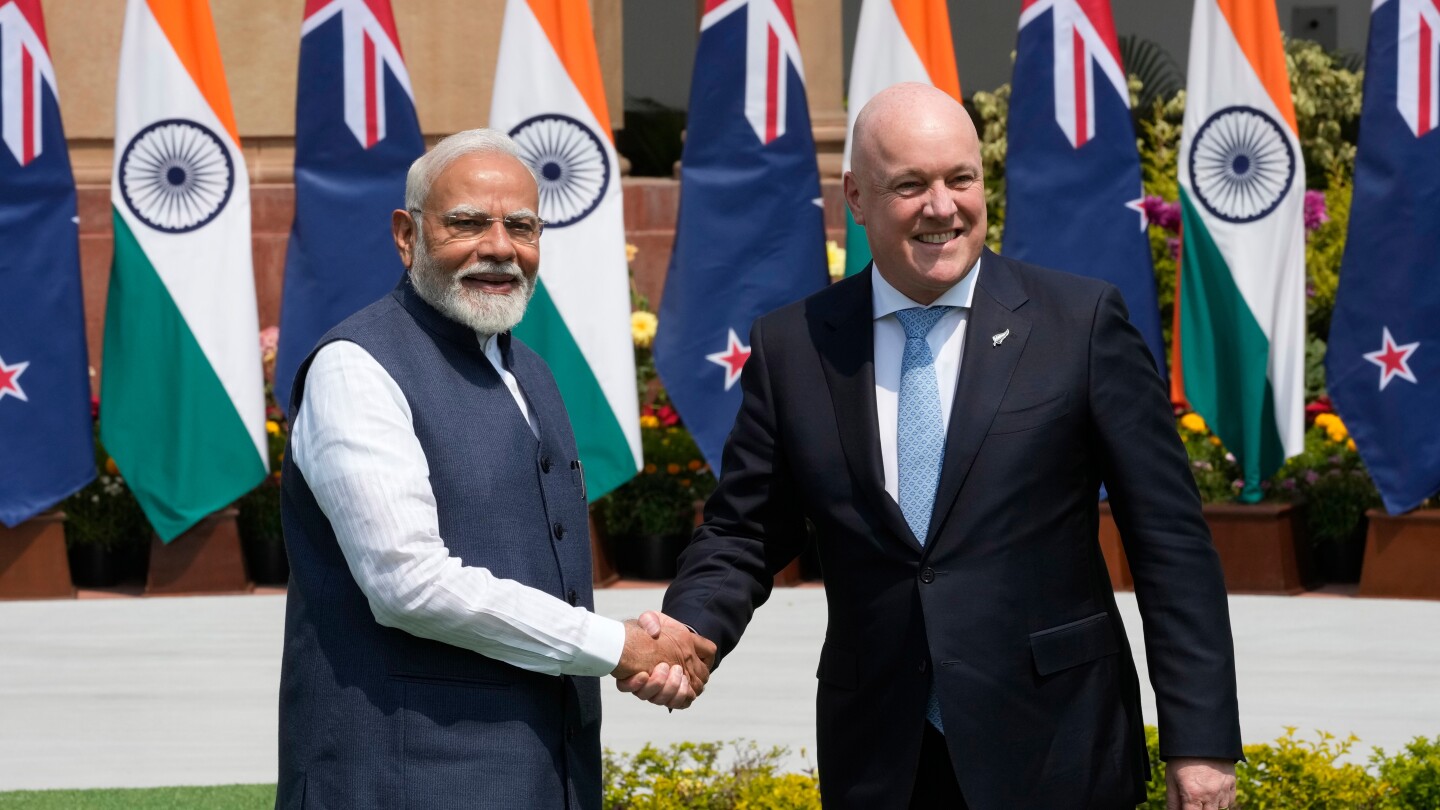
In a strategic move to bolster economic resilience against mounting global trade volatilities, India and New Zealand have finalized negotiations for an extensive free trade agreement. The pact, concluded after nine months of intensive discussions, represents a significant milestone in bilateral relations between the two nations.
The agreement establishes a framework for reciprocal tariff reductions, regulatory harmonization, and enhanced cooperation across multiple sectors including goods, services, and investments. India secures zero-duty export access for all its commodities entering New Zealand, while Wellington obtains phased duty concessions covering approximately 70% of New Delhi’s tariff lines, encompassing 95% of its exports.
Key beneficiaries from the Indian side include textiles, apparel, engineering goods, leather and footwear, and marine products. New Zealand anticipates substantial gains in horticulture, wood exports, and sheep wool industries. Notably, India has excluded sensitive agricultural products including dairy items (milk, cream, whey, yogurt, cheese), goat meat, onions, and almonds from the agreement due to domestic considerations.
The partnership extends beyond merchandise trade, with New Zealand committing $20 billion in investments over 15 years to strengthen economic ties. Current bilateral trade encompassing goods and services stands at $2.4 billion annually, with both governments targeting a doubling of this volume within approximately five years.
Prime Minister Christopher Luxon of New Zealand projected that exports to India would increase by $1.1 to $1.3 billion annually over the next twenty years, emphasizing that enhanced trade translates to more employment opportunities, higher wages, and expanded prospects for New Zealand workers. Indian Prime Minister Narendra Modi’s office characterized the agreement as a catalyst for greater trade, investment, innovation, and mutual prosperity.
The formal signing ceremony is scheduled for the first quarter of 2025 following legal verification of the negotiated text, according to India’s chief negotiator Petal Dhillon.