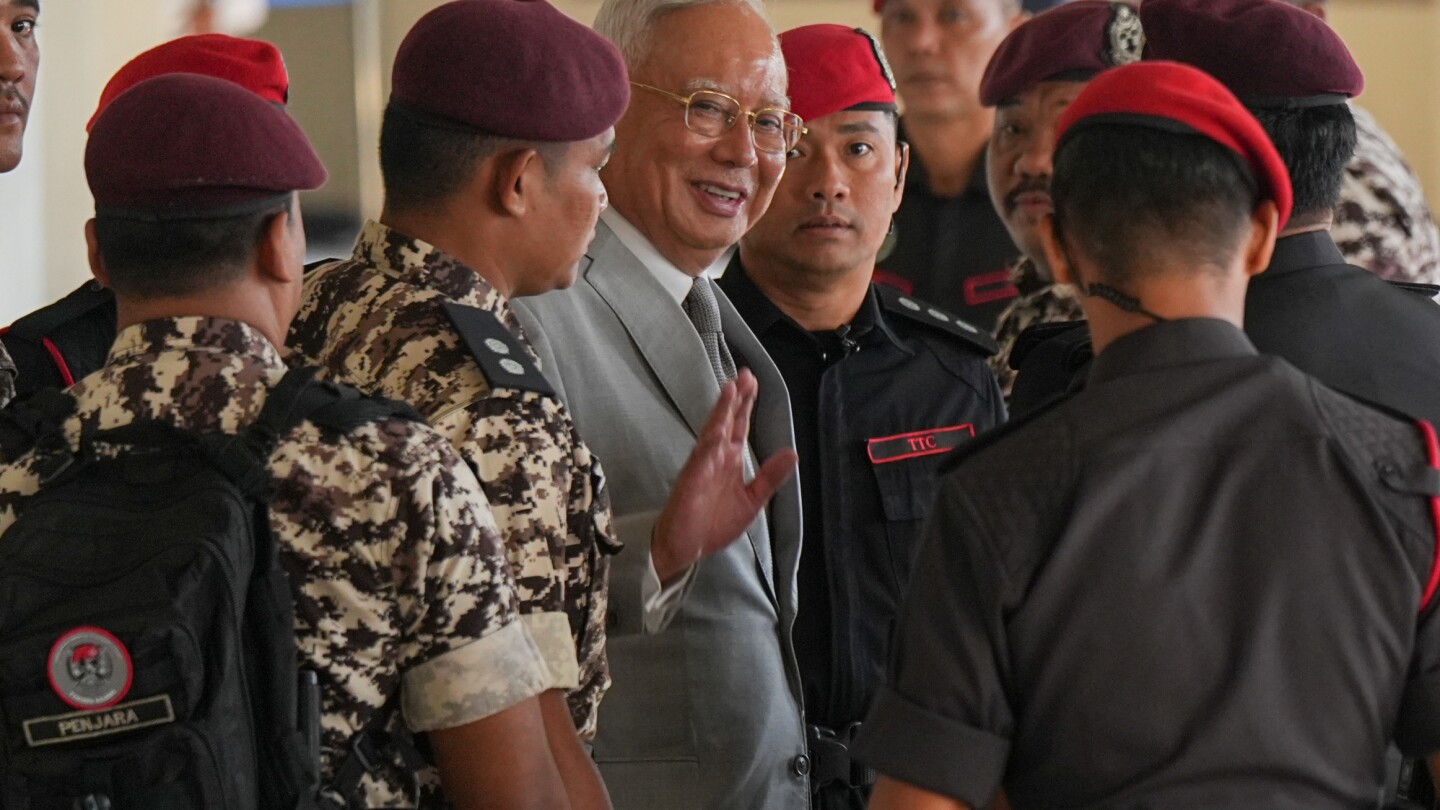
In a significant judicial ruling, Malaysia’s High Court has decisively rejected former Prime Minister Najib Razak’s petition to complete his corruption sentence under house arrest. Presiding Judge Alice Loke declared that a purported royal addendum from the former king lacked constitutional validity, as it was not properly issued in accordance with established legal procedures.
The court determined that the royal prerogative of mercy must be exercised based on the formal advice of the Pardons Board and cannot be implemented independently, which would risk arbitrary decision-making. While not disputing the existence of the document, Justice Loke emphasized that house arrest was neither raised nor discussed during the January 29th pardons board meeting chaired by then-King Sultan Abdullah.
Najib, 72, will consequently serve the remainder of his prison term scheduled through August 2028, following last year’s reduction of his original 12-year sentence by half. The former leader became Malaysia’s first imprisoned ex-premier when he began serving his sentence in August 2022 after exhausting all legal appeals.
His conviction stems from the massive 1MDB financial scandal, where investigators allege at least $4.5 billion was systematically looted from the state development fund. Najib was specifically sentenced in 2020 for abuse of power, criminal breach of trust, and money laundering involving 42 million ringgit ($10.3 million) channeled into his personal accounts from SRC International, a former 1MDB subsidiary.
In a separate legal proceeding, the High Court is scheduled to rule on Friday regarding Najib’s involvement in a second corruption trial directly linking him to the 1MDB scandal. He faces four charges of abuse of power involving over $700 million allegedly diverted to his accounts, plus 21 counts of money laundering for the same amount.
Despite his imprisonment, Najib maintains influence within the United Malays National Organization, which currently participates in Prime Minister Anwar Ibrahim’s unity government formed after the 2022 elections. The original 1MDB scandal triggered unprecedented political consequences, ending the six-decade rule of Malaysia’s dominant political coalition in the historic 2018 elections.