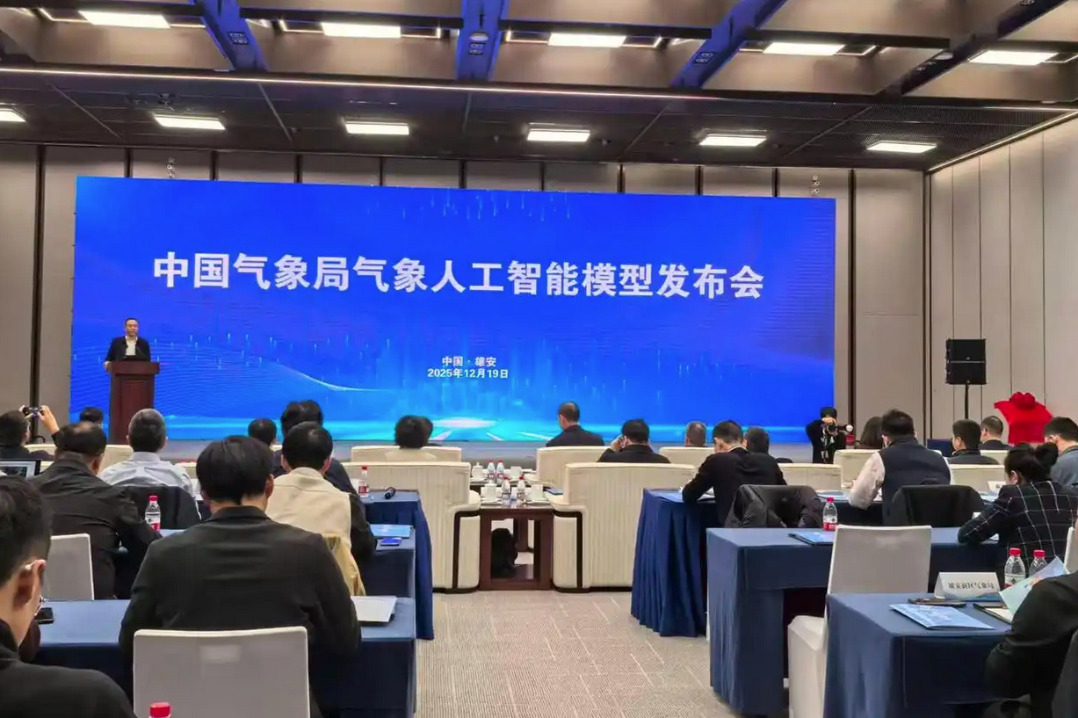
China’s meteorological authorities have significantly enhanced extreme weather response capabilities through the nationwide deployment of artificial intelligence-powered forecasting systems, though persistent challenges remain in predicting highly localized northern weather phenomena.
The China Meteorological Administration revealed that AI-based systems provided critical technical support during this year’s flood season and recent snowfall events. These models, operating alongside traditional numerical forecasting methods, have substantially improved warning timeliness and accuracy, strengthening overall disaster prevention and mitigation efforts.
According to Cao Yong, head of the weather forecasting technology research division at the National Meteorological Center, the medium- and short-range Fengqing AI model has achieved nationwide implementation with pilot deployments in regions including Hebei province. During this year’s complex flood season featuring prolonged scattered rainstorms across North China, the Fengqing model successfully captured event trends in 96-hour forecasts.
The system also demonstrated remarkable performance during North China’s inaugural snowfall this season, accurately predicting timing, duration, and intensity parameters. Meanwhile, China’s now-casting Fenglei system has undergone significant upgrades, enhancing short-term forecasting capabilities while improving adherence to atmospheric science principles and boosting stability and precision.
Zhang Xiaowen, head of the Fenglei research team, noted breakthrough achievements in predicting short-duration heavy rainfall and extreme downpours. The system successfully forecasted June’s severe convective storm in Beijing and an extreme Henan province rainstorm, showing marked improvement in predicting precipitation exceeding 50 millimeters per hour.
However, Lu Bo, vice-president of the Xiong’an Institute of Meteorological Artificial Intelligence, highlighted particular forecasting difficulties in northern regions. Unlike southern China’s relatively stable flood-season patterns, North experiences more sudden severe convective storms and short-duration downpours triggered by distant typhoons—events characterized by intensity, spatiotemporal unevenness, and heightened prediction complexity.
The Fengshun seasonal forecasting model exemplified these challenges, successfully predicting July’s North China rain belt by June’s end but underperforming compared to traditional models for August precipitation.
Looking forward, China’s Earth System Forecasting Development Strategy (2025-2035) outlines ambitious plans for operational deployment of next-generation models and establishment of a unified meteorological AI framework within five years. These advanced AI systems promise expanded support for short-term warnings and extreme climate alerts while facilitating energy dispatching and agricultural planning.
Unlike conventional models constrained by physical laws and processing speeds, AI forecasting offers unprecedented speed and accuracy—though limitations persist regarding unprecedented weather events beyond training data parameters.